Colonialism and Imperialism Worksheets
About This Worksheet Collection
This Colonialism and Imperialism worksheet collection is designed to help students explore complex global history in a clear, engaging, and structured way. Each activity breaks down big ideas-like expansion, trade, and cultural interaction-into manageable tasks that encourage active learning. With a variety of formats such as matching, reading, writing, and analysis, these worksheets support different learning styles while keeping students focused and involved. They are easy to implement in both classroom and homeschool settings, making them a reliable resource for teaching challenging historical topics.
As students work through this collection, they build essential skills like reading comprehension, cause-and-effect reasoning, and evidence-based writing. Many of the worksheets encourage learners to think critically about perspective, impact, and historical decision-making. Students also strengthen their ability to compare viewpoints, organize ideas, and analyze long-term global effects. Altogether, these activities help learners develop a deeper understanding of history while improving the thinking and literacy skills they use across subjects.
Detailed Descriptions Of These Worksheets
Empire Timeline - Matching Events to Imperial History
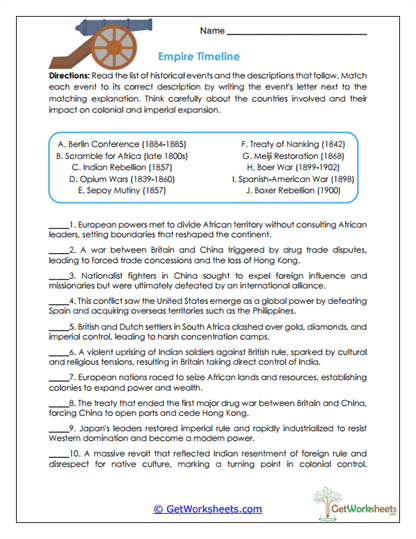
Students connect major imperial events with their correct descriptions to better understand how history unfolded. This activity encourages learners to think beyond dates and focus on the meaning behind each event. As they work, they strengthen comprehension and cause-and-effect reasoning. It also helps students see how different events are connected across time.
Colony Comparison - European and Indigenous Perspectives
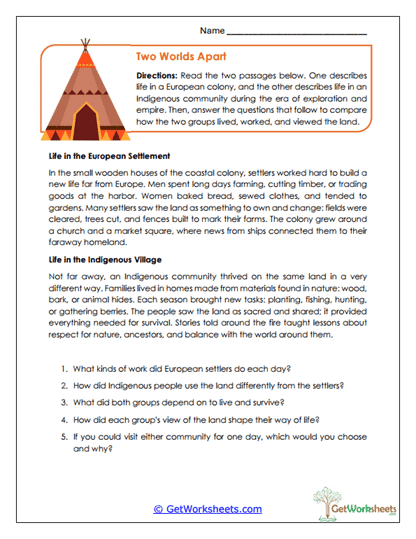
Learners examine two perspectives by comparing the lives of European settlers and Indigenous communities. They read passages and answer questions that highlight differences in culture, land use, and daily life. This builds strong comprehension and comparison skills. It also encourages students to think more deeply about fairness and perspective in history.
Imperialism Reading - Causes and Effects of Expansion
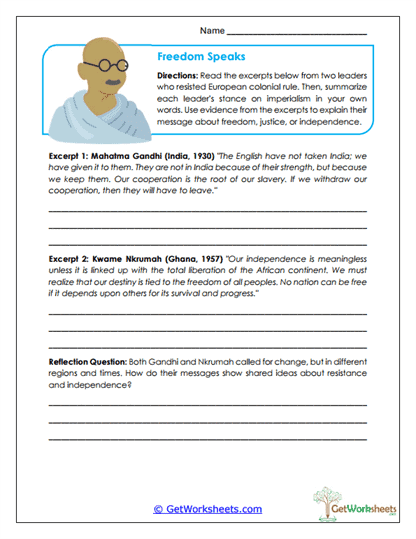
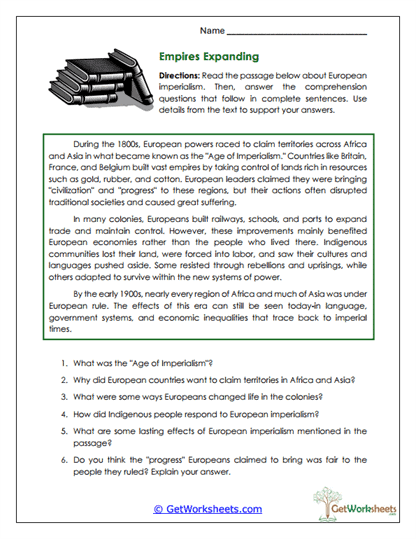
Students read an informational passage about imperialism and respond to questions based on the text. This activity helps learners identify key causes and effects tied to global expansion. It strengthens close reading skills while building content knowledge. Students also practice using evidence from the text to support their answers.
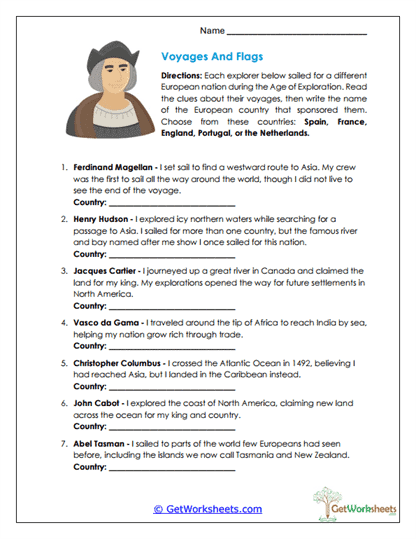
Voyages and Flags - Matching Explorers to Nations
This worksheet asks students to match explorers with the countries that supported their journeys. It helps learners understand how nations competed for power and influence during exploration. Students strengthen comprehension and attention to detail as they work through each clue. The activity also builds connections between geography and history.
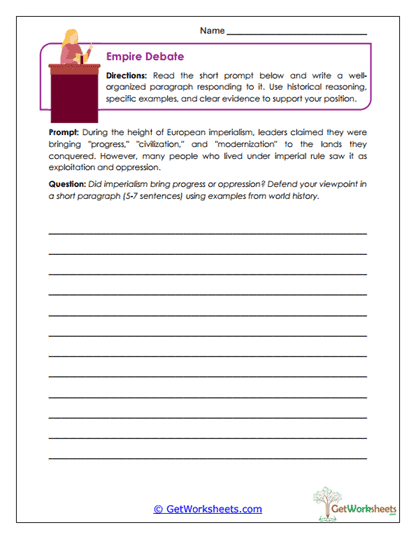
Imperialism Debate Writing - Evaluating Progress vs. Oppression
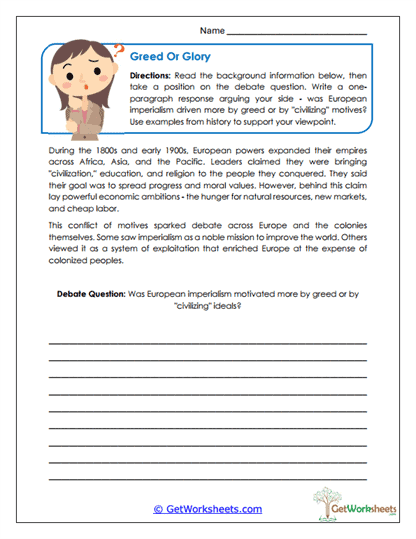
Students take a stance on whether imperialism led to progress or caused harm and support their opinion with evidence. This task develops structured writing and encourages thoughtful analysis of historical issues. Learners practice organizing ideas and explaining their reasoning clearly. It also helps them consider multiple perspectives on a complex topic.
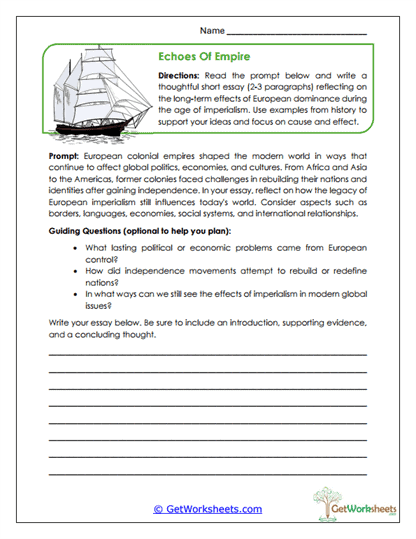
Imperialism Essay - Analyzing Long-Term Global Impact
This worksheet guides students through writing a longer response about the lasting effects of imperialism. They explore political, economic, and cultural outcomes while organizing their ideas into a clear structure. The activity builds writing stamina and analytical thinking skills. It also helps students connect past events to ongoing global issues.
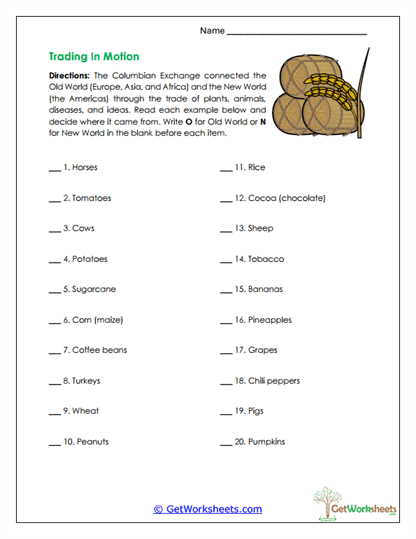
Columbian Exchange - Old World vs New World Sorting
Students sort items like crops and animals based on whether they originated in the Old World or New World. This hands-on activity makes a complex concept easier to understand. It builds categorization skills and strengthens knowledge of global trade. Students also gain a clearer picture of how exchange changed societies.
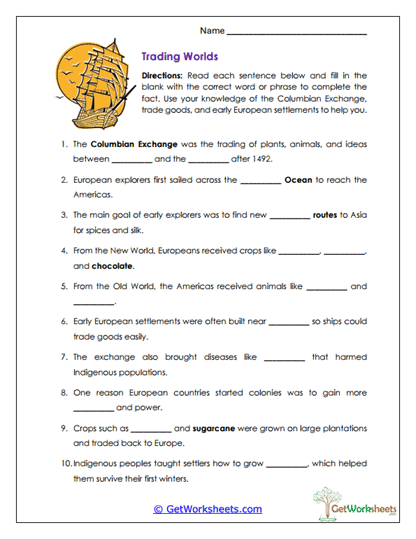
Colonial Trade Fill-In - Understanding Early Global Exchange
Learners complete sentences about early trade systems using context clues and prior knowledge. This structured format supports comprehension and vocabulary development. Students must think carefully about each response to ensure accuracy. The activity reinforces how trade connected different parts of the world.
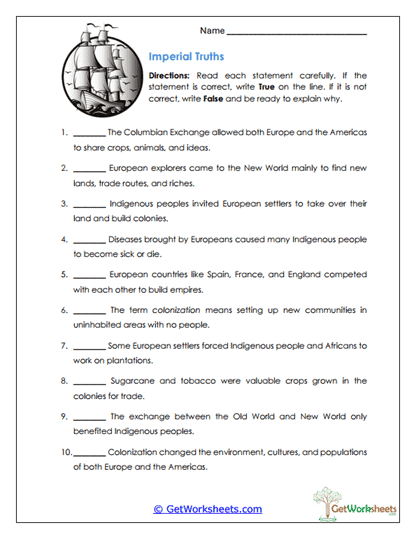
Imperialism Truth Check - Evaluating Statements About Colonization
Students review statements about imperialism and decide whether they are true or false. This task encourages critical thinking and careful reading. Learners must apply what they know to evaluate each claim accurately. It also helps reinforce key concepts related to colonization and its effects.
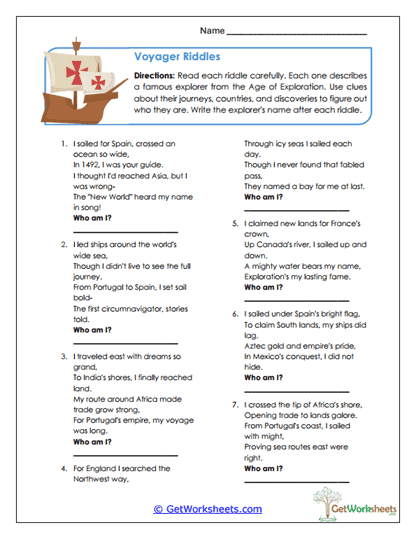
Voyager Riddles - Identifying Explorers Through Poetry Clues
Students solve creative riddles written in a poetic style to identify famous explorers. This format makes learning more engaging while strengthening comprehension. Learners interpret clues and connect them to historical knowledge. It also improves memory and inference skills in a fun way.
Empire Timeline Matching - Sequencing Imperial Events
This worksheet helps students organize important imperial events and match them to their descriptions. It supports chronological thinking and deeper understanding of global history. Students practice connecting events with their outcomes. The activity also reinforces how historical moments relate to one another.
Colonial Life Comparison - Analyzing Different Perspectives
Students compare life in colonial settlements with life in Indigenous communities through reading and analysis. This activity strengthens comprehension and comparison skills. Learners explore how culture and environment influence daily life. It also helps build empathy and a more balanced understanding of history.
Bookmark Us Now!
New, high-quality worksheets are added every week! Do not miss out!