Age of Exploration Worksheets
About This Worksheet Collection
This Age of Exploration worksheet collection offers a well-rounded set of activities designed to make history more engaging and accessible for upper elementary and middle-grade learners. Each worksheet presents content in a clear, interactive format that encourages students to actively participate rather than passively memorize facts. With a mix of matching, writing, sequencing, and critical thinking tasks, the collection supports a variety of learning styles in both classroom and homeschool settings. It provides educators with ready-to-use materials that bring historical concepts to life in meaningful ways.
As students work through these activities, they strengthen important academic skills such as reading comprehension, vocabulary development, and analytical thinking. They also build a deeper understanding of historical cause and effect, perspective, and global impact. Many of the worksheets encourage reasoning, discussion, and evidence-based thinking, helping learners move beyond surface-level knowledge. Altogether, this collection supports both content mastery and the development of critical thinking skills that extend across subject areas.
Detailed Descriptions Of These Worksheets
Explorer Match-Up - Identifying Early Explorers and Achievements
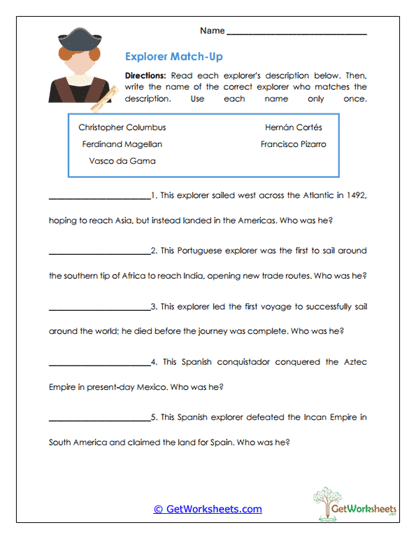
Students pair well-known explorers with their major accomplishments by analyzing short descriptions and clues. This activity helps learners connect important names to key historical events in a structured and approachable way. As they work, they strengthen comprehension and recall skills while practicing logical reasoning. It also helps students organize new information in a way that makes history easier to understand and remember.
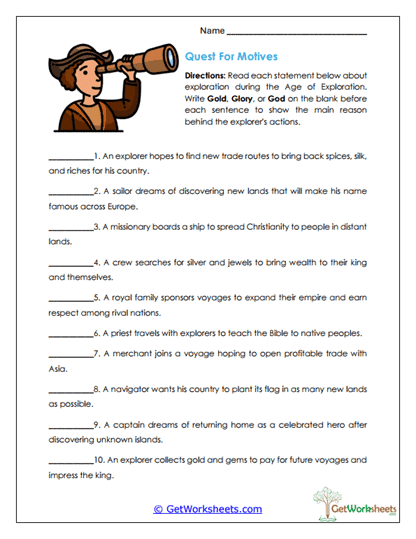
Quest for Motives - Understanding Reasons for Exploration
This worksheet guides students to think about the reasons behind exploration instead of just focusing on what happened. Learners read short scenarios and determine whether the motivation was trade, religion, wealth, or another factor. The activity builds strong inference skills as students rely on context clues to support their answers. It also encourages deeper thinking about how and why historical events take place.
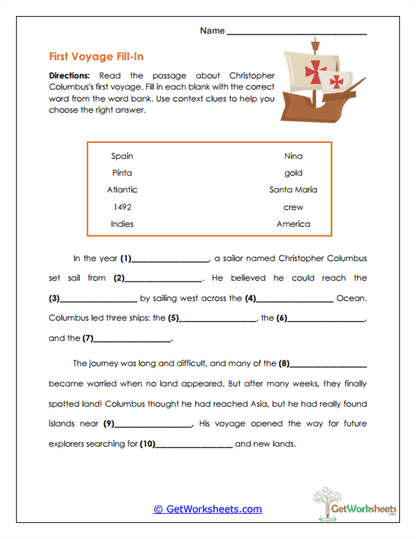
First Voyage Fill-In - Context Clues and Historical Sequencing
Students complete a passage about Columbus's journey by selecting the correct words from a provided bank. This structured format supports learners as they practice reading for meaning and identifying key details. It also helps reinforce the sequence of events within an important historical moment. By combining vocabulary and comprehension, the worksheet strengthens both literacy and historical understanding.
Exploration Truth Check - Fact vs Myth Analysis
Learners evaluate statements about exploration and decide whether each one is accurate or based on misconception. This task pushes students to think carefully about what they know and apply that knowledge with confidence. It promotes thoughtful reading and encourages students to question information instead of accepting it at face value. The activity also builds strong reasoning skills that are useful across subjects.
Exploration Vocabulary Builder - Definitions and Term Matching
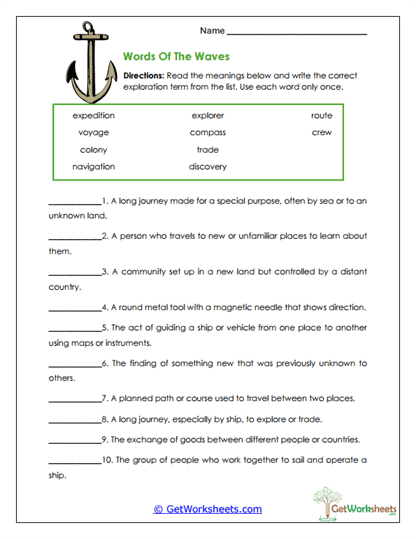
Students match important exploration terms with their correct definitions to build academic vocabulary. The clear structure makes it easier for learners to focus on understanding each word's meaning and use. As they complete the activity, they improve both reading comprehension and content knowledge. This worksheet helps students feel more confident when encountering new terms in historical texts.
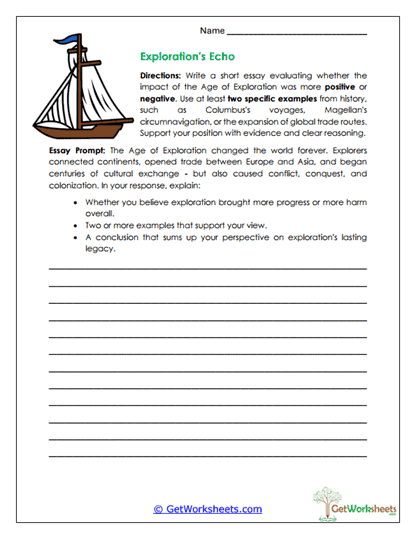
Exploration Opinion Writing - Evaluating Historical Impact
This activity asks students to take a position on whether exploration had more positive or negative effects. They must support their opinion using examples and clear reasoning. The worksheet strengthens writing organization while also encouraging critical analysis of historical events. It gives students a chance to express ideas thoughtfully and back them up with evidence.
Explorer Riddles - Identifying Explorers Through Clues
Students solve riddles that describe different explorers using hints about their journeys and achievements. This game-like format makes reviewing content more engaging and interactive. Learners practice interpreting clues and connecting them to prior knowledge. It also helps improve memory and comprehension in a fun and motivating way.
Guess the Explorer - First-Person Historical Identification
In this worksheet, students read clues written from a first-person perspective and identify the explorer being described. This approach helps learners better understand historical figures by thinking about their experiences. It strengthens comprehension and analytical thinking as students connect details to the correct individual. The format also makes history feel more personal and relatable.
Exploration Decisions - "Would You Rather" Critical Thinking
Students respond to challenging "Would You Rather" scenarios based on real exploration situations. They must choose an option and explain their reasoning using what they know about risks and goals. This encourages thoughtful decision-making and clear written expression. It also helps students connect historical knowledge to real-world thinking.
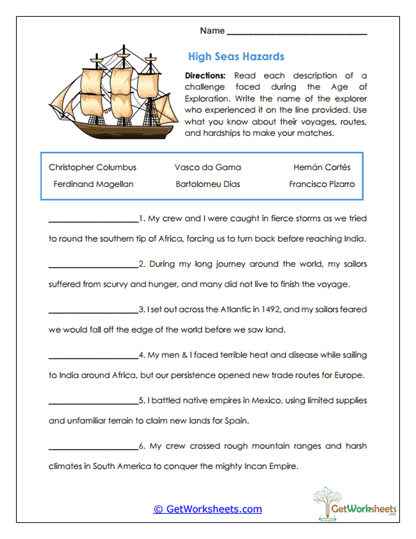
Exploration Hazards - Matching Explorers to Challenges
Learners match explorers to the challenges they faced, such as storms or illness, based on short descriptions. This activity highlights the difficulties of exploration, not just the successes. It strengthens cause-and-effect understanding while building reading comprehension skills. Students also gain a more complete and realistic view of historical events.
Exploration Timeline - Sequencing Major Historical Events
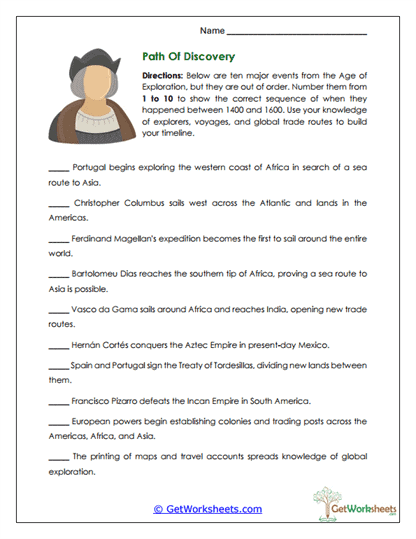
Students organize important exploration events in the correct chronological order on a timeline. This helps them see how different discoveries and voyages are connected over time. The activity builds sequencing skills and improves overall historical awareness. It also supports learners in understanding the bigger picture of how exploration developed.
Navigation Tools - Identifying Exploration Instruments
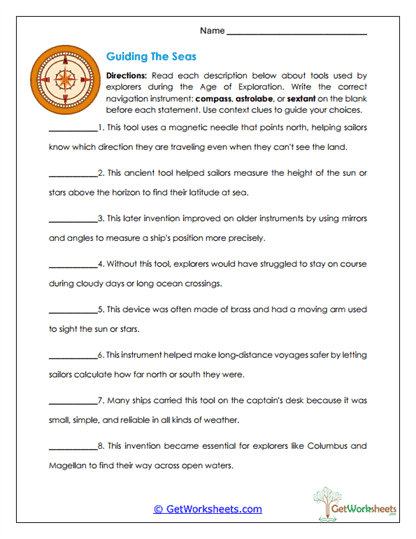
This worksheet introduces students to important navigation tools used during the Age of Exploration. Learners read descriptions and identify instruments like the compass or astrolabe based on clues. The activity builds vocabulary and strengthens inference skills through careful reading. It also helps students understand how technology made long-distance travel possible.
Bookmark Us Now!
New, high-quality worksheets are added every week! Do not miss out!