Reading Calendars Worksheets
About This Worksheet Collection
This reading calendars collection helps students develop practical, real-world literacy by teaching them how to interpret dates, times, schedules, and event-based information with clarity. Each worksheet presents a realistic monthly calendar-featuring community events, school activities, sports schedules, or library programs-and guides students through tasks that require locating details, comparing times, sequencing events, and applying logic. These activities mirror the kinds of schedule-reading skills people use every day.
As students progress through the collection, they strengthen their ability to retrieve information efficiently, analyze time-based relationships, make predictions, identify cause-and-effect connections, and solve scheduling problems. The worksheets also promote critical thinking by asking learners to justify answers with evidence from the calendar, evaluate conflicts, and connect events to broader real-life contexts. Together, these tasks build confidence in navigating practical informational text and reinforce functional life skills that extend far beyond the classroom.
Detailed Descriptions Of These Worksheets
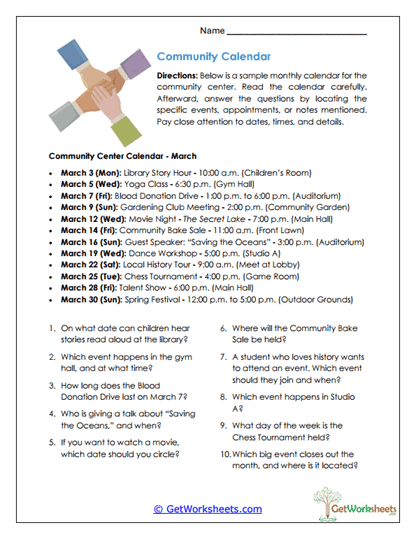
Community Calendar
Students read a monthly community center calendar and answer detailed questions requiring them to locate dates, times, and event locations. They practice determining when events occur, how long activities last, and which events meet specific conditions. The worksheet strengthens real-world comprehension and builds confidence in navigating time-based informational text.
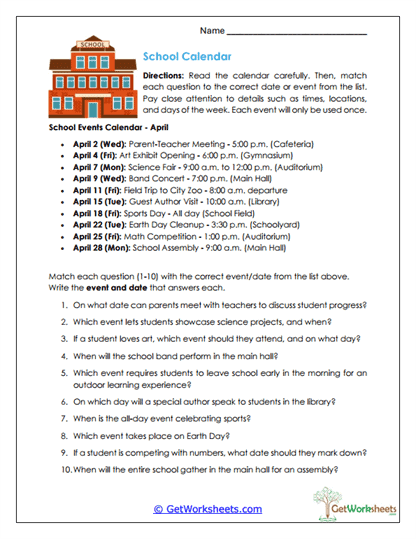
School Calendar
Learners examine an April school events calendar and match each question to the correct date or activity. To succeed, they must carefully track days of the week, event times, and locations. This task reinforces structured informational reading and encourages detail-oriented comprehension of school-related schedules.
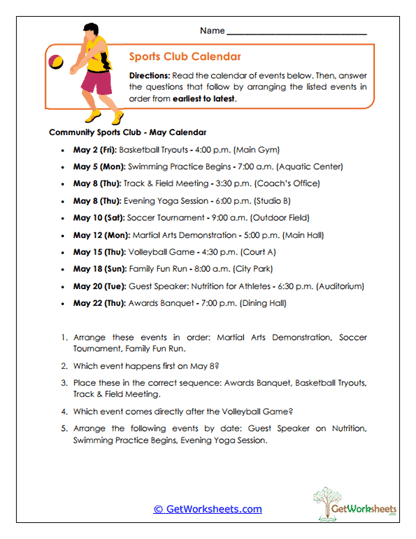
Sports Club Calendar
Students analyze a sports club's May calendar and answer sequencing questions involving chronological order. They determine which events happen first, compare event times, and arrange multiple activities from earliest to latest. The worksheet enhances understanding of scheduling, time management, and event comparison.
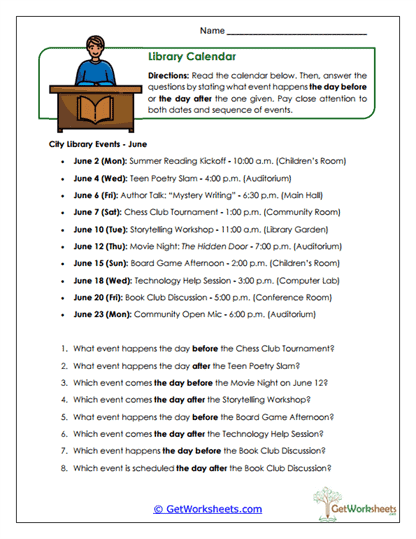
Library Calendar
In this worksheet, students study a June library events calendar and identify which activities occur before or after others. They compare dates and times to understand event relationships and sequence. The task strengthens attention to detail and builds competence with community resource calendars.
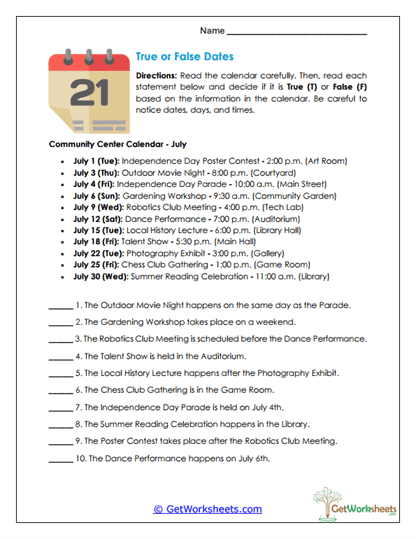
True or False Dates
Learners read a July community center calendar and evaluate true/false statements about its events. They must verify each claim using the schedule, emphasizing accuracy, fact-checking, and careful information retrieval. This activity sharpens critical reading and supports real-world calendar literacy.
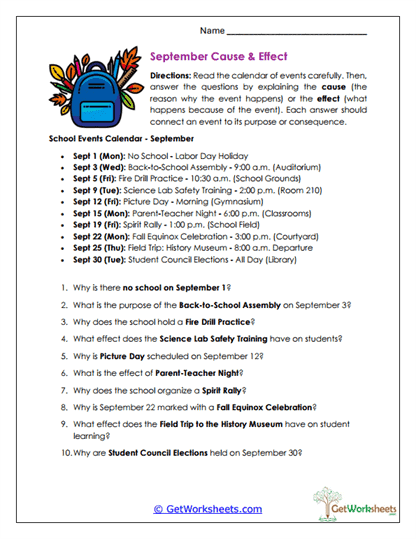
September Cause & Effect
Students review a September school calendar and answer questions linking causes and effects related to various school events. They learn to interpret why events occur and how they influence other activities. The worksheet builds comprehension of real-world cause-and-effect relationships within informational text.
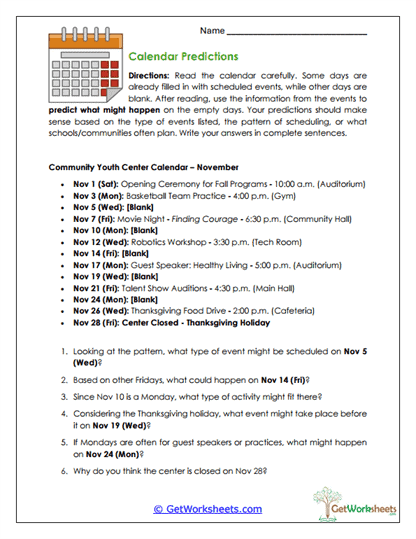
Calendar Predictions
In this activity, students examine a November youth center calendar with scheduled events and blank days. Using patterns and context clues, they predict what might logically be planned on unfilled dates. This strengthens inferencing, pattern recognition, and practical reasoning about calendars.
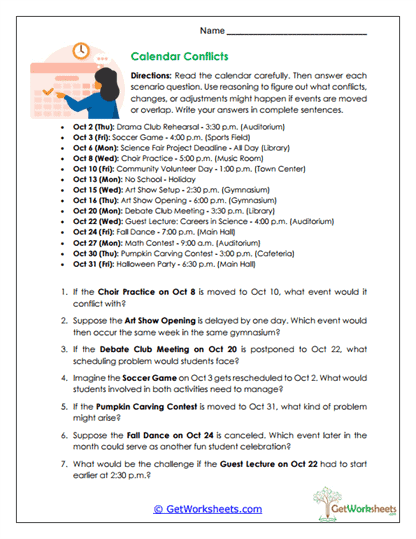
Calendar Conflicts
Students analyze a busy October calendar and solve scheduling conflict scenarios. They determine what happens when events overlap, shift, or are postponed. This worksheet develops flexible thinking, logistical problem-solving, and understanding of real-world scheduling complexities.
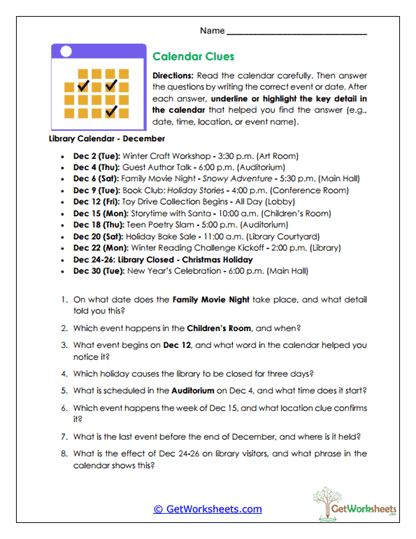
Calendar Clues
Learners read a December library calendar and answer questions by writing the correct event or date, then underline the exact detail that guided their answer. This reinforces evidence-based comprehension and helps students identify which features of a calendar are most relevant.
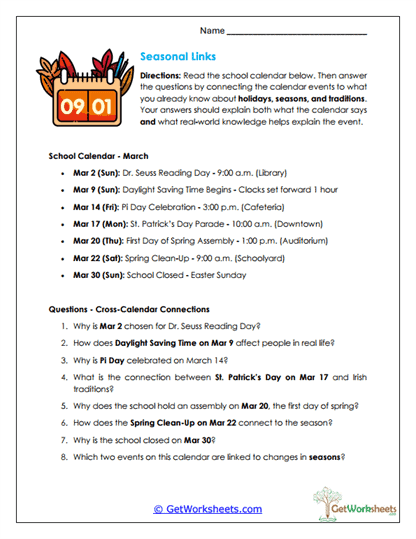
Seasonal Links
Students read a March school calendar and connect events to larger themes such as seasons, holidays, and cultural traditions. They explain why events fall on specific dates and how real-world factors shape school planning. The worksheet strengthens inferential reasoning and cultural awareness.
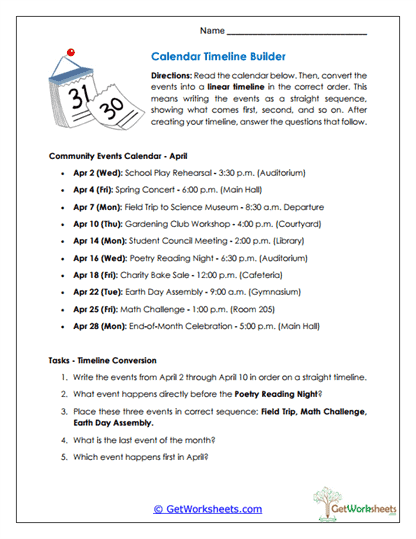
Calendar Timeline Builder
In this worksheet, students convert an April community events calendar into a chronological timeline. They sequence the events from earliest to latest and then answer comprehension questions using their timeline. The activity reinforces sequencing, organization, and the ability to translate calendar data into linear formats.
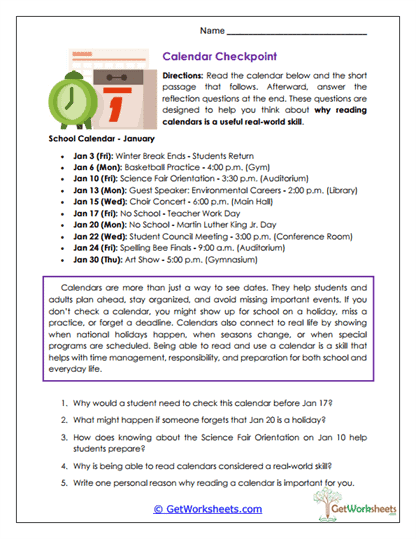
Calendar Checkpoint
Students analyze a January school calendar and read a brief passage explaining the importance of calendar literacy. They answer questions that involve locating details within the calendar and reflecting on how such skills support planning and organization. This task blends informational reading with real-life application and helps students understand why schedule literacy matters.
Bookmark Us Now!
New, high-quality worksheets are added every week! Do not miss out!