Reading Advertisements Worksheets
About This Worksheet Collection
This reading advertisements collection helps students become thoughtful, discerning consumers of media by teaching them how to analyze the messages, techniques, and intentions behind ads. Each worksheet offers a focused skill-from identifying persuasive tactics to interpreting visuals and evaluating claims-allowing learners to break down real-world advertisements with clarity. By examining both text and design, students gain practical tools for understanding how ads influence feelings, choices, and beliefs.
As they move through the collection, students practice reading critically, distinguishing fact from opinion, evaluating credibility, and recognizing bias or manipulation. They also build writing and reasoning skills by explaining their interpretations, crafting counterarguments, and even rewriting ads for new audiences. These tasks empower learners to navigate today's media-rich world with confidence, skepticism, and strong analytical habits.
Detailed Descriptions Of These Worksheets
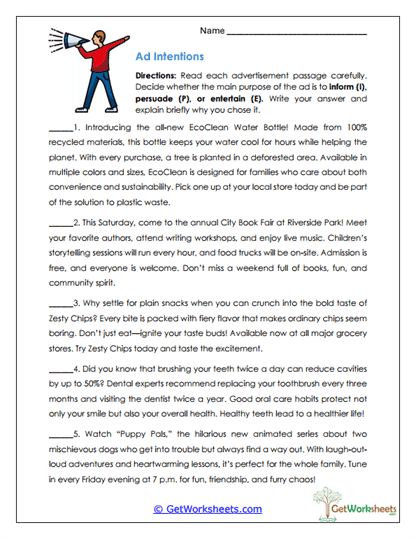
Ad Intentions
Students read short ad-style passages and determine whether each aims to inform, persuade, or entertain. They examine tone, content, and contextual clues before writing explanations to support their choices. This activity builds awareness of author purpose and strengthens media-literacy reasoning. It also helps students understand how different intentions shape the style and structure of an advertisement.
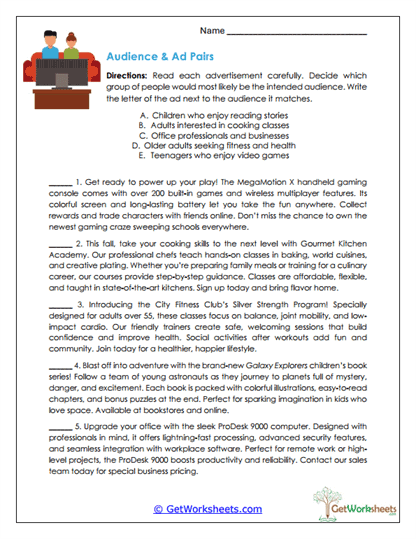
Audience & Purpose
Learners match each advertisement passage to its most likely intended audience by analyzing product descriptions and tone. They consider how advertisers tailor messages to children, teens, adults, or specialized groups. The activity strengthens inferencing and helps students recognize how audience shapes content. It reinforces real-world literacy and consumer awareness.
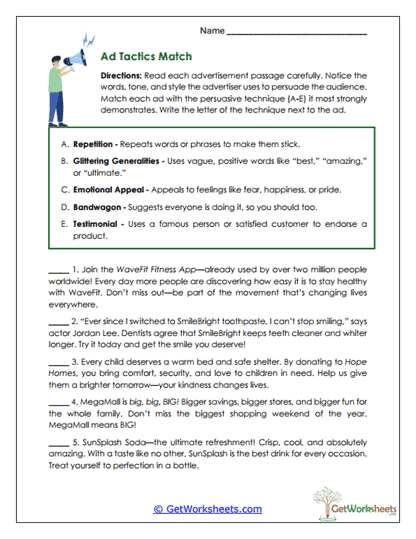
Ad Tactics Match
In this worksheet, students identify persuasive techniques-such as emotional appeal, bandwagon, repetition, glittering generalities, or testimonials-used in ad excerpts. They analyze word choice and tone to select the correct tactic. The task builds critical evaluation skills and teaches students to recognize manipulative or exaggerated language in media.
Hidden Persuasion
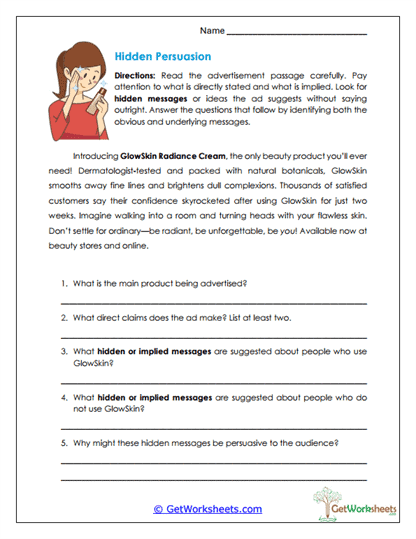
Students read an advertisement closely and identify both explicit claims and implied messages. They answer comprehension questions that analyze direct statements as well as subtler suggestions about the product or audience. This activity deepens media literacy by teaching students to read past surface-level information and question underlying assumptions.
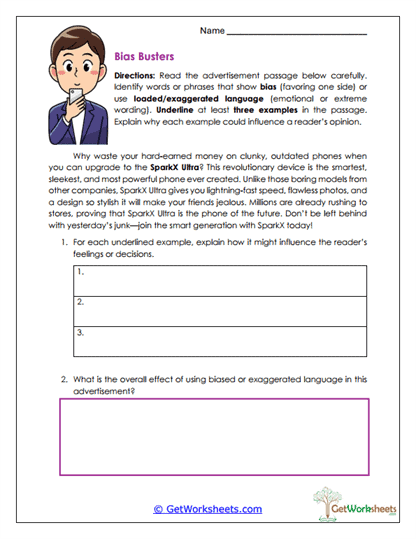
Bias Busters
Learners locate biased, exaggerated, or emotionally charged phrases within an advertisement and explain how they might influence consumer perceptions. The worksheet strengthens critical reading by revealing how slick wording can distort judgment. Students gain experience spotting slanted language and evaluating credibility.
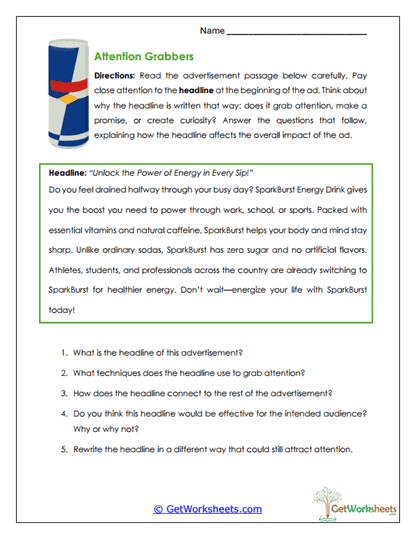
Attention Grabbers
Students analyze an advertisement's headline to evaluate how it captures attention, creates curiosity, or promises results. They assess its connection to the ad's overall message and rewrite the headline to maintain strong appeal. This activity builds understanding of persuasive structure and strengthens creative, purposeful writing.
Visual Ad Aesthetics
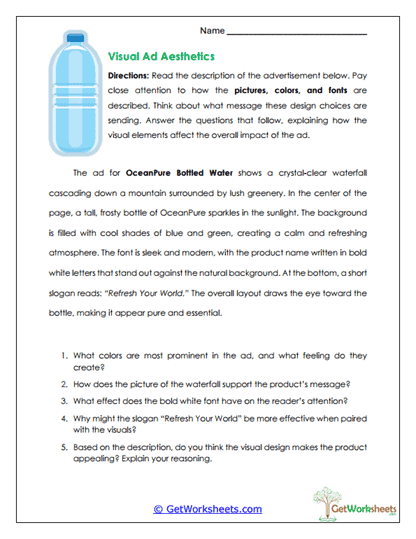
This worksheet focuses on analyzing ad visuals-colors, imagery, layout, and font choices. Students interpret how these design elements shape mood, guide attention, and support the product's message. They also determine whether the visuals effectively target the intended audience. The task strengthens visual literacy and media-analysis skills.
Selling Summary
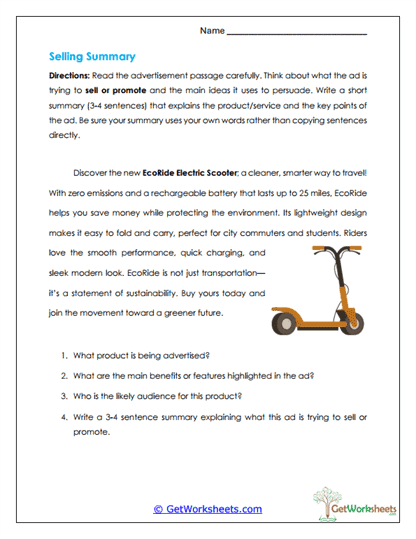
Students read an advertisement and write a 3-4 sentence summary explaining what the ad is promoting and how. They identify the product, its features, and the intended audience, using their own words to paraphrase the message. This exercise reinforces summarizing skills and helps learners distinguish main ideas from unnecessary detail.
Promo Probe
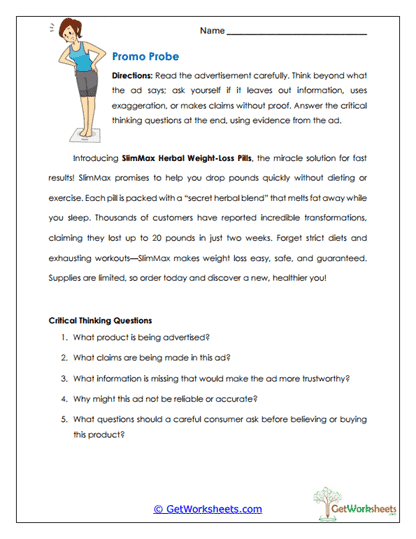
Learners question the reliability of an advertisement by analyzing claims, assumptions, missing information, and exaggerations. They answer critical-thinking prompts that encourage skepticism and deeper evaluation. This worksheet teaches students to differentiate evidence-based statements from unsupported promises.
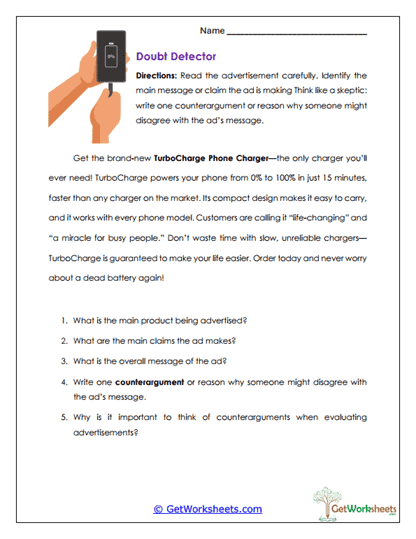
Doubt Detector
Students identify a product's main claims and then write a counterargument explaining why someone might disagree with the ad's message. They reflect on the importance of multiple perspectives when evaluating persuasive content. This activity strengthens reasoning and encourages independent evaluation of advertising techniques.
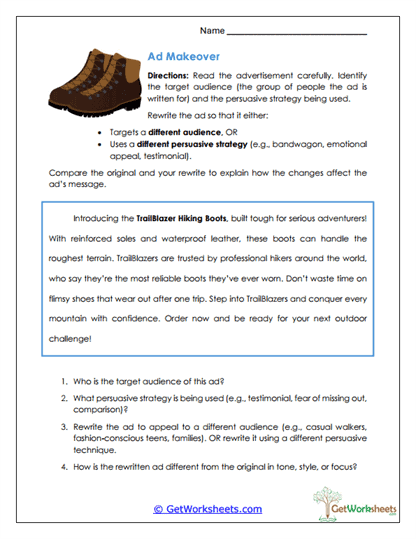
Ad Makeover
Learners analyze an advertisement to determine its target audience and persuasive strategy, then rewrite the ad for a different audience or method. They compare the original and revised versions to explain how tone and appeal change. This worksheet supports adaptation skills and deepens understanding of how audience shapes persuasive writing.
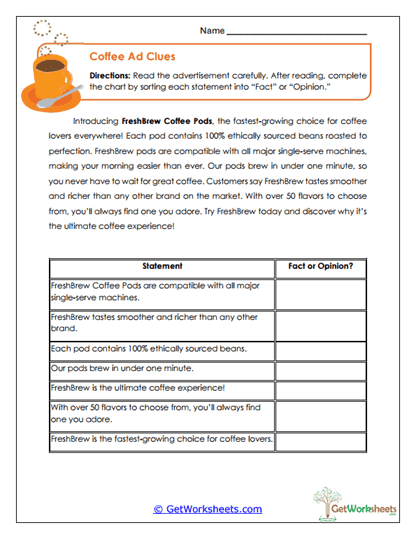
Coffee Ad Clues
Students distinguish factual statements from opinion-based claims in a coffee advertisement. They classify each statement as "Fact" or "Opinion," using clues from the text and reasoning to support their sorting. The activity builds critical judgment, teaches students to evaluate truthfulness, and strengthens key media-literacy skills.

Bookmark Us Now!
New, high-quality worksheets are added every week! Do not miss out!