Poetry Comprehension Worksheets
About This Worksheet Collection
This poetry comprehension collection helps students explore poems with confidence by guiding them through the essential elements of poetic craft. Each worksheet invites learners to slow down, read closely, and uncover how poets use language, structure, and imagery to communicate layered meanings. The variety of skills-from identifying rhyme schemes to interpreting figurative language-ensures that students develop a broad and flexible understanding of poetry.
Across the collection, students practice thinking analytically and expressively as they justify interpretations, examine how sound devices shape tone, and connect poetic ideas to personal experiences. These tasks deepen comprehension while building skills in evidence-based reasoning, literary analysis, and reflective writing. By approaching poetry through multiple angles, learners gain a richer appreciation for how poems work and why they resonate.
Detailed Descriptions Of These Worksheets
Rhyme Scheme Practice
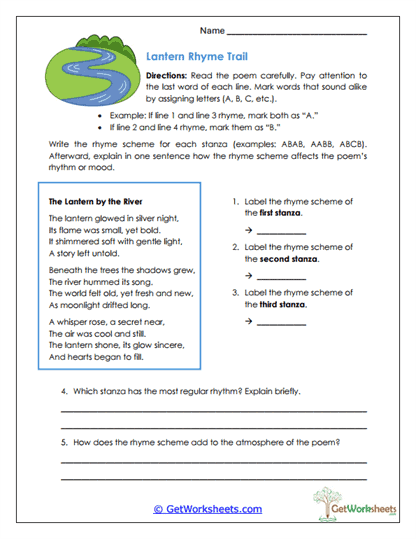
Students read a poem and determine the rhyme scheme for each stanza, labeling pairs of rhyming words and identifying the stanza with the most consistent rhythm. They also consider how the poem's rhyme enhances its tone and atmosphere. Through written explanation, learners develop a stronger sense of how structured sound patterns influence meaning. This worksheet supports foundational analysis of poetic form.
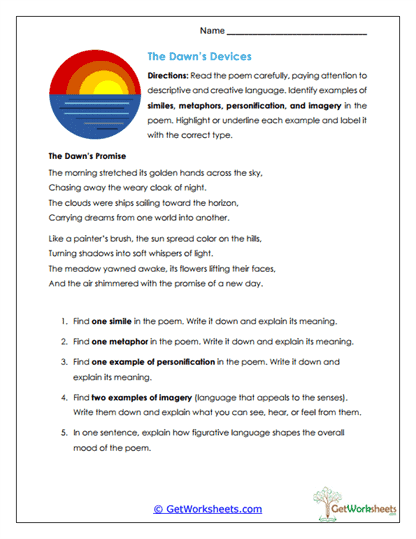
Figurative Language Devices
In this worksheet, students identify similes, metaphors, personification, and imagery within a poem. They highlight and label each device, then explain how it enriches the poem's language. The activity encourages close attention to descriptive details and helps learners understand how figurative expressions create emotion and mood. It builds essential skills for interpreting expressive writing.
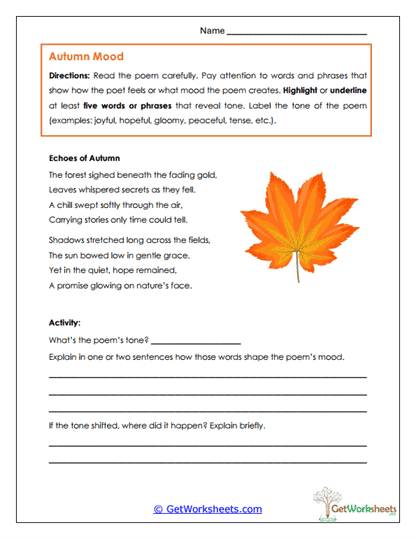
Mood and Tone
Learners read a nature poem and highlight words that reveal tone, then write explanations describing how these choices shape the poem's mood. The activity trains students to detect emotional cues embedded in diction. By analyzing subtle shifts in language, they develop stronger interpretive habits and a deeper awareness of how poets guide reader feeling.
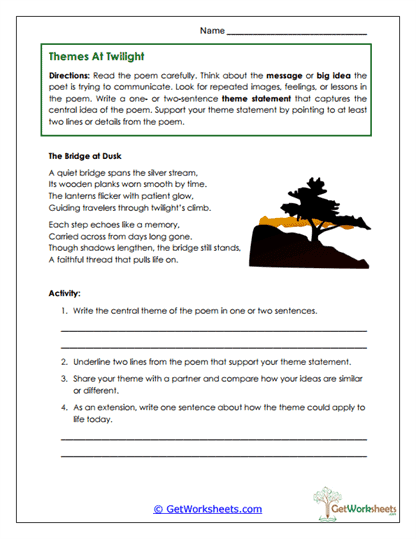
Theme in Poetry
Students read a poem about a bridge at dusk and write a theme statement supported by underlined lines from the text. They analyze repeated ideas, imagery, and emotional cues to uncover the poem's deeper message. The worksheet encourages reflection on how themes connect to real-life experiences. It supports thoughtful reading and clear written interpretation.
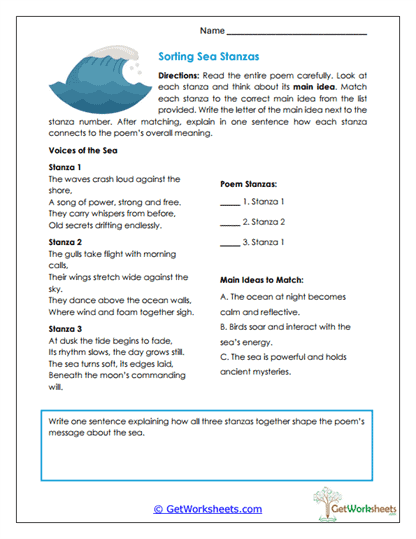
Stanza Meaning Match
This worksheet asks students to match each stanza of a three-part poem to its main idea. They then explain how the stanzas work together to build the poem's larger meaning. The activity teaches learners to interpret poetry both in individual sections and as a cohesive whole. It strengthens analytical reasoning and structured comprehension.
Poem Title Analysis
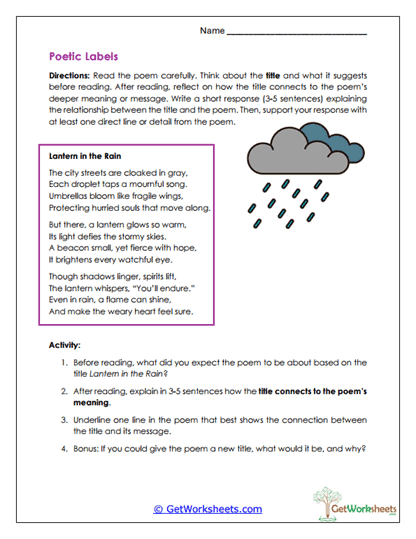
Learners examine how a poem's title connects to its deeper meaning, citing at least one line from the poem to support their interpretation. Additional prompts ask them to reflect on how the title shaped their expectations. This worksheet reinforces interpretive thinking and encourages students to consider how paratext influences understanding.
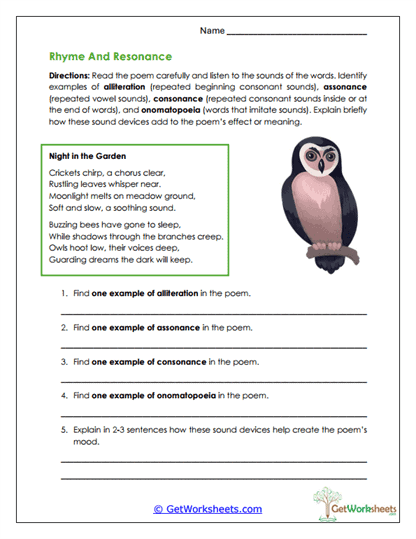
Sound Device Identification
Students read a descriptive nighttime poem and identify sound devices such as alliteration, assonance, consonance, and onomatopoeia. They explain how these auditory elements enhance mood and contribute to the poem's overall impact. This activity builds awareness of the musical qualities of poetry and deepens understanding of poetic craft.
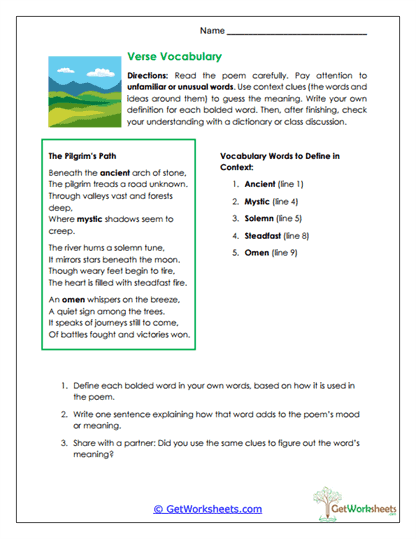
Vocabulary in Poetry
In this activity, students use context clues from a poem to determine meanings of bolded vocabulary words, then explain how each word contributes to tone or meaning. This reinforces contextual interpretation and supports vocabulary development. The worksheet also helps learners see how precise word choice shapes poetic expression.
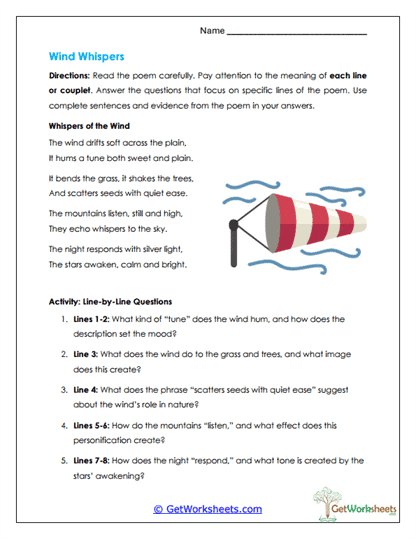
Line-by-Line Analysis
Students examine each line or couplet of a poem about the wind and respond to questions that ask them to interpret imagery and figurative language. They support their explanations with evidence from the text. This close-reading approach helps students break down a poem into meaningful parts and uncover deeper layers of interpretation.
Poetic Structure Study
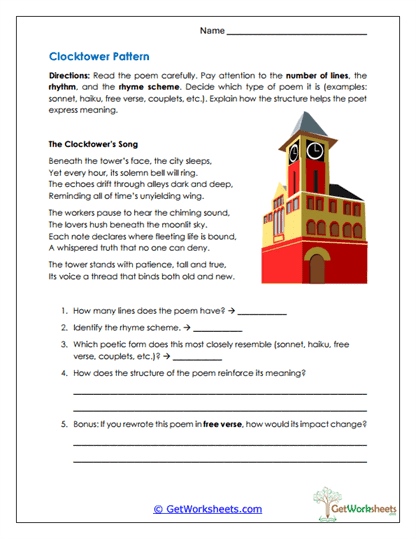
This worksheet guides students in identifying a poem's structure by counting lines, analyzing rhyme scheme, and determining its poetic form. They then explain how structure reinforces meaning, and optionally consider how the poem would change if written in free verse. The activity teaches learners to think critically about how form supports content.
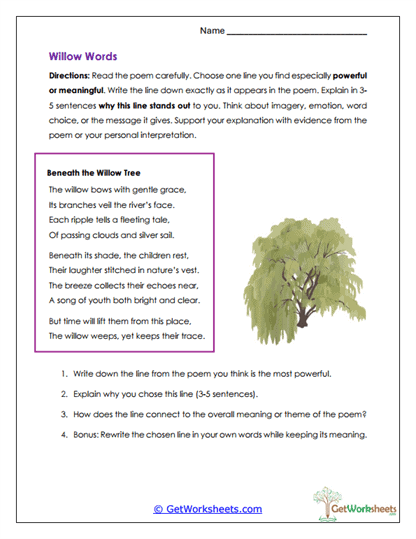
Meaningful Lines
Students choose a line from a poem about a willow tree that they find particularly meaningful and write a multi-sentence explanation of why it stands out. They connect the line to the poem's overall message and may rewrite it in their own words to explore interpretation. This exercise builds close-reading and reflective writing skills.
Personal Reflection Poem
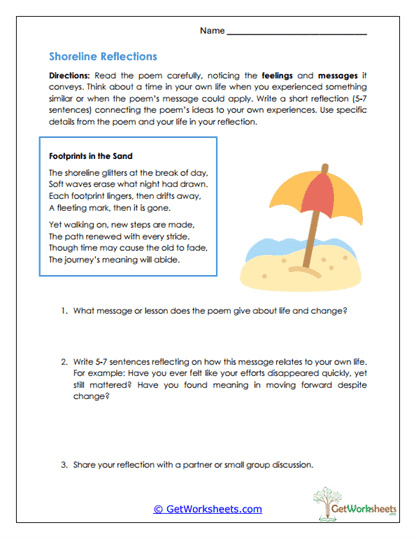
Learners read a poem about change and time, then write a longer reflection connecting the poem's message to personal experiences. They support their thoughts with details from the poem and share insights about its emotional impact. This worksheet encourages deep engagement with poetic themes and strengthens text-based reflective writing.
Bookmark Us Now!
New, high-quality worksheets are added every week! Do not miss out!