Multiple Choice Reading Passages Worksheets





About This Worksheet Collection
This collection of multiple-choice reading passages is designed to help students practice the full spectrum of comprehension skills in a structured, engaging format. Each worksheet features a focused passage followed by thoughtfully crafted answer choices that require learners to interpret key details, analyze language, and apply reasoning. The variety of topics-ranging from vocabulary and figurative language to main idea and prediction-ensures that students encounter both literary and informational texts in manageable, meaningful ways.
As students work through the set, they strengthen foundational literacy abilities such as identifying themes, recognizing text structure, and using context clues. They also develop higher-level skills including inferencing, evaluating character actions, and drawing conclusions supported by evidence. By navigating challenging distractors and justifying their choices, learners build reading stamina, critical thinking, and confidence-key components of success on academic assessments and in real-world reading.
Detailed Descriptions Of These Worksheets
Central Message
Students read several short passages and choose the central message that best matches each one. They must distinguish between supporting details and the author's overarching idea, encouraging deeper comprehension. As they compare answer choices, learners evaluate tone, purpose, and main themes. The activity strengthens close reading and reinforces the ability to summarize meaning in a single, accurate statement.
Vocabulary in Context
In this worksheet, students explore vocabulary through a passage about a mountain trek. They determine meanings of bolded words using surrounding clues and select the best match from multiple-choice options. The tasks highlight synonyms, antonyms, tone, and descriptive language. This approach builds contextual vocabulary skills and supports more nuanced interpretation of narrative detail.
Cause and Effect
Learners read a narrative about a school play and answer questions that ask why events happened as they did. Each choice requires students to identify causes behind specific actions or outcomes. The activity helps students understand how moments in a story connect logically. It reinforces careful reading and supports strong comprehension of cause-and-effect relationships.
Character Traits
This worksheet asks students to analyze characters involved in a group project by examining their dialogue, behavior, and choices. Multiple-choice questions guide learners in matching traits to the appropriate individuals. The activity encourages inference-making and evidence-based thinking. It deepens understanding of character motivation and contributes to broader narrative analysis.
Drawing Conclusions
Students read short scenarios and answer questions that require them to combine textual hints with logical thinking. They practice drawing conclusions about character behavior, motives, and implied outcomes. This strengthens higher-order thinking by moving students beyond literal comprehension. It also reinforces the importance of citing textual evidence in making interpretations.
Inference Practice
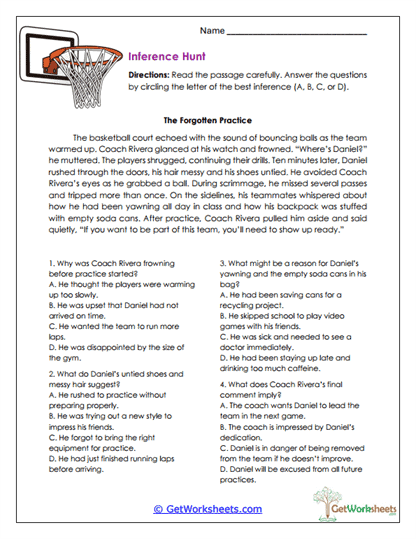
This worksheet challenges learners to make inferences from a passage about basketball practice. They examine character choices, relationships, and problems, choosing answers that reveal deeper meaning. The task builds inferential reasoning by prompting students to rely on clues rather than explicit statements. It supports stronger comprehension of both character and plot.
Theme Identification
Students read moral-focused passages and select the theme or lesson that best matches each story. They analyze how character actions lead to broader messages, distinguishing between surface events and underlying meaning. The activity develops reflective thinking and helps learners interpret narrative purpose. It strengthens skills needed for interpreting themes across diverse texts.
Text Structure
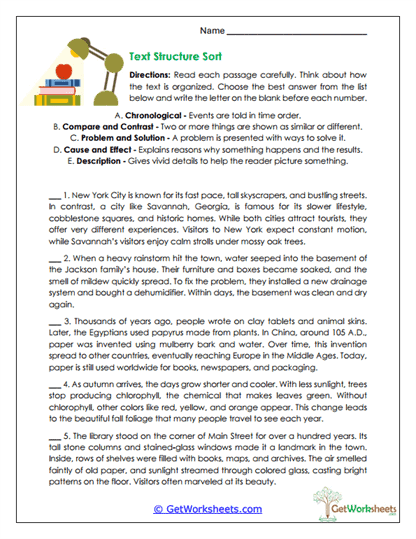
In this worksheet, students determine how each informational passage is organized, choosing from structures like chronological, problem-solution, compare-and-contrast, and cause-and-effect. They learn to identify signal words and patterns that reveal how authors arrange information. This strengthens nonfiction comprehension and builds awareness of author's craft.
Predicting Outcomes
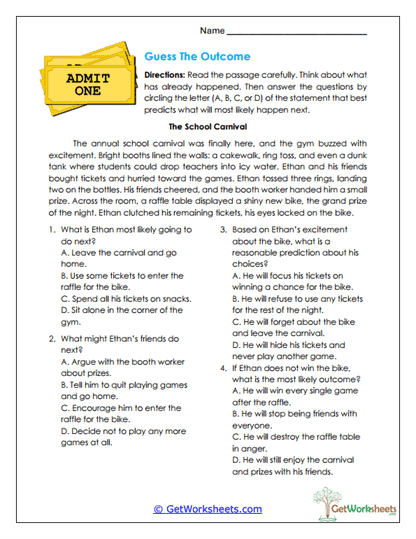
Students read a narrative about a school carnival and use clues from the text to decide what is most likely to happen next. Each choice requires reasoning based on character behavior and narrative flow. The activity encourages foresight and logical thinking. It builds the ability to anticipate consequences in stories, an important skill for deeper comprehension.
Context Clues
Learners read a passage about a camping trip and use context clues to interpret bolded vocabulary words. They answer multiple-choice questions involving synonyms, antonyms, and usage. The worksheet builds confidence in figuring out unfamiliar words using surrounding detail. It improves comprehension by encouraging precise attention to language.
Figurative Language
Students read a vivid passage about a storm and identify examples of figurative language-including similes, metaphors, idioms, and personification. Multiple-choice questions guide them in interpreting meaning and understanding how these devices enhance imagery. This builds literary analysis skills and helps learners recognize author craft in descriptive writing.
Reasoning and Judgment
In this worksheet, students evaluate character actions and decisions in a passage about a struggling school newspaper. They answer questions that require judgment, motivation analysis, and cause-and-effect reasoning. The activity promotes higher-level thinking by asking learners to justify interpretations with evidence. It strengthens critical reading and comprehension of narrative complexity.
Bookmark Us Now!
New, high-quality worksheets are added every week! Do not miss out!