Matching Choices Reading Passages Worksheets
About This Worksheet Collection
This collection of Matching Choices Reading Passages offers students an engaging way to practice close reading through multiple-choice style tasks. Each worksheet features short, focused passages paired with sets of options-titles, summaries, themes, settings, character descriptions, and more-allowing learners to analyze meaning and select the best match. These activities mirror the reasoning skills needed for standardized assessments, but in a more approachable, narrative-friendly format.
Across the collection, students strengthen comprehension by comparing possibilities, eliminating distractors, and justifying why one option fits better than another. They refine essential literacy skills such as identifying main ideas, interpreting character traits, recognizing author purpose, and analyzing vocabulary in context. By working with short texts and clear choices, learners build confidence, accuracy, and deeper understanding of how authors craft meaning.
Detailed Descriptions Of These Worksheets
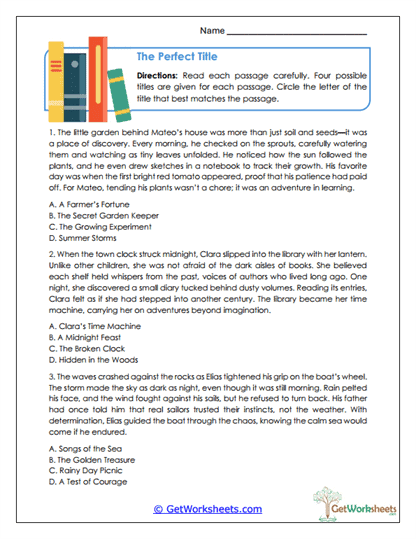
The Perfect Title
Students read brief narrative passages and choose which of four titles best captures each text's central idea and tone. To make the correct selection, they must weigh key details, consider the overarching message, and rule out titles that fit only partially. This process encourages learners to think about how titles influence reader expectations and reflect author intent. The activity sharpens comprehension by prompting students to summarize the meaning of each passage in a single phrase.
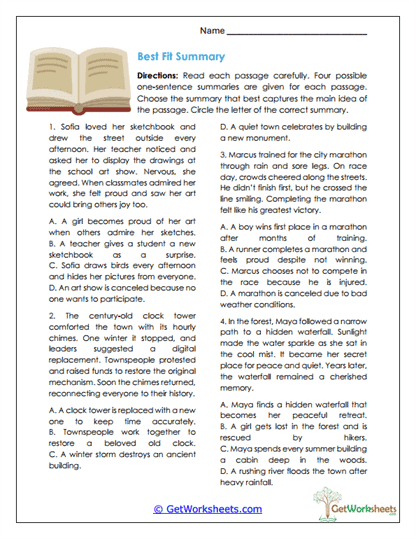
Best Fit Summary
In this worksheet, students evaluate four one-sentence summaries for each short passage and choose the one that reflects the true main idea. They must distinguish between accurate statements and summaries that distort or overlook important information. The task encourages careful consideration of wording and nuance. It offers strong practice for test-style comprehension questions that ask students to identify the best summary.
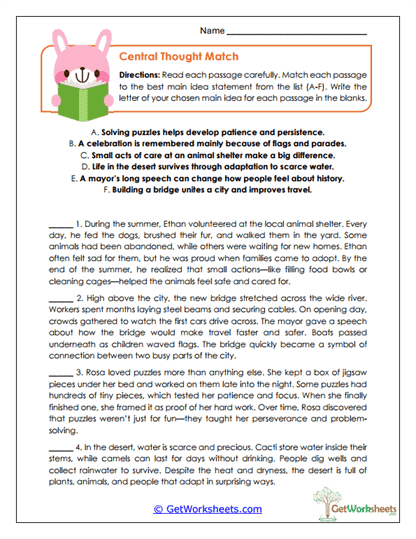
Central Thought Match
Students analyze several passages and match each one to the correct central idea from a provided list. To make their decisions, they evaluate tone, purpose, and core details. The format helps learners practice eliminating distractors and recognizing statements that capture the overall meaning rather than isolated facts. This activity builds confidence in identifying the "big idea" and improves close reading skills.
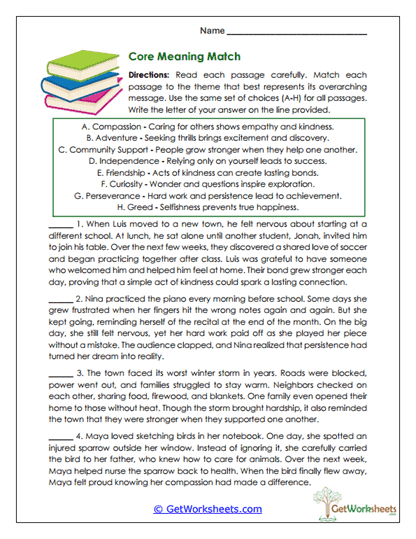
Core Meaning Match
In this worksheet, learners read short texts and match each one to a universal theme such as resilience, kindness, curiosity, or cooperation. They must interpret implied messages behind characters' choices and reflect on what the scenarios suggest about life lessons. This strengthens inferential thinking and supports deeper literary analysis. The task also encourages students to reflect on values embedded in narrative writing.
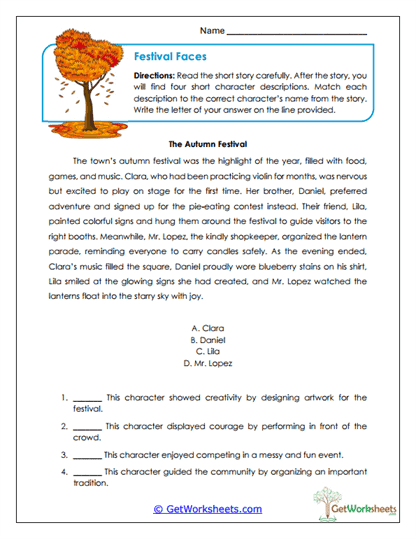
Festival Faces
Students read a lively story about an autumn festival and match specific character descriptions to the correct individuals. To do this, they analyze behaviors, emotions, and small narrative details scattered throughout the passage. The activity encourages attention to how authors reveal personality traits through action. It also improves memory for story events and supports broader character analysis skills.
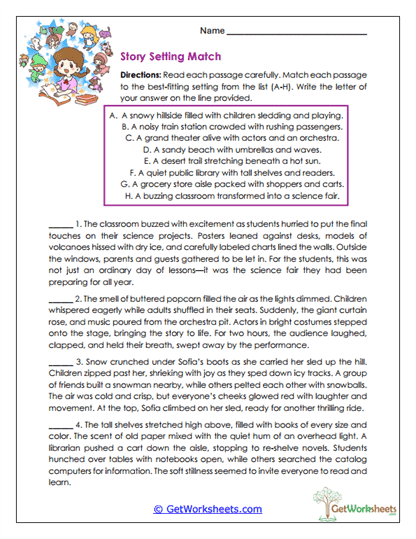
Story Setting Match
Learners examine several passages and choose the most appropriate setting option for each one. They rely on sensory details, contextual clues, and descriptive language to determine location. The task strengthens students' understanding of how setting shapes mood and narrative structure. It also supports inferential reading, since clues often require interpretation rather than direct identification.
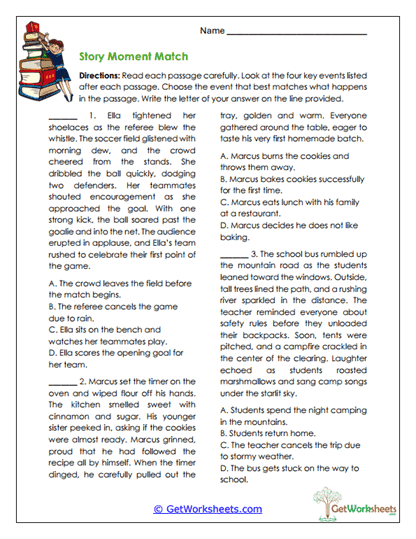
Story Moment Match
In this worksheet, students identify the key event in each passage and select the matching option from a list. They must focus on primary actions and cause-and-effect relationships rather than minor details. The activity builds understanding of plot structure and teaches students to differentiate between major and supporting events. It reinforces close reading and sequencing skills.
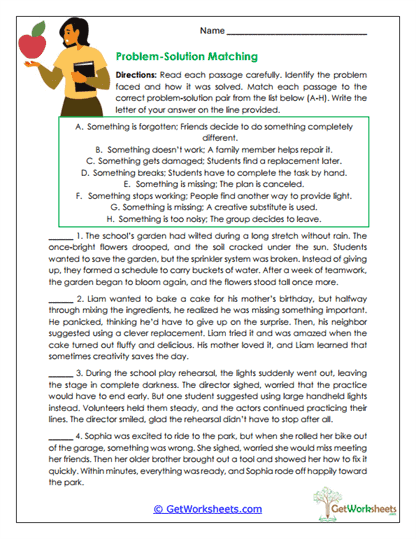
Problem-Solution Matching
Students read short passages containing a clear problem and its resolution, then match each to the correct problem-solution pair. They analyze how characters respond to challenges and how those actions guide plot progression. The worksheet strengthens understanding of narrative structure, especially the role of conflict in storytelling. It also promotes careful reading as learners distinguish between similar options.
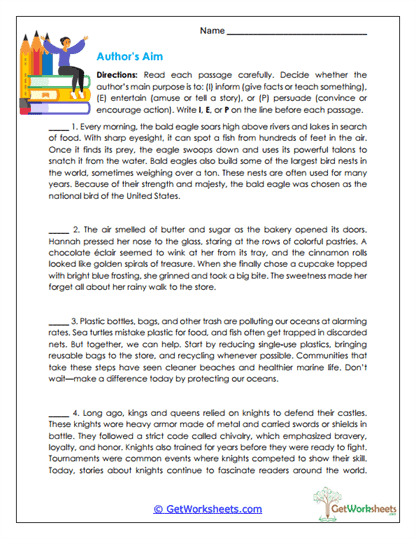
Author's Aim
This worksheet asks students to determine whether each passage is meant to inform, entertain, or persuade. To do so, they consider tone, structure, and the types of details included. Students justify their choices based on textual evidence, promoting stronger analysis of author intent. The task supports broader comprehension assessments that emphasize purpose identification.
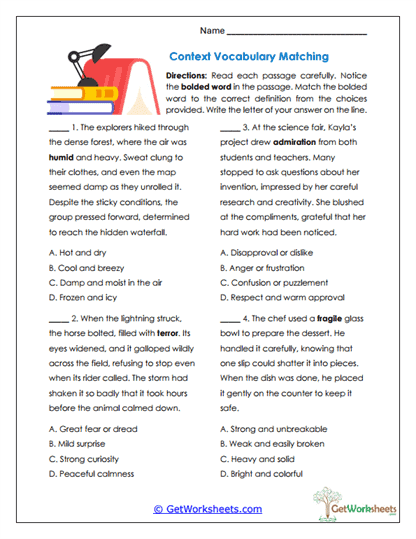
Context Vocabulary Matching
Students read brief passages and use context clues to match bolded vocabulary words to their definitions. They interpret descriptive hints, tone, and example details to deduce meaning. The matching format helps learners compare plausible definitions and choose the best fit. This activity strengthens vocabulary understanding and builds confidence in tackling unfamiliar words during independent reading.
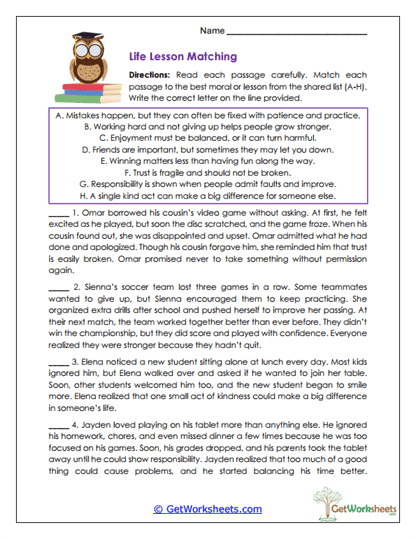
Life Lesson Matching
Learners read short narratives and match each one to the most fitting moral or life lesson. They think about character decisions, consequences, and the message implied by the events. By comparing multiple possible lessons, they sharpen evaluative reasoning and eliminate choices that partially fit. This worksheet reinforces theme identification and supports character education.
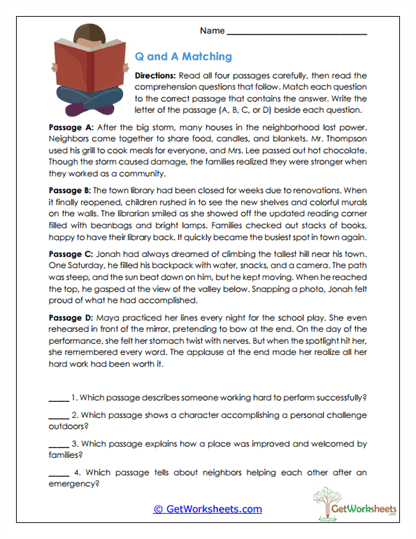
Q and A Matching
In this final worksheet, students read four passages and match specific comprehension questions to the passage they describe. They analyze events, accomplishments, and character responses to find the correct connection. The activity strengthens evidence location skills and boosts accuracy in multi-passage reasoning tasks. It provides excellent practice for test formats that require comparing and distinguishing between multiple texts.
Bookmark Us Now!
New, high-quality worksheets are added every week! Do not miss out!