Grade 3 Vocabulary Worksheets
About This Worksheet Collection
This collection of Grade 3 vocabulary worksheets offers a wide range of engaging activities designed to help students explore word meaning in meaningful and interactive ways. Each worksheet presents a unique approach to vocabulary development, from solving riddles to analyzing word relationships, giving teachers flexible options for instruction and practice. Whether used in the classroom or at home, these resources support consistent skill-building while keeping learners motivated and curious.
As students work through these worksheets, they strengthen essential skills such as comprehension, inference, word analysis, and precise language use. The activities encourage deeper thinking about how words function in different contexts, helping learners move beyond basic memorization. With continued practice, students build confidence in reading, improve their writing clarity, and develop a stronger ability to communicate ideas effectively.
Detailed Descriptions Of These Worksheets
Clues and Definitions - Context Clue Vocabulary Practice
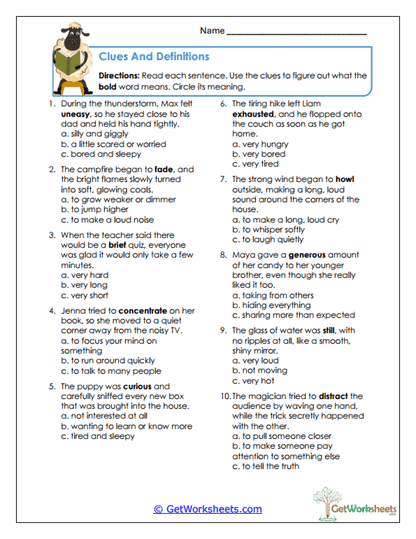
Students use sentence clues to figure out the meanings of unfamiliar words, building confidence as independent readers. By examining surrounding details, they learn how context can guide understanding without needing a dictionary. This activity encourages careful reading and thoughtful analysis of language. It also helps students become more strategic when encountering new vocabulary in everyday reading.
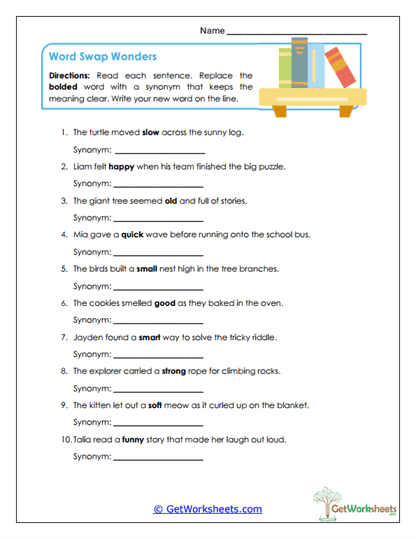
Word Swap Wonders - Synonyms in Sentences
Learners practice replacing common words with stronger or more precise synonyms while keeping the sentence meaning the same. This exercise helps students see how word choice can improve clarity and expression. It encourages flexible thinking as they explore multiple ways to say the same idea. Over time, students begin to write with more variety and confidence.
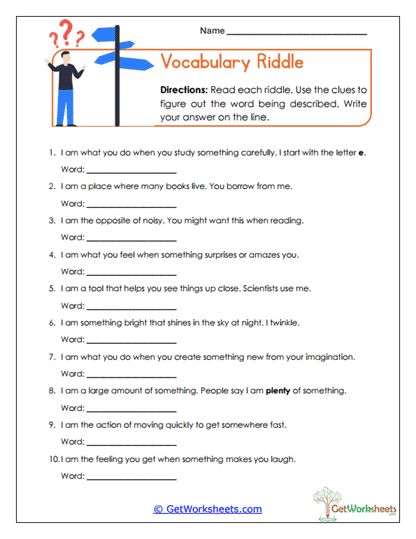
Vocabulary Riddle Solver - Clues to Word Meaning
Students solve engaging riddles by using descriptive clues to identify the correct vocabulary word. This format makes learning feel like a puzzle, increasing motivation and participation. As they work through each riddle, learners sharpen their reasoning and inference skills. It's a fun way to deepen understanding of descriptive language.
Categorizing Words - Vocabulary Classification Skills
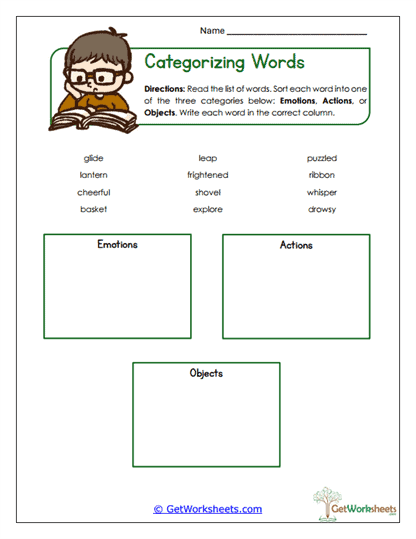
This worksheet invites students to sort words into meaningful groups such as actions, emotions, or objects. By organizing vocabulary, learners develop a clearer understanding of how words relate to one another. The activity strengthens both comprehension and logical thinking. It also supports better word usage when speaking or writing.
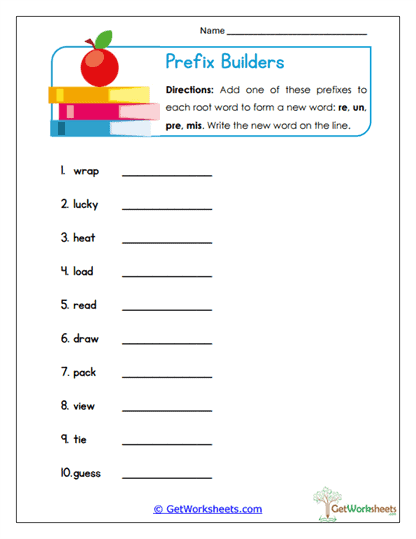
Prefix Builders - Word Formation Practice
Students explore how prefixes change the meaning of base words by creating new vocabulary. This hands-on activity helps learners recognize common word parts and understand their impact. As they build words, they also strengthen decoding and spelling skills. It's a practical way to make sense of unfamiliar words during reading.
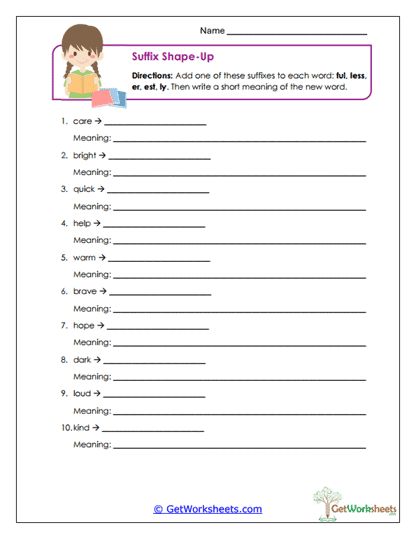
Suffix Shape-Up - Word Endings and Meaning
Learners practice adding suffixes to base words and analyzing how meanings change. This activity builds awareness of word structure and helps students understand how endings affect usage. It also connects vocabulary learning with grammar development. With repeated practice, students become more confident in both reading and writing.
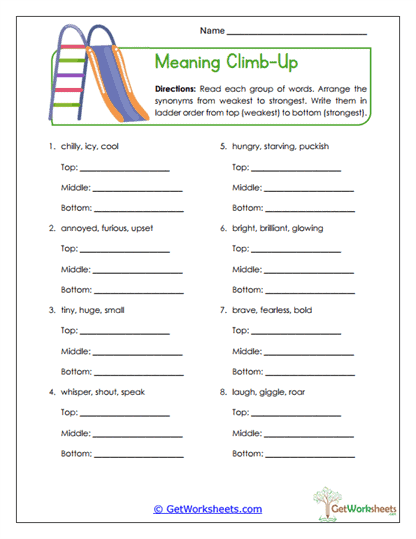
Meaning Climb-Up - Ordering Synonyms by Strength
Students arrange similar words based on their intensity, learning to notice subtle differences in meaning. This task encourages deeper thinking about how words compare and contrast. By evaluating word strength, learners develop more precise vocabulary skills. It helps them choose words more carefully when expressing ideas.
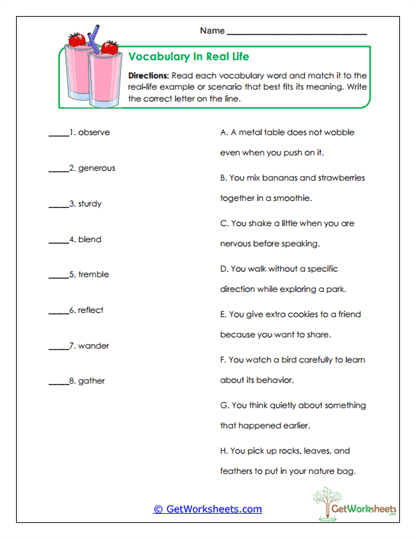
Vocabulary in Real Life - Applying Word Meaning
This worksheet connects vocabulary words to real-world situations, helping students see how language is used beyond the classroom. Learners match words to scenarios that clearly demonstrate their meanings. The activity strengthens comprehension by making vocabulary more relevant and practical. It also helps students remember words more effectively.
Analogy Adventure - Understanding Word Relationships
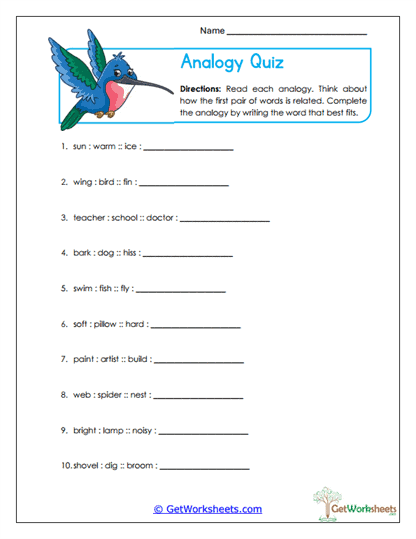
Students explore how pairs of words are related and apply that same relationship to new examples. This type of thinking builds strong reasoning and pattern recognition skills. It challenges learners to look beyond definitions and understand deeper connections. As a result, students become more thoughtful and analytical readers.
Definition to Word - Vocabulary and Meaning Mastery
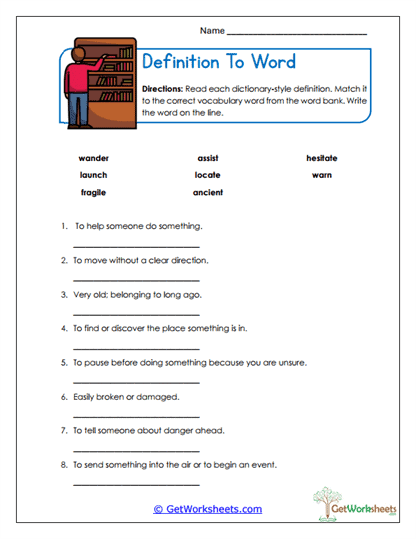
Learners match clear, dictionary-style definitions to the correct vocabulary words. This activity helps students focus on precise meanings and key details within each definition. It strengthens comprehension by encouraging careful reading and comparison. Over time, students improve their ability to understand and use academic vocabulary.
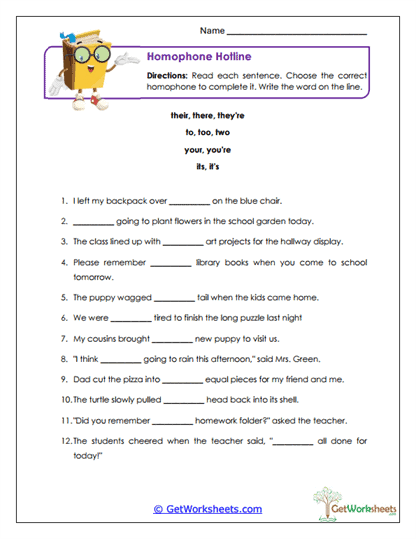
Homophone Hotline - Understanding Sound-Alike Words
Students practice choosing the correct homophone based on sentence meaning, improving both spelling and comprehension. By focusing on commonly confused words, they learn to pay closer attention to context. This activity reinforces accurate word usage in writing. It also helps prevent common mistakes in everyday communication.
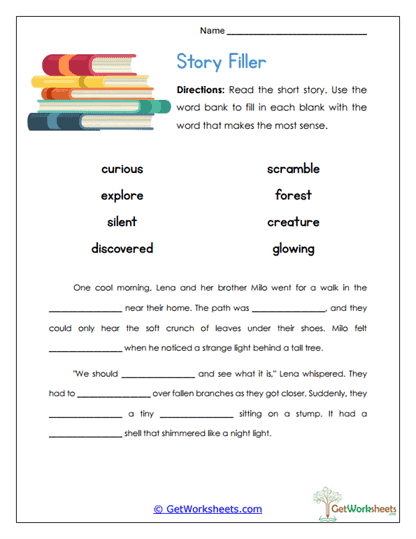
Story Builder - Vocabulary in Context Writing
Students complete a short story by selecting the best words from a provided word bank. This activity combines reading comprehension with creative thinking as learners build a logical and engaging narrative. It encourages them to consider how vocabulary fits within a larger context. As they work, students strengthen both their reading and writing skills.
Bookmark Us Now!
New, high-quality worksheets are added every week! Do not miss out!