Grade 12 Vocabulary Worksheets
About This Worksheet Collection
This Grade 12 vocabulary worksheet collection is designed to challenge students with advanced language tasks that reflect real academic and professional expectations. Each activity encourages learners to think critically about word choice, tone, and meaning while engaging with complex ideas. The variety of worksheets supports both independent practice and classroom instruction, making it easy to build deeper language skills in meaningful ways.
As students work through this collection, they develop precision in vocabulary, strengthen analytical reading abilities, and refine their writing for clarity and purpose. The tasks promote careful reasoning, thoughtful revision, and a deeper understanding of how language shapes communication. These experiences help students prepare for college-level work and real-world situations where strong, accurate language use is essential.
Detailed Descriptions Of These Worksheets
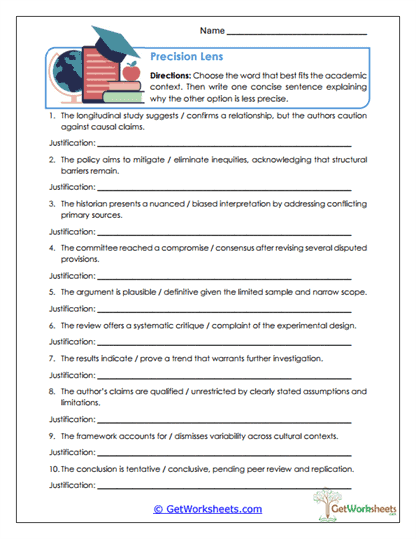
Precision Lens - Academic Word Choice & Justification
Students examine closely related words and decide which option best fits a given context. They must also explain their reasoning, which encourages deeper thinking about meaning and usage. This activity builds strong habits around precision and clarity in academic language. It helps learners become more confident when making careful word choices in writing.
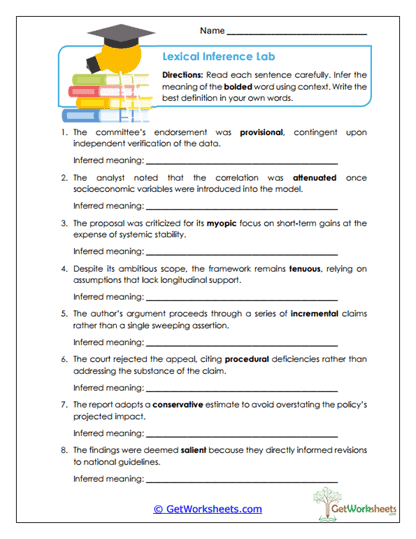
Lexical Inference Lab - Context-Based Vocabulary Analysis
Learners read complex sentences and determine the meaning of unfamiliar words using surrounding clues. They explain how they arrived at their conclusions, strengthening both comprehension and reasoning. This process encourages active engagement with challenging texts. It also builds confidence when encountering new vocabulary independently.
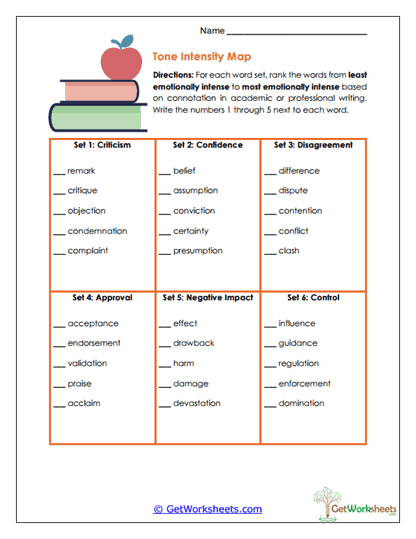
Tone Intensity Map - Connotation & Strength of Language
Students compare related words and rank them based on emotional strength and tone. This helps them notice subtle differences in how language can affect meaning. The activity encourages thoughtful evaluation of word choice in both reading and writing. It also supports more intentional communication by sharpening tone awareness.
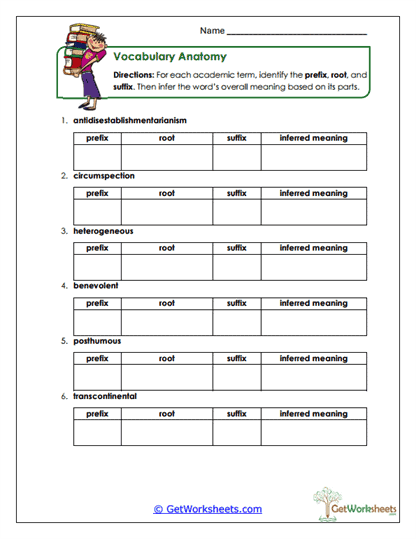
Vocabulary Anatomy - Word Structure & Meaning Analysis
This worksheet guides students in breaking down complex words into meaningful parts such as prefixes, roots, and suffixes. By analyzing structure, learners infer definitions and deepen their understanding of advanced vocabulary. The process supports independent decoding of unfamiliar terms. It also builds long-term retention of academic language.
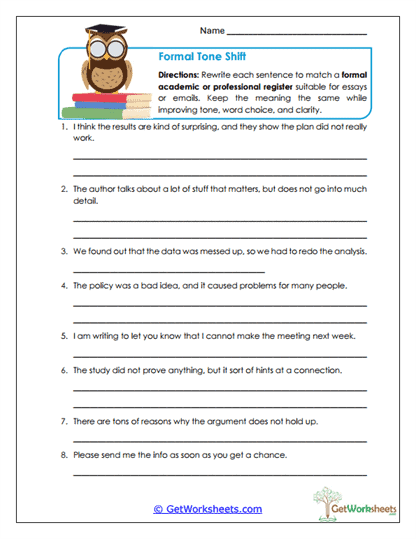
Formal Tone Shift - Academic Writing Revision
Students revise informal sentences to create more polished and academically appropriate versions. This task emphasizes clarity, structure, and precise wording. Learners practice refining their writing without changing the original meaning. It helps them develop a stronger and more professional writing style.
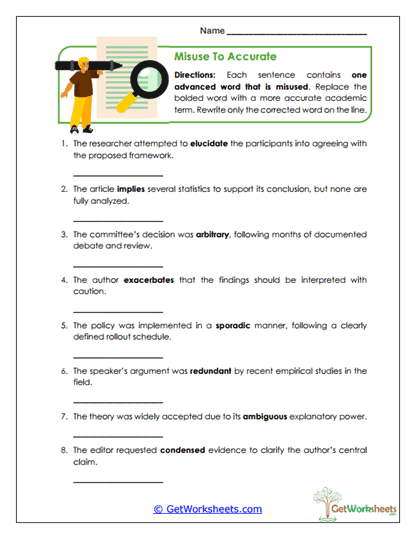
Misuse to Accurate - Advanced Vocabulary Correction
Students identify incorrectly used vocabulary words and replace them with better choices. This activity requires careful attention to context and meaning. It helps learners recognize common mistakes and avoid them in their own writing. Over time, it builds accuracy and confidence with advanced language.
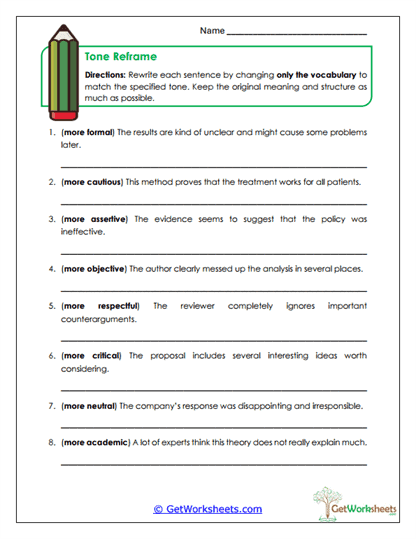
Tone Reframe - Adjusting Voice & Style
Learners rewrite sentences to match specific tones such as formal, neutral, or persuasive. This encourages flexibility in writing and a deeper understanding of audience expectations. Students practice adjusting language while keeping ideas consistent. It's a useful way to strengthen control over voice and style.
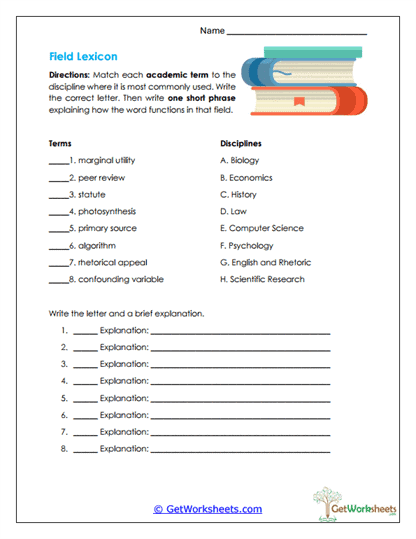
Field Lexicon - Academic Vocabulary Across Disciplines
Students explore how vocabulary changes depending on the subject area in which it is used. They match terms to disciplines and explain how each word functions in context. This activity promotes cross-curricular understanding and deeper thinking about meaning. It helps learners connect language skills to a variety of academic fields.
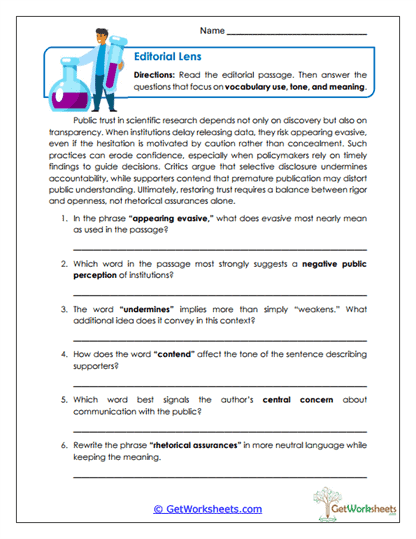
Editorial Lens - Analyzing Language & Author Perspective
Students read an editorial passage and examine how word choice reflects the author's tone and viewpoint. They support their ideas with evidence from the text. This activity builds strong analytical reading skills and encourages thoughtful interpretation. It also prepares students for advanced discussion and writing tasks.
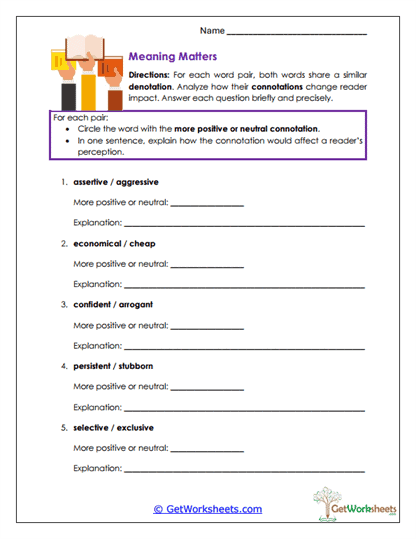
Meaning Matters - Connotation & Word Choice Precision
Learners compare words with similar definitions and evaluate how each one shapes meaning and tone. They consider how different choices affect a reader's perception. This encourages careful thinking about language and its impact. It also supports more effective and intentional writing.
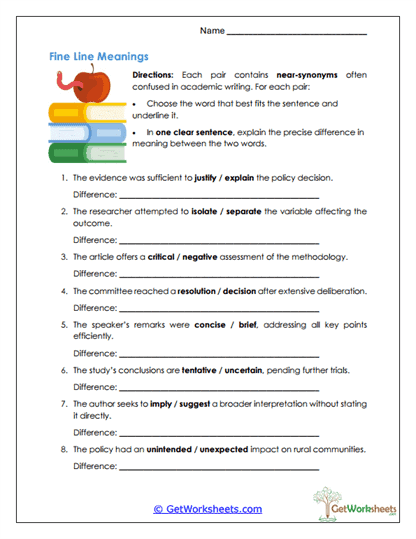
Fine Line Meanings - Distinguishing Near-Synonyms
Students choose between closely related words and explain the difference in meaning. This process strengthens understanding of nuance and precise usage. It encourages learners to think carefully about how small differences can change a sentence. The activity supports clearer and more accurate communication.
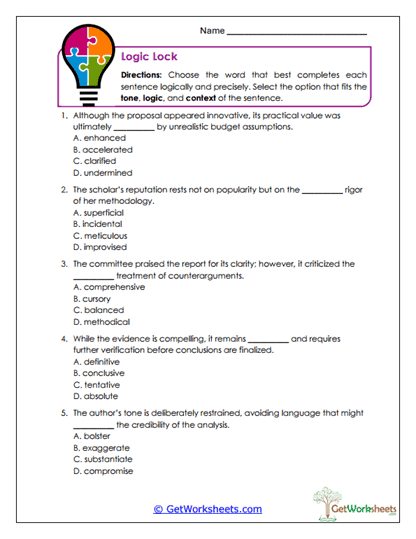
Logic Lock - Advanced Sentence Completion & Reasoning
Students complete sentences by selecting the word that best fits based on logic and tone. This task requires careful analysis of context and meaning. It mirrors the type of thinking needed for advanced assessments. As a result, learners build both reasoning skills and confidence with complex vocabulary.
Bookmark Us Now!
New, high-quality worksheets are added every week! Do not miss out!