Grade 11 Reading Comprehension Worksheets
About This Worksheet Collection
The Grade 11 Reading Comprehension collection offers advanced literary and informational texts designed to prepare high school students for college-level analysis and discussion. Each worksheet blends close reading with critical thinking, guiding learners to evaluate arguments, interpret symbolism, and connect literature to history, culture, and modern issues. Students analyze tone, rhetorical devices, and thematic depth while citing evidence to support interpretations across genres such as speeches, essays, poetry, and fiction.
By working through this collection, learners refine their ability to read deeply, reason logically, and write persuasively. Activities encourage synthesis of ideas, emotional and cultural awareness, and connection between classic and contemporary voices. Whether interpreting rhetoric in historical speeches or exploring identity in modern narratives, students strengthen both comprehension and expression-building intellectual confidence and academic fluency for upper-level English studies.
Detailed Descriptions Of These Worksheets
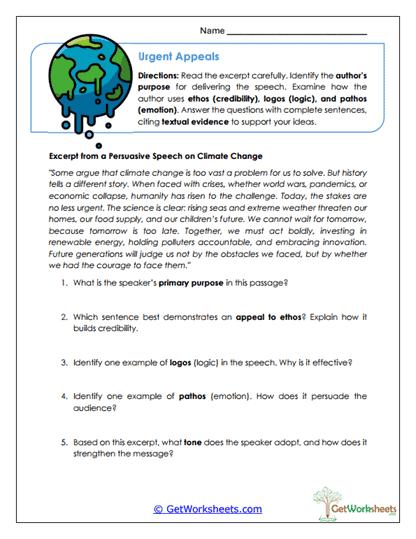
Climate Change Appeals
Students examine a persuasive passage on climate change, identifying ethos, pathos, and logos within the author's appeals. They evaluate the effectiveness of these techniques in shaping the audience's response. The worksheet develops rhetorical analysis, comprehension, and evidence-based reasoning skills.
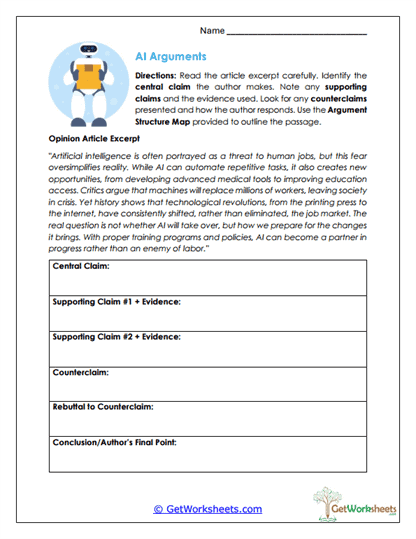
AI Argument Analysis
Learners analyze an opinion article about artificial intelligence and its impact on employment. They map claims, counterclaims, and rebuttals to assess logical flow and balance. This task builds critical thinking, argument organization, and understanding of bias in modern informational texts.
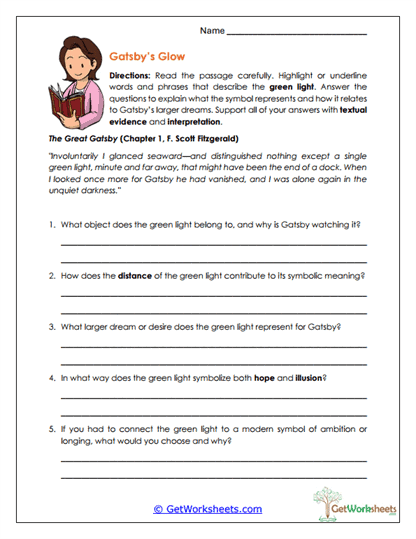
Gatsby's Green Light
Students perform close reading of The Great Gatsby, interpreting the symbolism of the green light as it relates to ambition and illusion. They use textual evidence to connect the symbol to broader themes of hope and longing. The exercise deepens appreciation of classic literature and symbolism.
Renewable Energy Evidence
This worksheet guides students in evaluating a persuasive essay about renewable energy. They analyze claims and counterarguments, determining credibility and sufficiency of evidence. It reinforces informational text comprehension and environmental awareness through argument evaluation.
Mortality in Poetry
Students compare Emily Dickinson's "Because I Could Not Stop for Death" with David M. Romano's "When Tomorrow Starts Without Me." They analyze tone, figurative language, and emotional perspective to explore contrasting views of mortality. The task builds literary comparison and interpretive depth.
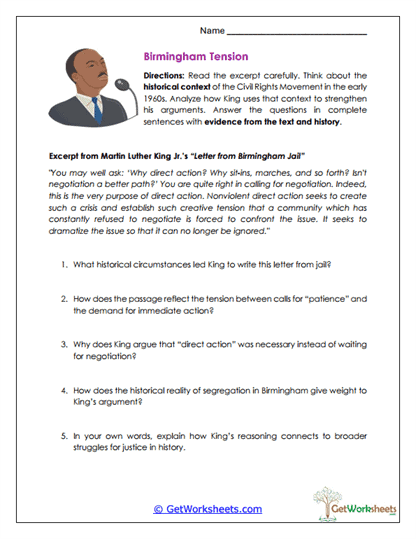
Birmingham Letter Analysis
Learners study an excerpt from Martin Luther King Jr.'s "Letter from Birmingham Jail" to understand its historical context and rhetorical strategy. They examine justice, patience, and action as interconnected themes. The activity integrates critical reading with civic and historical understanding.
Poe's Tone and Mood
Through a close study of Edgar Allan Poe's "The Raven," students identify tone words and analyze how sound devices create mood. They evaluate the poem's rhythm and diction to explain its emotional intensity. This worksheet strengthens literary vocabulary and interpretive precision.
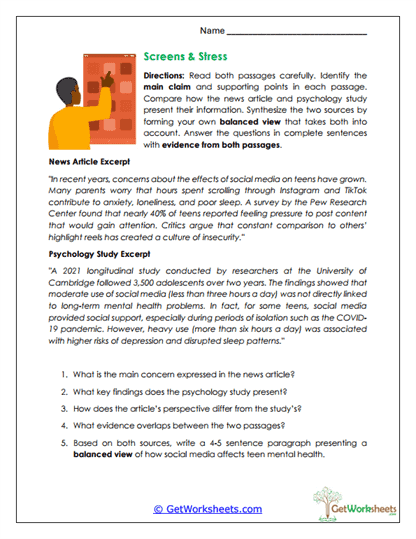
Media and Mental Health
Students read and synthesize a news article and a psychology study about social media's influence on mental well-being. They compare evidence, write a balanced paragraph, and integrate both viewpoints. The activity enhances synthesis, informational reading, and evidence-based writing.
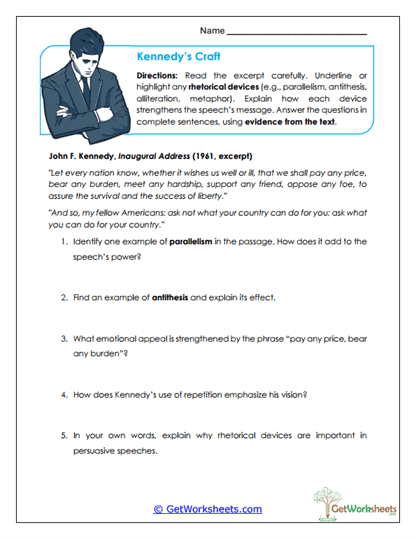
Kennedy's Rhetoric
Learners examine rhetorical devices in John F. Kennedy's 1961 inaugural address, including parallelism and repetition. They explain how these choices unify the message and inspire action. This exercise promotes historical literacy and AP-style rhetorical analysis.
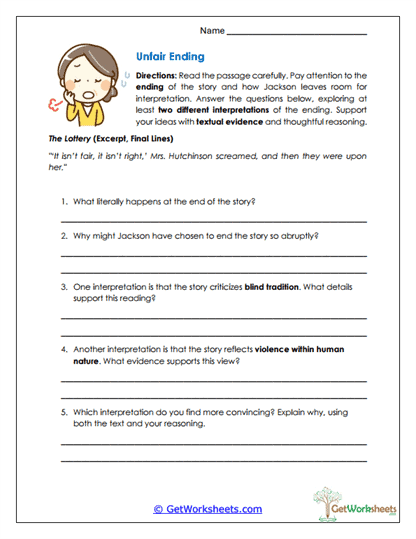
Literary Endings
Students analyze Shirley Jackson's "The Lottery," focusing on its unsettling conclusion. They interpret themes of conformity, violence, and human nature using text-based reasoning. The worksheet encourages critical thought and discussion of authorial purpose and symbolism.
Technology and Loneliness
In this reflective writing task, students evaluate an essay about digital connection and isolation. They write a personal paragraph linking the author's claim to their own experiences. The exercise fosters self-awareness, evidence-based reasoning, and analysis of modern relationships.
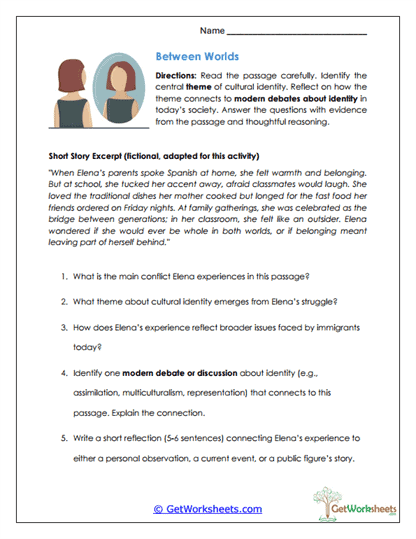
Cultural Identity Conflict
Learners read a fictional excerpt about Elena balancing two cultures and analyze themes of belonging and identity. They connect her experiences to contemporary issues of assimilation and representation. This activity builds empathy, thematic interpretation, and reflective writing.
Bookmark Us Now!
New, high-quality worksheets are added every week! Do not miss out!