Division on a Number Line Worksheets
-
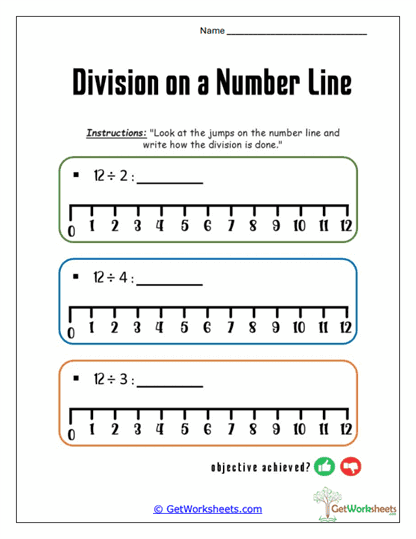
Analyzed Jumps
-
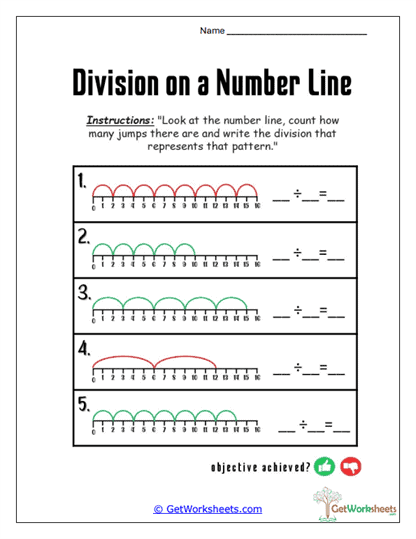
Color-Coded Division Models
-
Dividing Interpretations
-

-
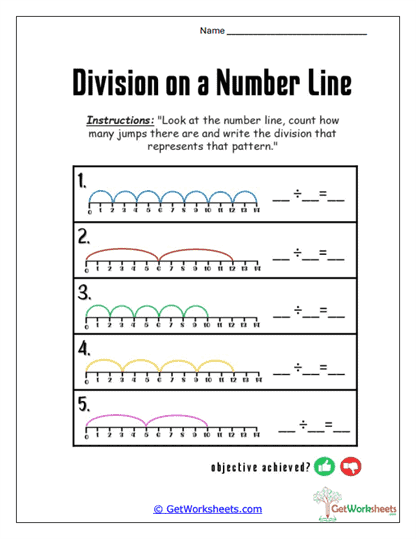
Dividing Lines Identification
-
Equal Steps Separation
-
Interpret and Section
-
Jump Counting for Division
-
Jump Pattern Dissolution
-
Jump-and-Count Fragments
-
Jumps for Distribution
-
Number Line Disunions
-
Number Line Division Jumps
-
Repeated Jumps
-
Visual Dividing Interpretation
-
Visual Segmentation
About This Worksheet Collection
This Division on a Number Line collection gives students a highly visual and intuitive pathway into understanding division. By drawing or interpreting equal jumps on number lines, learners see division unfold as repeated subtraction and equal-step grouping, helping them grasp the "why" behind division before relying on abstract algorithms. The worksheets move gradually from modeling jumps to analyzing pre-drawn number line representations, offering a smooth transition from concrete visuals to symbolic equations.
Through these tasks, students strengthen number sense, develop fluency with equal groups, and build confidence in recognizing how the divisor, quotient, and total relate. They learn to interpret math visually, translate patterns into equations, and compare how changing the divisor affects the number of jumps. This collection prepares learners for more advanced division by grounding the concept in accessible, meaningful visual models.
Detailed Descriptions Of These Worksheets
Number Line Division Jumps
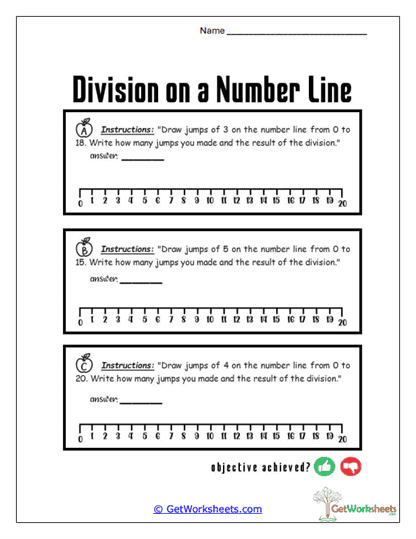
Students draw equal jumps on number lines to model division, counting each jump to find the quotient. This visual approach helps them understand division as repeated subtraction and equal grouping. The clear format supports early learners who need concrete representations. It encourages strong conceptual grounding before moving to abstract notation.
Repeated Jumps on a Number Line
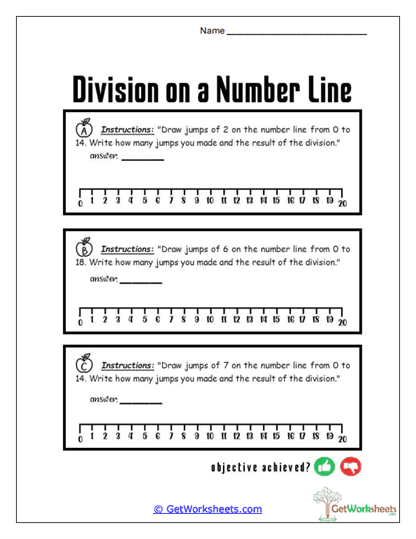
This worksheet guides students through drawing jumps of 2, 6, or 7 until they reach each endpoint. Learners then record the number of jumps and connect the visual model to the quotient. The activity reinforces partitioning numbers into equal steps. It strengthens number sense and supports hands-on division understanding.
Jump-and-Count Fragments
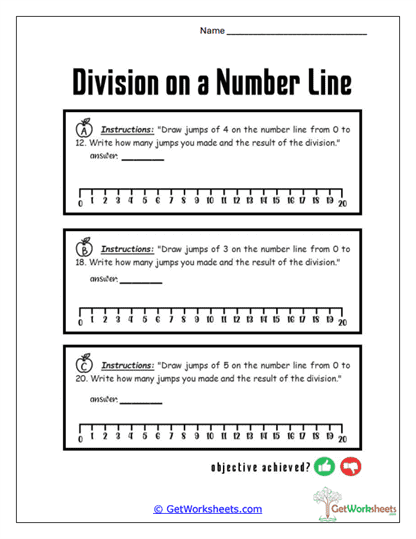
Students work with number lines labeled for divisors 4, 3, and 5, diagramming equal jumps until they reach the final number. They count the jumps to determine the quotient, reinforcing early division modeling skills. The repetition helps students transition from visual demonstrations to symbolic computation. It serves well as either an introduction or review.
Visual Segmentation
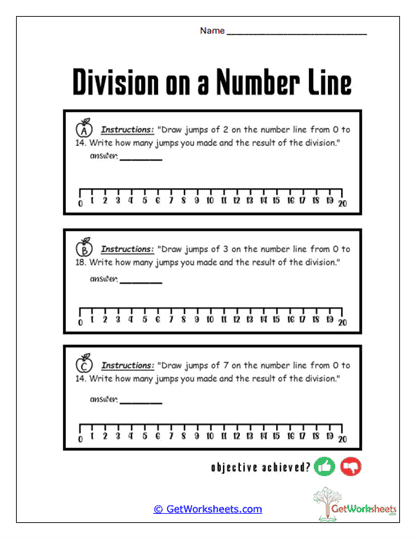
Using number lines, students model division with divisors of 2, 3, and 7 by drawing equal jumps. They practice counting jumps and connecting that number to the quotient. The hands-on structure reinforces grouping concepts and builds counting fluency. It's excellent for foundational division development.
Equal Steps Separation
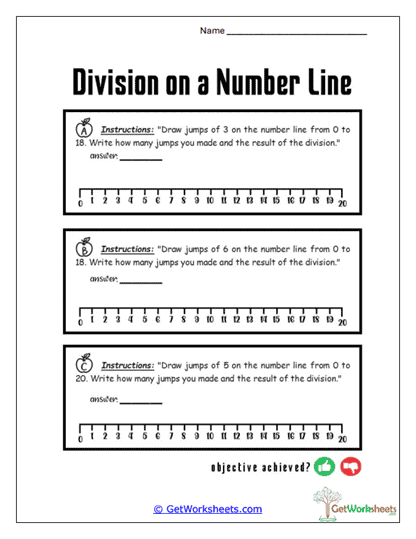
This worksheet asks students to make equal jumps of 3, 6, and 5 to model different division problems. They count the jumps and write the quotient to show their understanding. Working through multiple scenarios strengthens recognition of repeated-step patterns. The format deepens number sense and conceptual fluency.
Analyze Number Line Jumps
Students study pre-drawn number lines and determine which division equations they represent. They analyze the number and size of jumps to infer both divisor and quotient. This task builds skills in connecting visual models to symbolic expressions. It promotes analytical thinking and strengthens model interpretation.
Interpret and Section
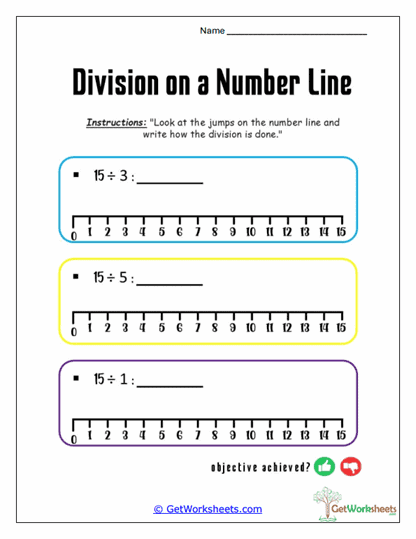
Learners examine number lines already marked with jumps and write the matching division equations. They analyze step size, spacing, and the total length to decode each problem. The activity supports the transition from concrete modeling to abstract reasoning. It enhances pattern recognition and conceptual understanding.
Number Line Disunions
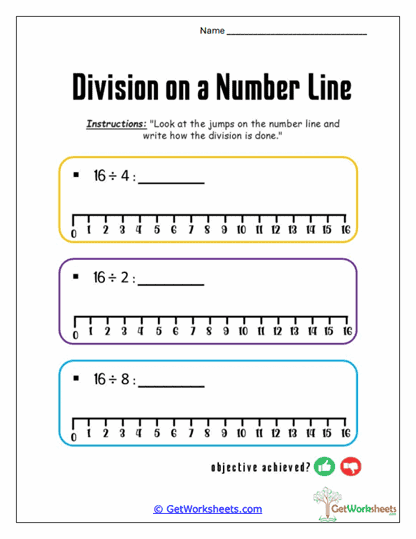
Students interpret number lines representing problems like 16 ÷ 4 or 16 ÷ 8, observing how the same dividend behaves with different divisors. They connect the number of jumps to the quotient and explore relationships between divisor size and group count. This strengthens equal-group reasoning and operational insight. It reinforces visual fluency with division.
Jump Counting for Division
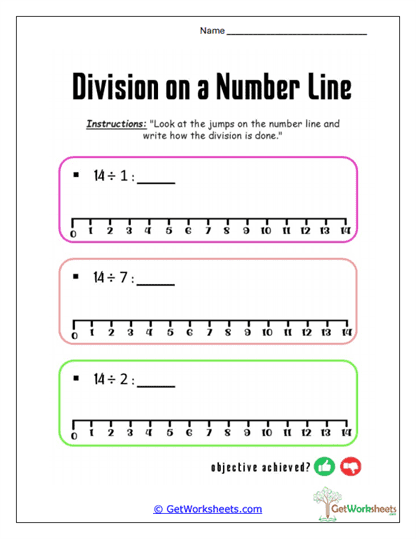
Learners analyze number lines for division problems such as 14 ÷ 1 and 14 ÷ 7, comparing how the number of jumps differs. The worksheet highlights the relationship between group size and number of groups. Students develop deeper understanding of division mechanics through visual processing. It supports strong foundational reasoning.
Dividing Interpretation on Number Lines
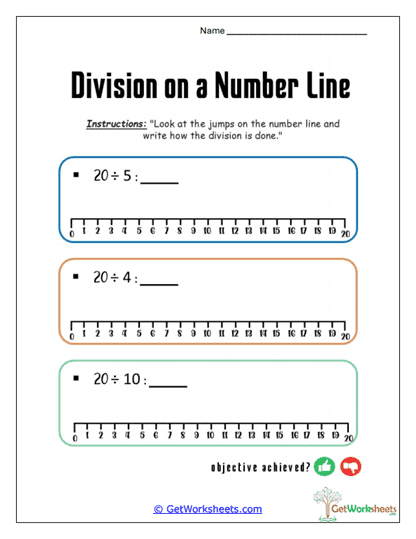
Students examine number lines representing 20 divided by different divisors. They interpret the jumps and write the corresponding quotients, noting how changing the divisor alters the number of jumps. This comparison builds conceptual strength and prepares learners for abstract division. The task encourages clear visual-to-symbolic translation.
Jumps for Distribution
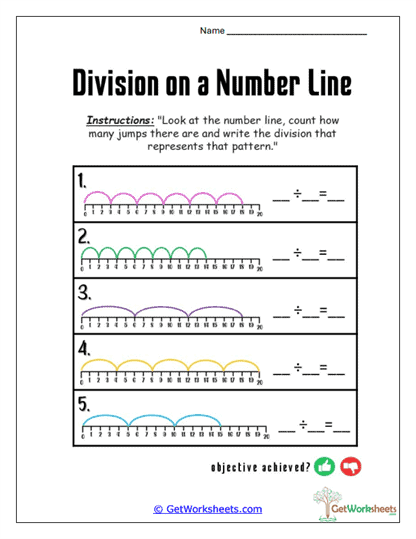
Learners count pre-drawn equal jumps on number lines and write division equations that match each model. This reinforces division as repeated subtraction and helps solidify the meaning of equal groups. Students analyze both total value and step size to construct accurate equations. It supports conceptual clarity and mathematical reasoning.
Visual Dividing Interpretation
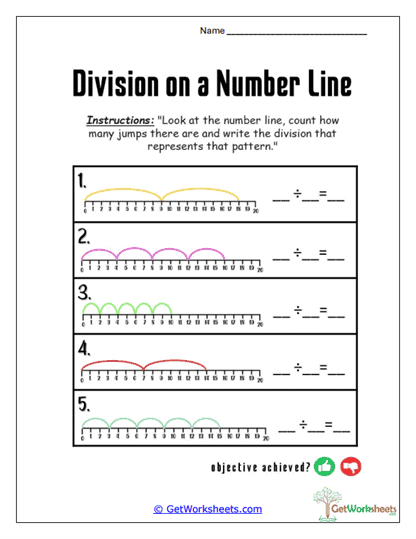
Students examine color-coded number line jumps to identify the divisor, total, and quotient for each model. The color differentiation aids visual processing and supports pattern recognition. Learners translate each representation into division expressions, strengthening understanding of equal groups. This worksheet bridges concrete reasoning and more abstract division thinking.
Jump Pattern Dissolution
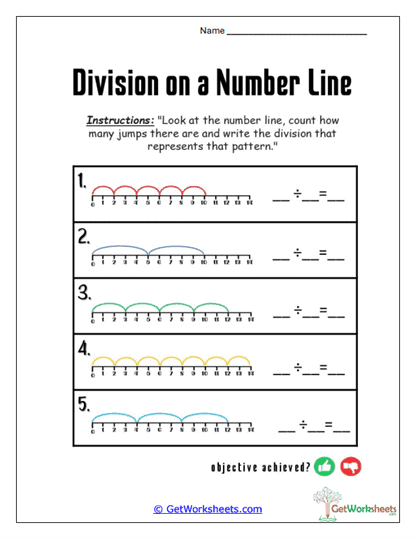
Students count equal jump patterns to determine which division equations they represent. Each pattern reveals both divisor and quotient through step size and frequency. This activity deepens understanding of repeated addition as a model for division. It encourages flexible thinking and connection-making between visuals and equations.
Dividing Lines Identification
Learners interpret number line models showing equal jumps and write the division equations each represents. They identify the total, group size, and number of groups, reinforcing core division structure. The activity sharpens visual reasoning and strengthens number sense. It supports conceptual mastery through clear visual modeling.
Color-Coded Division Models
Students analyze color-coded number line jumps to form matching division sentences. The visual distinction of jumps enhances comprehension of repeated sequences. Learners count groups and identify jump sizes to determine both divisor and quotient. This worksheet offers structured, engaging practice that supports early division mastery.
Bookmark Us Now!
New, high-quality worksheets are added every week! Do not miss out!