ChatGPT Activities Worksheets
-
AI Conversation Practice
-
AI Ethics Discussion
-
AI Fact Checking
-
-
AI Quiz Creation
-
AI Reflection Journal

-
AI Vocabulary Development
-
Audience Awareness Practice
-
ChatGPT in the Classroom
-
ChatGPT Introduction
-
Creative AI Writing
-
Exploring AI Uses
-
Grade 1 – Curiosity and Questioning
-
Grade 10 – Designing the Future
-
Grade 11 – Philosophy and Perspective
-
Grade 12 – Structured Debate
-
Grade 2 – Rhyming and Word Play
-
Grade 3 – Country Exploration
-
Grade 4 – Collaborative Story Writing
-
Grade 5 – Writing Feedback Practice
-
Grade 6 – Myth vs. Reality Research
-
Grade 7 – Fact Checking and Evidence
-
Grade 8 – Alternate History Analysis
-
Grade 9 – Bias and Perspective
-
Prompt Writing Practice
About This Worksheet Collection
The ChatGPT Classroom Activities collection equips students and teachers with practical, ready-to-use tasks that make AI a thoughtful partner in learning. From foundational introductions to advanced discussion and debate, these worksheets translate complex technology into approachable, classroom-friendly experiences. Each activity emphasizes clarity, safety, and purposeful use, helping learners explore where AI can support brainstorming, research, writing, and reflection-while keeping human judgment at the center.
As students progress, they develop core literacy and communication skills alongside digital citizenship and critical evaluation. They learn to design effective prompts, scrutinize evidence, adapt language for audience, and reflect ethically on AI's role in school and society. The result is a coherent pathway that blends creativity with responsibility, empowering learners to use AI tools with precision, curiosity, and care.
Detailed Descriptions Of These Worksheets
ChatGPT Introduction
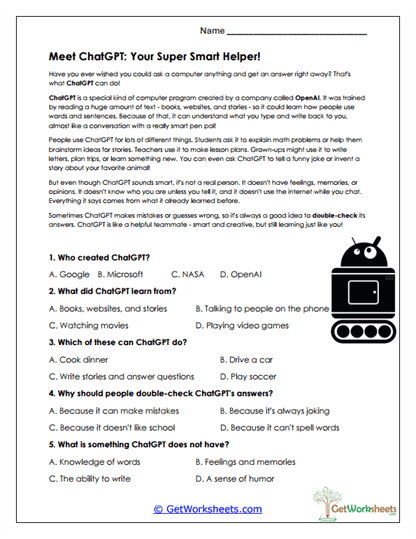
Students get acquainted with ChatGPT's core capabilities through guided questions and visual prompts. They match everyday tasks to appropriate AI uses and reflect on responsible, effective practice. The worksheet builds digital literacy while strengthening reading comprehension and written explanation.
Exploring AI Uses
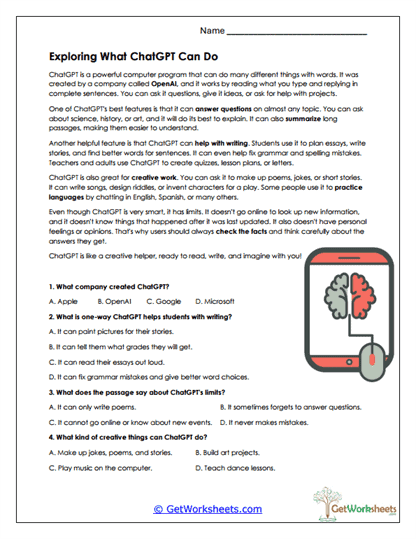
Learners examine real examples of AI-supported tasks and sort them by subject or academic purpose. They compare scenarios to decide when AI enhances learning-and when it doesn't. Through discussion and categorization, students practice critical thinking and build a framework for ethical, subject-aligned use. The activity nurtures digital citizenship grounded in thoughtful decision-making.
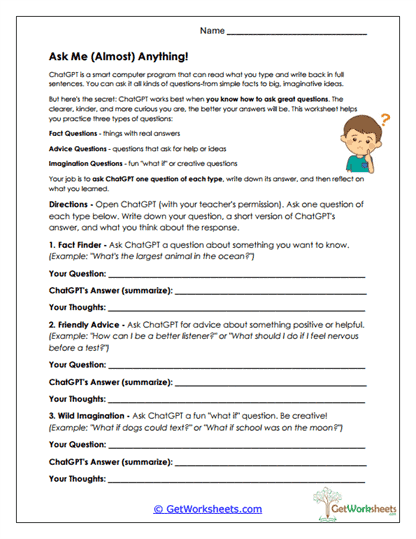
Prompt Writing Practice
This lesson shows how clear, specific prompts lead to stronger AI responses. Students analyze weak prompts, revise them, and craft goal-focused instructions. They practice sequencing information, sharpening intent, and anticipating outcomes. By the end, learners can design prompts that reliably support academic and creative work.
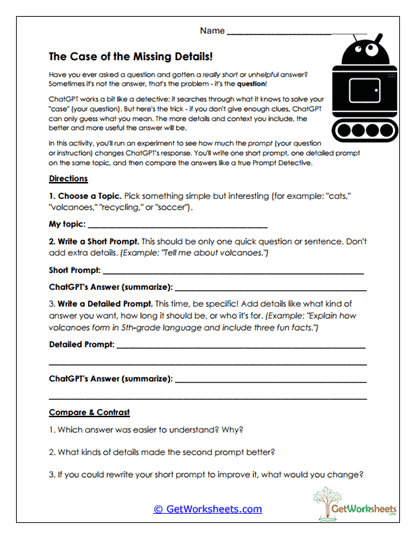
AI Ethics Discussion
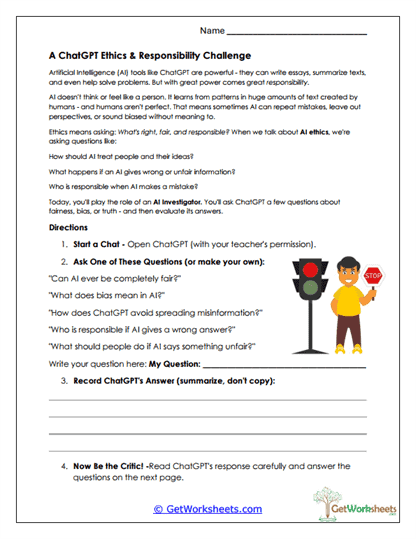
Students investigate fairness, accuracy, privacy, and responsibility through real-world vignettes. They evaluate each scenario, articulate a position, and justify it with reasons and examples. The worksheet blends civic awareness with technology literacy. It invites respectful dialogue and principled decision-making.
ChatGPT in the Classroom
Using authentic school scenarios, students identify when ChatGPT can assist with brainstorming, summarizing, or clarifying concepts. They match examples to appropriate learning tasks and reflect on boundaries and best practices. The activity promotes metacognitive thinking about tools and strategies. It reinforces the idea that AI complements-not replaces-human learning.
AI Vocabulary Development
Learners build foundational terminology for discussing AI and ChatGPT. They match words to definitions, use terms in context, and talk through meaning nuances. The worksheet supports precise academic language and concept mastery. It prepares students for informed conversation and reading across technology topics.
Creative AI Writing
Students generate ideas with ChatGPT to spark plots, dialogue, or descriptive details, then draft and revise their own pieces. They compare AI suggestions to their voice and make choices that improve style and coherence. The activity highlights creativity, ownership, and revision. It models AI as a springboard-not a substitute-for original writing.
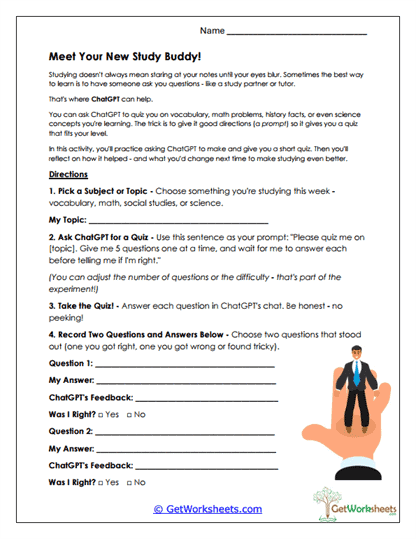
AI Fact Checking
In short case studies, students decide whether AI outputs are factual, opinion-based, or misleading. They use credible sources to confirm or correct information and explain their reasoning. The task develops verification habits and source evaluation. It strengthens research discipline and academic integrity.
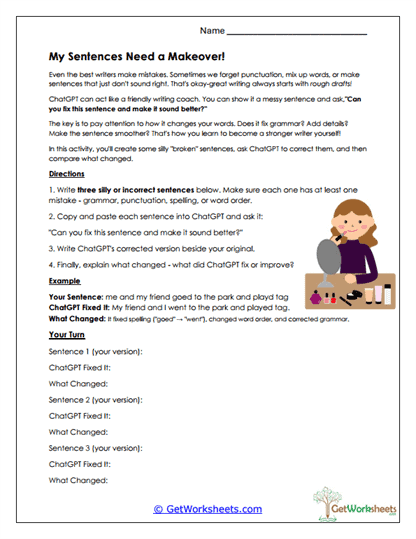
AI Conversation Practice
Students plan and script mini-dialogues with ChatGPT to explore tone, clarity, and follow-up questioning. They observe how phrasing shapes responses and iterate to improve outcomes. The exercise builds communication etiquette and adaptive thinking. Learners connect audience needs to language choices.
AI Reflection Journal
Serving as a capstone, this journal prompts students to synthesize what they've learned about AI across the unit. They reflect on challenges, breakthroughs, and ethical takeaways, tying insights to classroom applications. The activity cultivates self-awareness and long-term responsibility.
Audience Awareness Practice
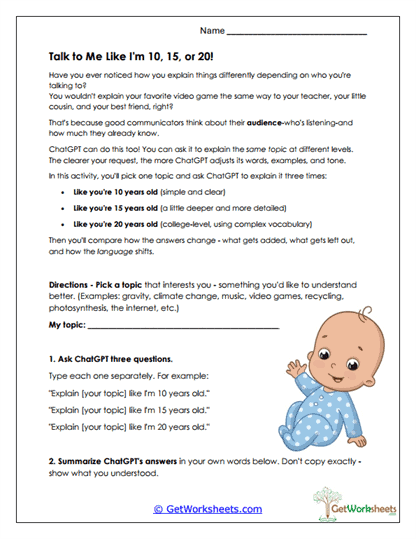
Students request explanations of the same topic for audiences of different ages, then analyze how vocabulary, detail, and tone shift. They summarize patterns and evaluate which choices best fit each reader. The worksheet sharpens audience analysis and purposeful communication. It reinforces concise paraphrasing and style control.
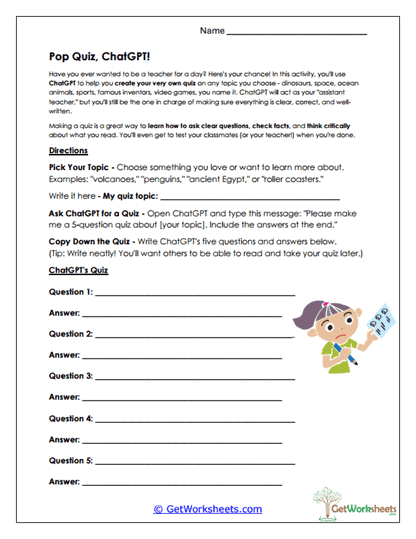
AI Quiz Creation
Acting as teachers, students use ChatGPT to draft a short quiz and then refine questions for clarity and accuracy. They check answers, adjust difficulty, and organize the final set. The process deepens content understanding and metacognition. It also models quality control when adapting AI-generated materials.
Grade 1 - Curiosity and Questioning
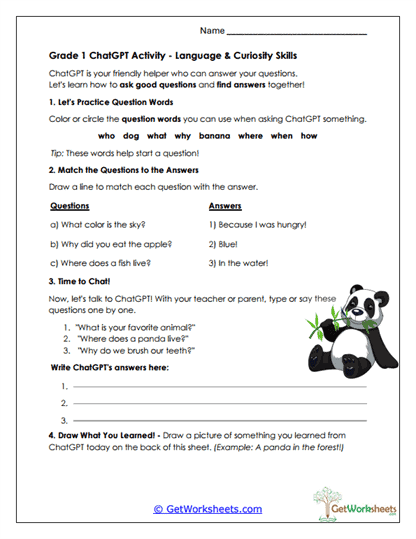
Young learners practice simple question words and safely ask ChatGPT guided questions. They connect answers to drawings or short labels to show understanding. The activity fosters inquiry, vocabulary growth, and responsible first steps with digital tools.
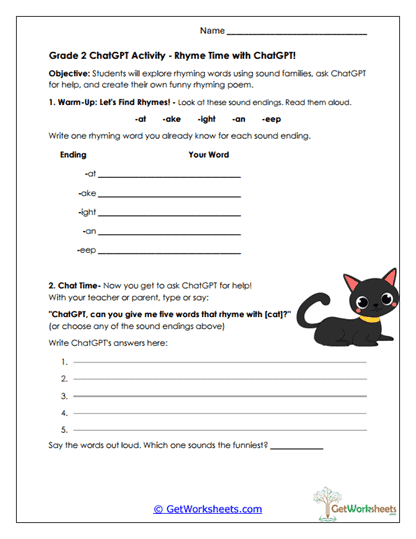
Grade 2 - Rhyming and Word Play
Students explore rhymes by listing known pairs and discovering new ones with ChatGPT's help. They compare sound patterns and choose favorites for creative mini-lines. The worksheet supports phonological awareness and playful language practice. It encourages listening, patterning, and confidence with words.
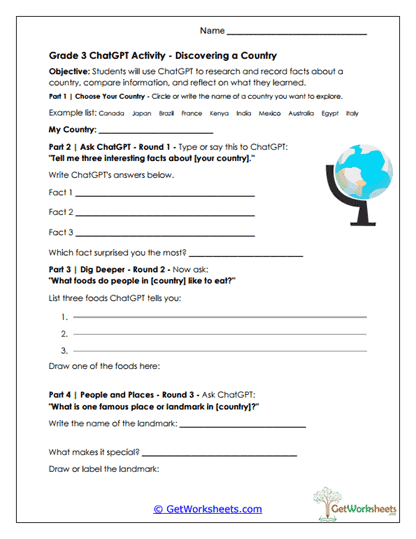
Grade 3 - Country Exploration
Learners research a country's culture, foods, and landmarks using structured prompts. They record facts, sketch an emblem or site, and note one surprising discovery. The activity blends geography, reading, and responsible digital research. It emphasizes clear note-taking and synthesis.
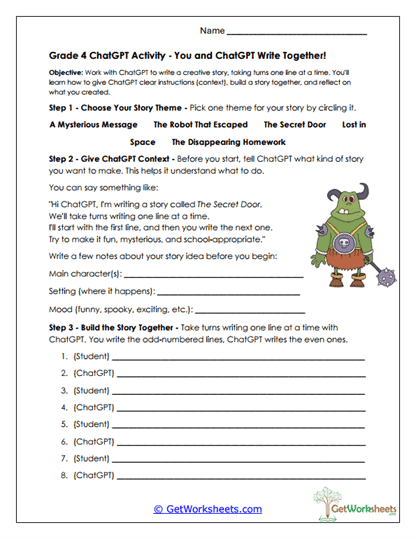
Grade 4 - Collaborative Story Writing
Students co-author a narrative by alternating sentences with ChatGPT after planning character, setting, and mood. They monitor plot flow, revise for voice, and add descriptive detail. The experience highlights collaboration and control over tone. It strengthens narrative craft and sequencing.
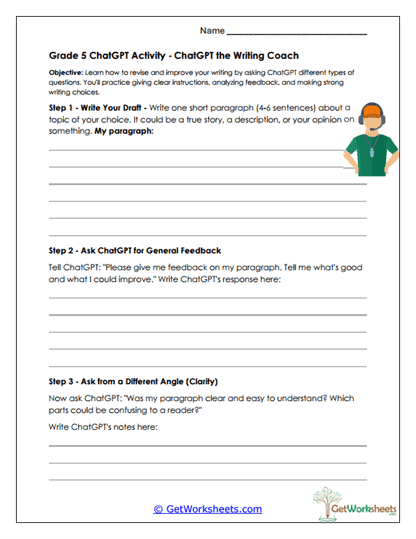
Grade 5 - Writing Feedback Practice
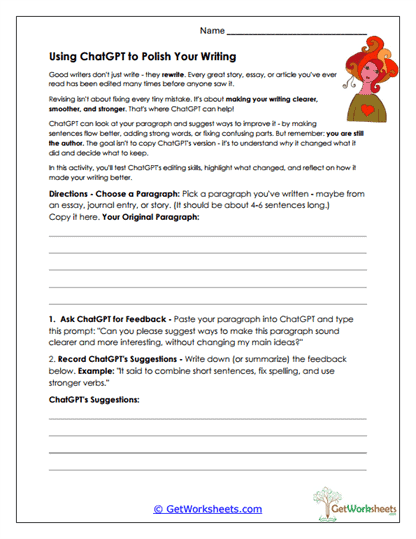
Students compose a paragraph and request targeted feedback from ChatGPT, then evaluate which suggestions to adopt. They revise for clarity, organization, and precision. The worksheet teaches reflective editing and writerly ownership. It frames AI as a coach within a human-led process.
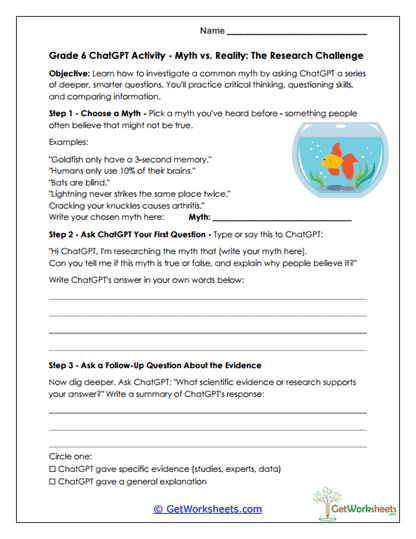
Grade 6 - Myth vs. Reality Research
Learners probe a common myth and ask evidence-seeking questions to test claims. They separate explanation from proof and cite reliable sources. The activity builds skepticism and scientific reasoning. It shows how verification elevates understanding beyond general statements.
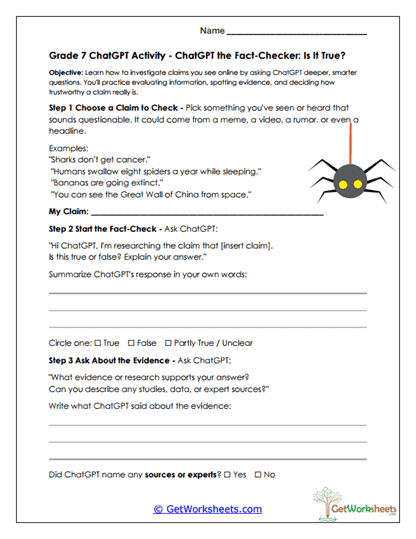
Grade 7 - Fact Checking and Evidence
Students select a questionable statement and examine how ChatGPT supports or fails to support it. They judge whether the claim is true, false, or uncertain and explain the status with sources. The task advances credibility analysis and argument evaluation. It develops disciplined habits of inquiry.
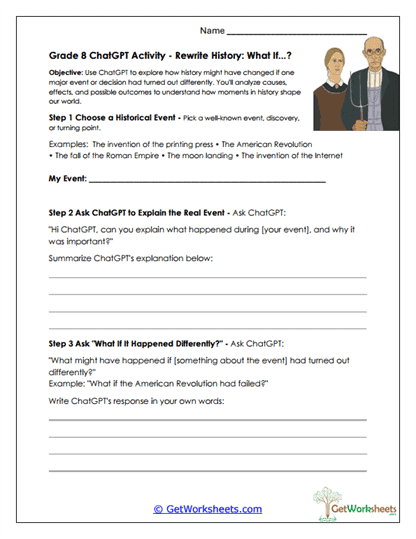
Grade 8 - Alternate History Analysis
After reviewing actual events, students ask a "what if" question and outline plausible ripple effects. They compare the real timeline to their alternate scenario and analyze consequences. The activity blends historical reasoning with creative speculation. It deepens cause-and-effect thinking.
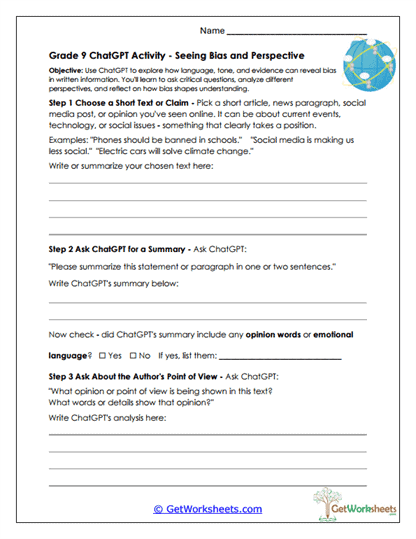
Grade 9 - Bias and Perspective
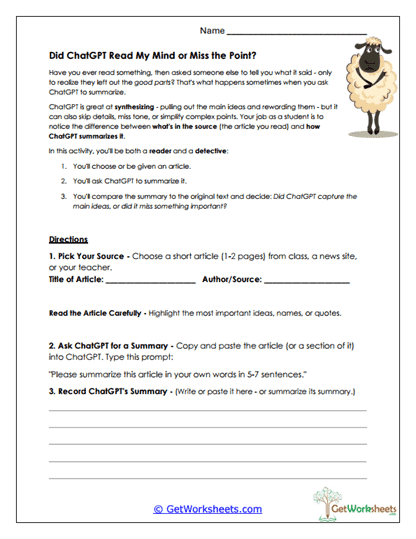
Students summarize a short passage with ChatGPT and inspect the summary for loaded language or slant. They identify the original author's viewpoint and contrast it with the AI's phrasing. The worksheet sharpens bias detection and paraphrase quality. It promotes mindful reading of media.
Grade 10 - Designing the Future
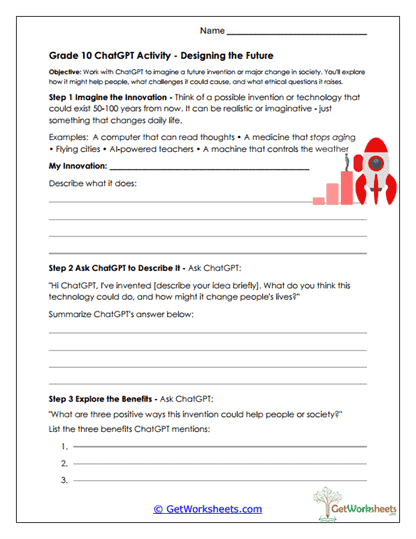
Learners imagine a new technology, describe its purpose, and explore potential impacts with AI-assisted brainstorming. They weigh benefits, risks, and social implications. The activity merges innovation with ethical reflection. It encourages systems thinking and clear exposition.
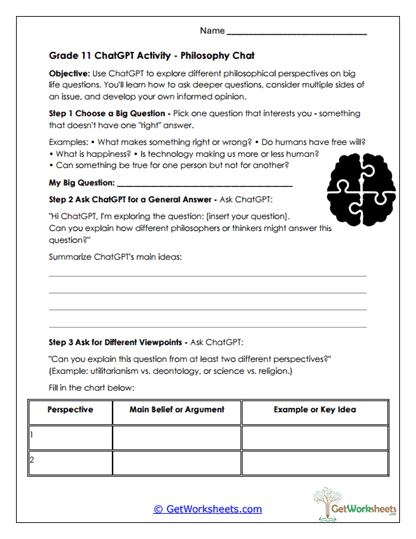
Grade 11 - Philosophy and Perspective
Students choose a "big question" and gather major viewpoints with ChatGPT's help, then classify positions and note examples. They compare reasoning styles and identify key assumptions. The worksheet builds comparative analysis and careful synthesis. It invites respectful engagement with abstract ideas.
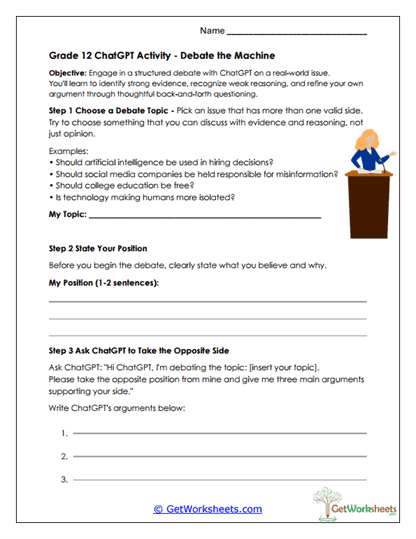
Grade 12 - Structured Debate
Students stage a formal exchange by taking one side and asking ChatGPT to articulate the counterposition. They evaluate rebuttals, refine claims, and integrate evidence. The activity elevates argumentation, logic, and civic discourse. It prepares learners for college-level reasoning and public dialogue.
Bookmark Us Now!
New, high-quality worksheets are added every week! Do not miss out!