Social Studies Worksheets
-
Age of Exploration
-
American Frontier and Wild West
-
American Revolution

-
-
Articles of Confederation
-
Boston Tea Party
-
Brown v. Board of Education
-
Civil Rights Movement
-
Colonialism and Imperialism
-
Colonial America
-
Declaration of Independence
-
Dred Scott Decision
-
Gettysburg Address
-
Globalization
-
Immigration and Ellis Island
-
Industrial Revolution
-
Industrialization and the Gilded Age
-
Jamestown Settlement
-
Lewis and Clark Expedition
-
Marbury v. Madison
-
Mayflower Compact
-
Missouri Compromise
-
Nationalism and Unification
-
Progressive Era
-
Prohibition Era
-
Reconstruction
-
Salem Witch Trials
-
The American Dream
-
The Cold War
-
World War I
-
World War II
Social Studies Worksheets Collection
Social Studies helps learners understand how people, events, and ideas have shaped the world they live in. This Social Studies Worksheets collection provides students with engaging activities that explore history, government, culture, and important turning points in the American story. Each worksheet is designed to bring complex topics to life through accessible explanations, guided questions, primary-source connections, and structured reflections.
Learners practice analyzing cause and effect, understanding historical context, interpreting key documents, and connecting past events to modern experiences. Through timelines, reading passages, comparison charts, and critical-thinking tasks, students gain confidence in their ability to make sense of historical developments. These resources support reading comprehension, civic understanding, and thoughtful analysis.
Educators and families can customize learning by exploring each of the subtopic collections below. Every topic focuses on a specific event, era, or foundational idea, making it simple to tailor lessons and build a cohesive Social Studies curriculum. Together, they help learners strengthen historical awareness and appreciate the rich complexity of America's past.
Subtopic Worksheet Collection Descriptions
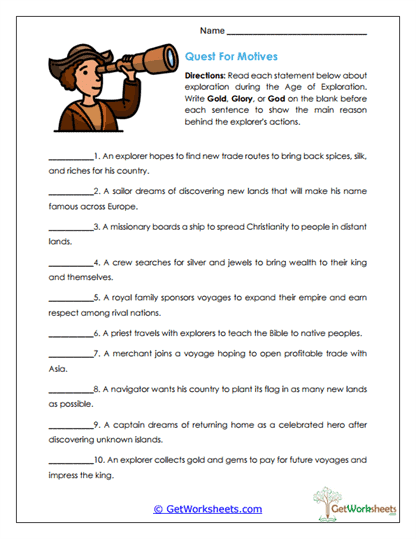
Explore the era when European explorers set out to discover new lands, trade routes, and riches. These worksheets cover key figures like Columbus, Magellan, and Vasco da Gama, along with the motivations behind exploration. Students will examine the impact of these journeys on indigenous peoples and global trade. Activities encourage critical thinking about cause, effect, and cultural exchange.
American Frontier and Wild West
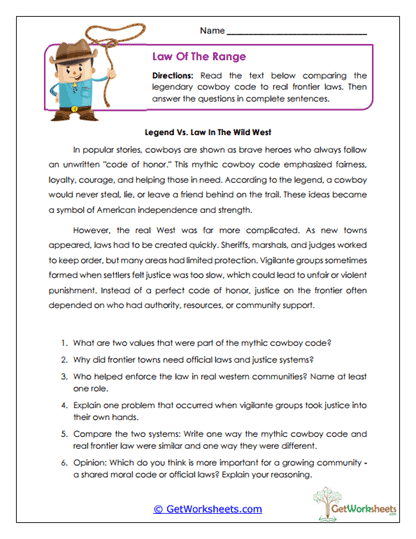
These worksheets explore life on the frontier, westward expansion, and cultural change. This builds understanding of exploration, conflict, and opportunity. It helps students see how expansion shaped communities and landscapes.
Students learn about major causes, battles, and figures of the American Revolution. This strengthens historical reasoning and chronological understanding. It helps learners appreciate the struggle for independence.
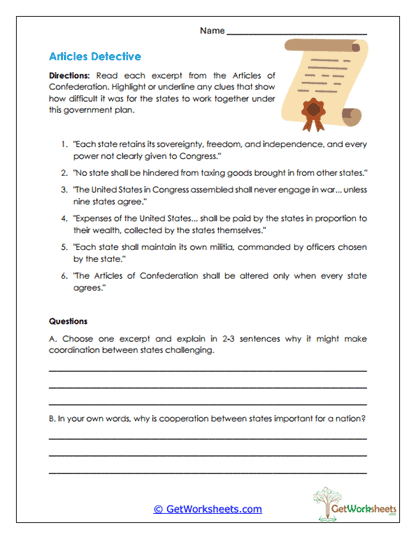
These worksheets introduce the first U.S. governing document and its limitations. This supports understanding of early government challenges. It helps students see why a stronger Constitution became necessary.
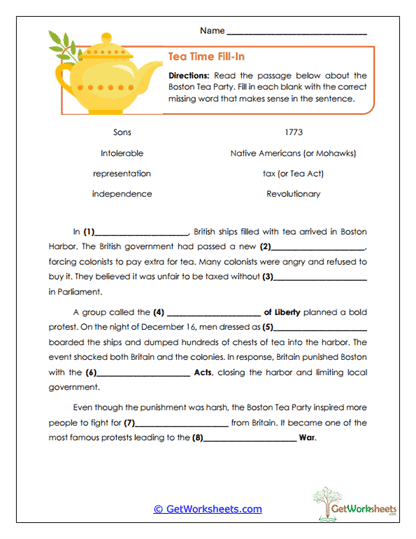
Learners examine the causes and significance of the Boston Tea Party. This encourages analysis of protest and political response. It helps students understand how resistance movements can influence change.
Students learn about the landmark Supreme Court case that ended legal segregation in public schools. This supports understanding of civil rights and equality. It encourages reflection on fairness and justice.
These worksheets highlight key events, leaders, and goals of the Civil Rights Movement. This builds historical awareness and empathy. It helps learners see how people work together for social change.
Dive into the expansion of empires and the global competition for land, resources, and power. This collection helps students understand how European nations established colonies and influenced regions across Africa, Asia, and the Americas. Worksheets highlight both the economic motives and the human consequences of imperial rule. Learners will analyze perspectives and long-term impacts on modern nations.
Students explore early settlements, daily life, and cultural interactions in Colonial America. This strengthens understanding of early U.S. history. It helps learners envision how communities developed.
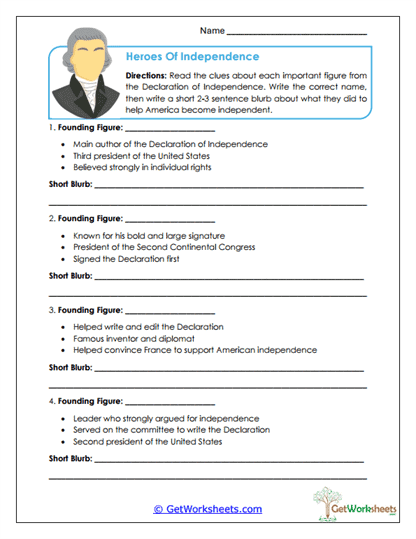
These worksheets introduce the document's purpose, ideas, and historical impact. This supports comprehension of foundational democratic principles. It helps students understand why independence was declared.
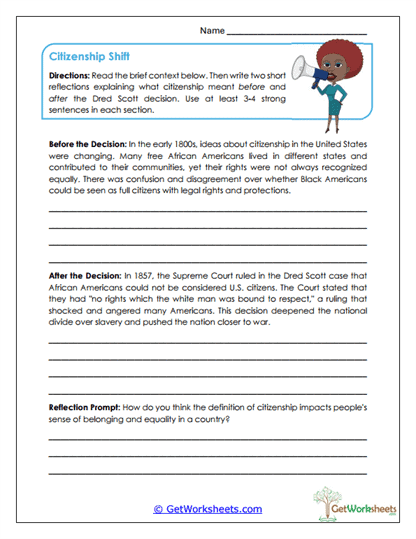
Learners study the Supreme Court case and its role in tensions leading to the Civil War. This strengthens analysis of legal history. It helps students understand how court decisions can shape national debate.
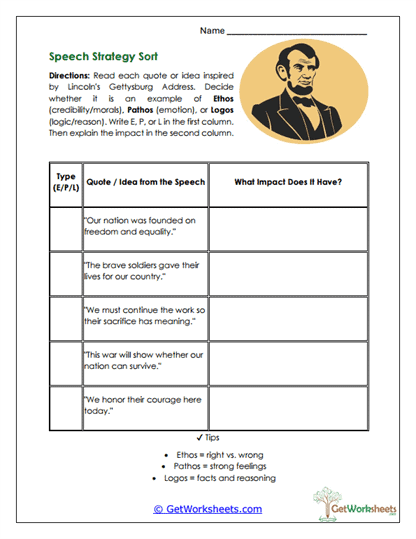
Students analyze Lincoln's famous speech and its themes of unity and purpose. This supports reading comprehension and interpretation of primary sources. It helps learners connect powerful language with national ideals.
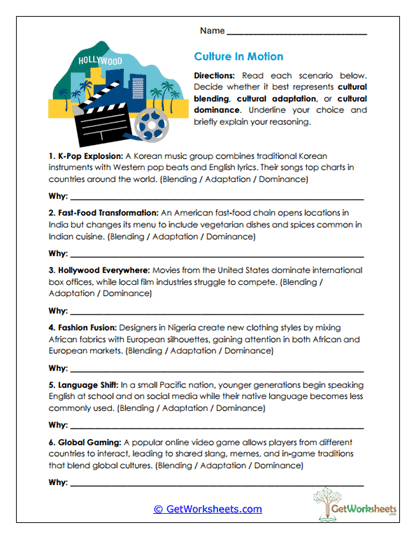
Help students understand how the world has become increasingly interconnected through trade, technology, and communication. These worksheets explore the movement of goods, ideas, and people across borders. Students will examine both the benefits and challenges of globalization in today's world. Activities promote real-world connections and global awareness.
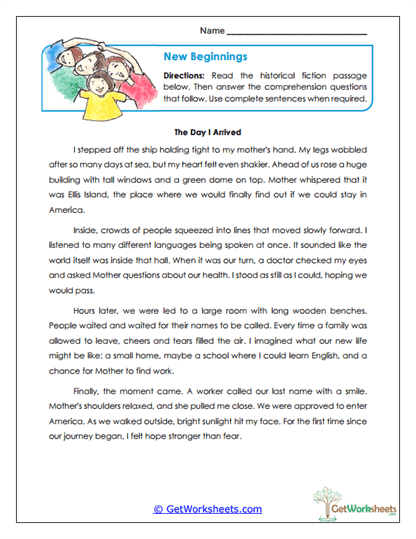
These worksheets explore immigrant experiences and the significance of Ellis Island. This builds cultural understanding and historical empathy. It helps students appreciate diverse backgrounds and journeys.
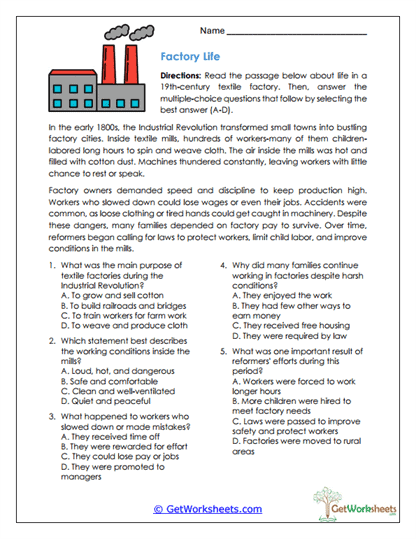
Introduce students to the period of rapid industrial growth that transformed economies and societies. These worksheets cover inventions, urbanization, and changes in labor during the 18th and 19th centuries. Students will explore how industrialization improved productivity but also created new social challenges. Lessons encourage analysis of technological progress and its effects on daily life.
Industrialization and the Gilded Age
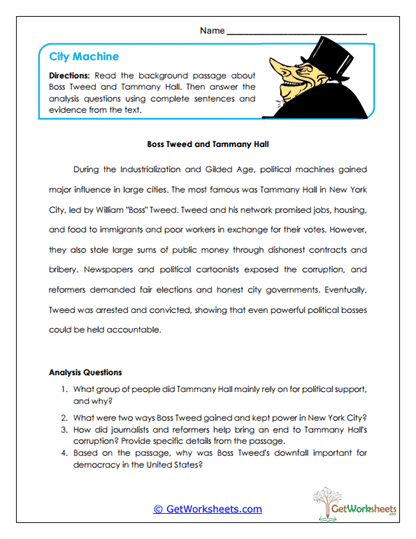
Learners study inventions, economic change, and social challenges during rapid industrial growth. This supports understanding of modernization and inequality. It helps students connect innovation with societal impacts.
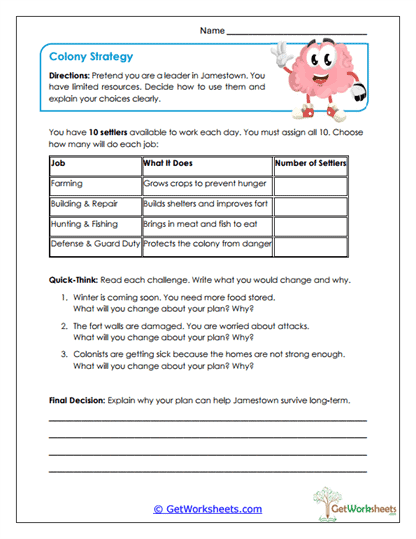
Students examine the founding of Jamestown and early colonial struggles. This strengthens comprehension of early settlement dynamics. It helps learners understand perseverance and adaptation.
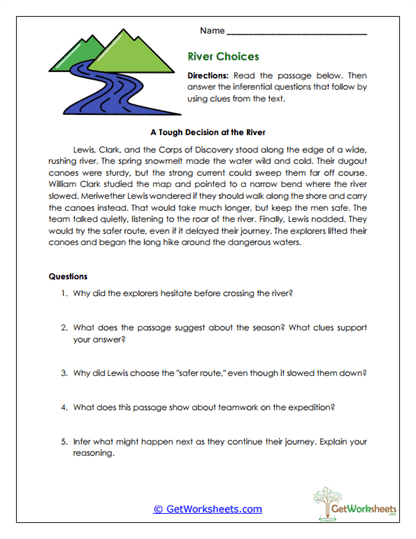
These worksheets highlight the goals, discoveries, and challenges of the expedition. This supports map skills, exploration history, and scientific observation. It helps students appreciate curiosity and discovery.
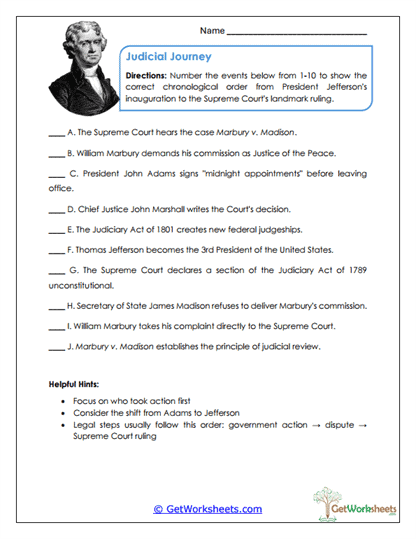
Learners study the case that established judicial review in the United States. This strengthens understanding of government structure. It helps students see how checks and balances function.
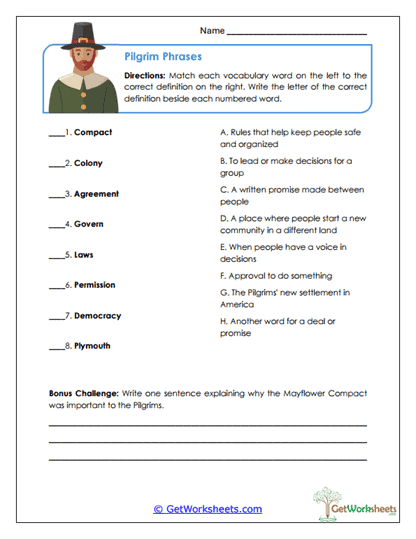
These worksheets introduce the Compact as an early step toward self-government. This supports civics understanding and historical analysis. It helps learners see how cooperation shaped early colonies.
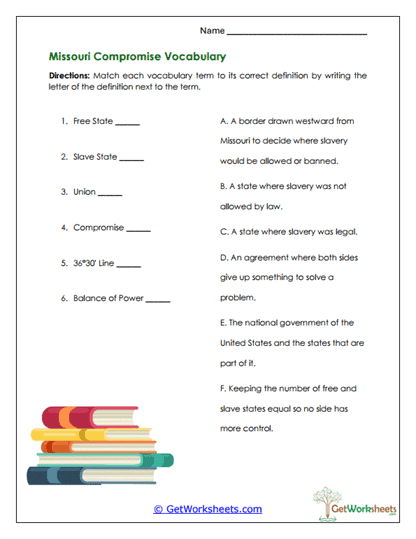
Students explore the agreement that attempted to balance free and slave states. This encourages analysis of sectional tensions. It helps learners understand the growing divide leading to the Civil War.
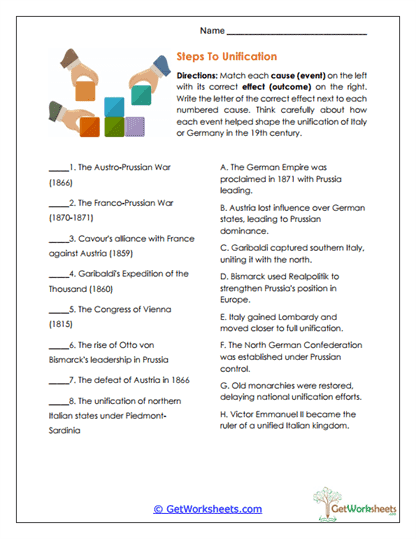
Examine how shared identity, culture, and language inspired movements to unify or divide nations. This collection focuses on key events like the unification of Germany and Italy. Students will explore how nationalism shaped political boundaries and influenced conflicts. Activities help learners connect historical movements to modern national identities.
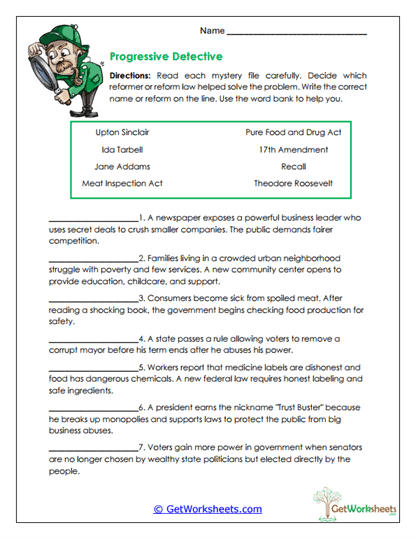
These worksheets examine reforms aimed at improving working conditions, rights, and government transparency. This strengthens historical understanding of activism and change. It helps students see how reform movements shape society.
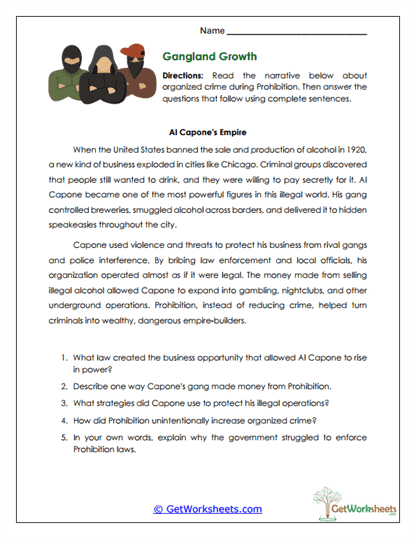
Learners study the causes, laws, and consequences of Prohibition. This supports analysis of social policy and unintended effects. It helps students understand how public attitudes influence laws.
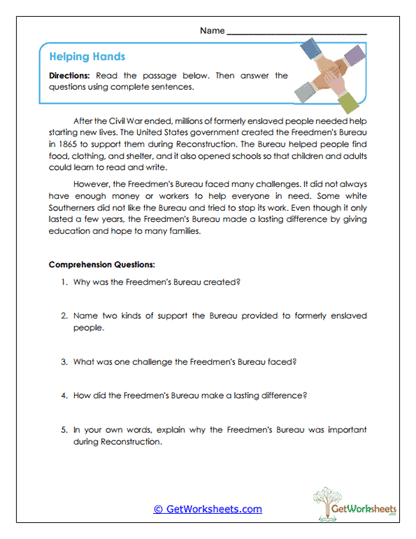
These worksheets introduce the challenges of rebuilding the South and expanding rights after the Civil War. This supports understanding of citizenship and equality. It helps learners see how decisions made during Reconstruction affect today.
Students explore the events, fears, and cultural tensions behind the Salem Witch Trials. This builds historical thinking and analysis of mass hysteria. It helps learners consider how fear can influence judgment.
These worksheets encourage learners to explore ideas of opportunity, hope, and aspiration throughout U.S. history. This supports reflective thinking and cultural understanding. It helps students consider how dreams evolve across generations.
Investigate the tense rivalry between the United States and the Soviet Union after World War II. These worksheets cover major events like the arms race, space race, and proxy wars. Students will analyze how ideological differences shaped global politics for decades. Lessons emphasize critical thinking about conflict without direct warfare.
Learn about the causes, major battles, and global impact of the First World War. This collection introduces alliances, trench warfare, and key historical figures. Students will examine how the war reshaped borders and set the stage for future conflicts. Activities focus on understanding complex causes and consequences.
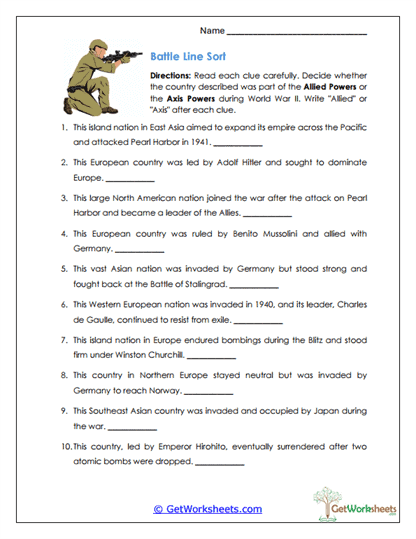
Explore the events and outcomes of the largest global conflict in history. These worksheets cover the rise of totalitarian regimes, major battles, and the Holocaust. Students will analyze the roles of different countries and the war's lasting impact on the modern world. Lessons encourage reflection on leadership, conflict, and global cooperation.
Bookmark Us Now!
New, high-quality worksheets are added every week! Do not miss out!