Figures in the Night
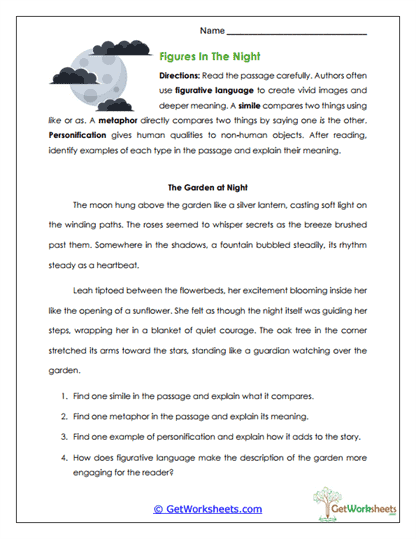
This engaging literature worksheet helps students in Grades 4, 5, and 6 strengthen reading comprehension, close reading, and literary analysis skills by exploring figurative language in a vivid descriptive passage. Through careful examination of similes, metaphors, and personification, students analyze how authors use language choices to create imagery, convey meaning, and make settings more engaging and memorable.
Learning Goals
- Figurative Language Identification (Grades 4-6): Locate and distinguish similes, metaphors, and personification within a descriptive text.
- Interpreting Meaning: Explain what each figure of speech means beyond the literal words.
- Imagery & Author’s Craft: Analyze how figurative language enhances mood, setting, and sensory detail.
- Creative Interpretation: Reflect on how descriptive language influences the reader’s experience and understanding.
Instructional Benefits
- Teacher-Created Resource: Designed by educators to align with upper elementary ELA standards.
- Versatile Use: Ideal for whole-class lessons, small groups, independent practice, homework, or assessment.
- Clear, Guided Prompts: Supports students as they explain meaning and analyze imagery step by step.
- Supports Diverse Learners: Encourages higher-level thinking while remaining accessible for a range of reading abilities.
This printable worksheet helps students build confidence with figurative language, imagery analysis, and interpretation of literary devices. By examining how descriptive language shapes a scene, learners deepen their understanding of author’s craft, meaning, and creative expression. Whether used in a classroom or homeschool setting, this resource provides meaningful practice with close reading, literary analysis, and thoughtful engagement with descriptive fiction texts.
This worksheet is part of our reading fiction texts worksheets collection.
Bookmark Us Now!
New, high-quality worksheets are added every week! Do not miss out!