Phishing Patrol
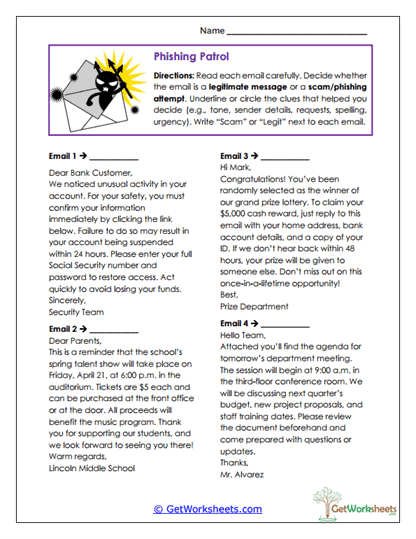
This essential media literacy worksheet helps students in Grades 4, 5, and 6 build critical digital reading, safety awareness, and credibility evaluation skills through realistic email examples. As students analyze four messages, they learn to identify warning signs of phishing and scams by examining tone, spelling, sender details, urgency tactics, and unrealistic claims, then justify whether each email is legitimate or unsafe.
Learning Goals
- Scam & Phishing Identification (Grades 4-6): Distinguish between legitimate emails and scam or phishing attempts.
- Evaluating Credibility: Analyze sender information, message content, and reliability clues.
- Text Evidence Reasoning: Underline or circle specific details that support conclusions.
- Digital Citizenship Skills: Understand how careful reading helps protect personal information online.
Instructional Benefits
- Teacher-Created Resource: Designed by educators to support upper elementary media literacy and ELA standards.
- Real-World Digital Safety Focus: Prepares students for responsible online communication.
- Evidence-Based Analysis: Requires students to explain why an email is safe or unsafe.
- Flexible Classroom Use: Ideal for technology lessons, SEL discussions, homework, or assessment.
This printable worksheet helps students develop confidence in recognizing online scams, evaluating written credibility, and staying safe in digital spaces. By practicing how to spot phishing clues and justify decisions with evidence, learners strengthen critical thinking, media literacy, and responsible communication habits. Whether used in a classroom or homeschool setting, this resource provides meaningful practice with digital safety, careful reading, and informed decision-making in real-world online contexts.
This worksheet is part of our reading emails worksheets collection.
Bookmark Us Now!
New, high-quality worksheets are added every week! Do not miss out!