Hidden Persuasion
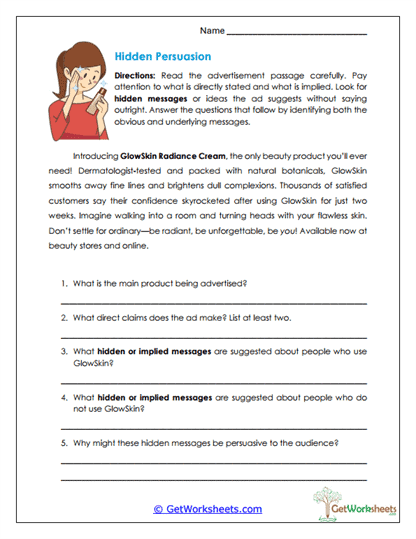
This critical media literacy worksheet helps students in Grades 4, 5, and 6 strengthen analytical reading, inference, and evaluation skills by examining how advertisements communicate both directly and indirectly. As students read an advertisement closely, they analyze clear claims, implied messages, and underlying persuasive techniques, learning how ads influence thinking beyond what is stated outright.
Learning Goals
- Explicit vs. Implicit Meaning (Grades 4-6): Distinguish between what an advertisement states clearly and what it suggests indirectly.
- Identifying Implied Messages: Analyze subtle cues about the product, audience, or lifestyle being promoted.
- Evaluating Persuasive Claims: Examine how language and presentation influence beliefs and assumptions.
- Analytical Writing & Justification: Explain interpretations using evidence from the advertisement.
Instructional Benefits
- Teacher-Created Resource: Designed by educators to align with upper elementary ELA and media literacy standards.
- Builds Healthy Skepticism: Encourages students to question advertising assumptions rather than accept messages at face value.
- Guided Critical-Thinking Prompts: Supports deeper interpretation through structured questions.
- Flexible Classroom Use: Ideal for media literacy units, discussion-based lessons, homework, or assessment.
This printable worksheet helps students become more thoughtful and informed media consumers by uncovering hidden persuasion techniques in advertisements. By analyzing both explicit claims and implicit messages, learners strengthen critical thinking, inference skills, and evidence-based reasoning. Whether used in a classroom or homeschool setting, this resource provides meaningful practice with media literacy, analytical writing, and careful evaluation of persuasive texts.
This worksheet is part of our reading advertisements worksheets collection.
Bookmark Us Now!
New, high-quality worksheets are added every week! Do not miss out!