Sound Device Identification
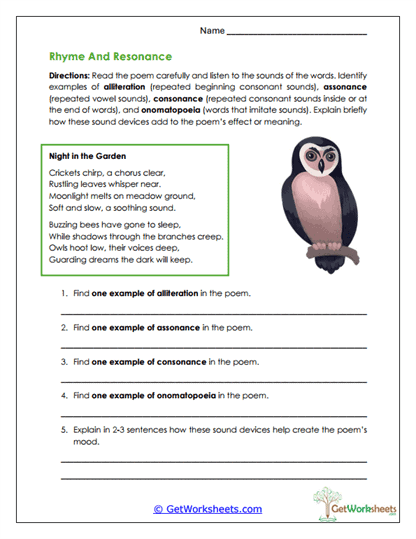
This engaging poetry worksheet helps students in Grades 4, 5, and 6 strengthen reading comprehension, literary analysis, and awareness of poetic craft by focusing on sound devices. After reading a descriptive nighttime poem, students identify examples of alliteration, assonance, consonance, and onomatopoeia, then explain how these sound choices shape mood, atmosphere, and emotional impact within the poem.
Learning Goals
- Sound Device Identification (Grades 4-6): Locate and label examples of alliteration, assonance, consonance, and onomatopoeia.
- Poetry Comprehension: Understand how sound contributes to meaning beyond literal word definitions.
- Mood & Atmosphere Analysis: Explain how auditory elements influence tone and emotional effect.
- Using Text Evidence: Support explanations with specific words or lines from the poem.
Instructional Benefits
- Teacher-Created Resource: Designed by educators to align with upper elementary poetry standards.
- Focus on Author’s Craft: Helps students see poetry as a deliberate combination of sound and meaning.
- Structured Written Responses: Guides students in explaining why sound devices matter.
- Flexible Classroom Use: Ideal for poetry units, close-reading lessons, homework, or assessment.
This printable worksheet helps students develop a deeper appreciation for how poets use sound to create vivid imagery and emotional resonance. By identifying and explaining sound devices, learners strengthen comprehension, analytical writing, and understanding of poetic techniques. Whether used in a classroom or homeschool setting, this resource provides meaningful practice with poetry analysis, sound patterns, and evidence-based interpretation.
This worksheet is part of our poetry comprehension worksheets collection.

Bookmark Us Now!
New, high-quality worksheets are added every week! Do not miss out!