Rhyme Scheme Practice
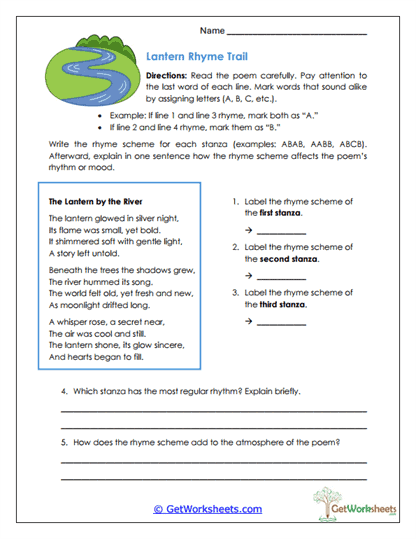
This structured poetry worksheet helps students in Grades 4, 5, and 6 strengthen understanding of poetic structure, rhyme patterns, and sound devices. After reading a poem, students label rhyming words with letters to determine the rhyme scheme of each stanza. They then compare the patterns, identify which stanza has the most regular rhythm, and explain how rhyme contributes to the poem’s overall atmosphere and tone.
Learning Goals
- Poetry Structure & Rhyme Analysis (Grades 4-6): Identify rhyme schemes by labeling rhyming words accurately.
- Recognizing Rhythm & Pattern: Analyze how consistent or varied rhyme patterns affect flow.
- Sound Devices & Meaning: Explain how rhyme supports mood, tone, or atmosphere in a poem.
- Written Explanation with Evidence: Support ideas using specific examples from the poem.
Instructional Benefits
- Teacher-Created Resource: Designed by educators to align with upper elementary ELA poetry standards.
- Step-by-Step Analysis: Breaks rhyme identification into clear, manageable tasks.
- Builds Poetry Confidence: Helps students see rhyme as a meaningful structural choice, not just a sound feature.
- Flexible Classroom Use: Ideal for poetry units, guided practice, homework, or assessment.
This printable worksheet helps students deepen comprehension of poetry by connecting rhyme schemes to rhythm and emotional impact. By labeling patterns and explaining their effects, learners strengthen close reading, analytical thinking, and written expression. Whether used in a classroom or homeschool setting, this resource provides meaningful practice with poetic structure, sound analysis, and thoughtful interpretation of verse.
This worksheet is part of our poetry comprehension worksheets collection.
Bookmark Us Now!
New, high-quality worksheets are added every week! Do not miss out!