Polder Analysis
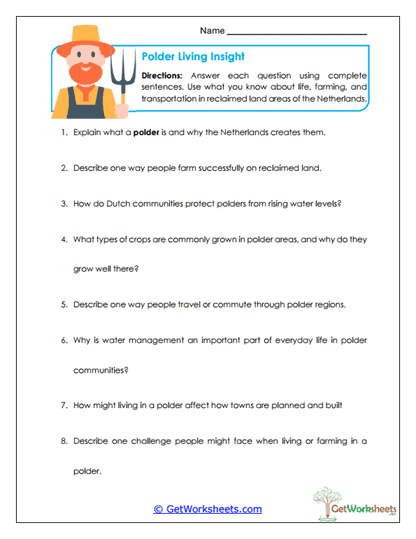
This worksheet supports students in Grades 5, 6, and 7 as they explore how people in the Netherlands adapt to and manage their environment through land reclamation. Using open-ended questions, students analyze how polders are created, how communities farm and travel in reclaimed land areas, and how dikes and water systems protect land from flooding. The activity builds analytical thinking, geographic reasoning, and clear written explanation using real-world environmental challenges.
Learning Goals
- Human-Environment Interaction (Grades 5-7) – Explain how people modify their environment to meet needs such as farming, housing, and transportation
- Water Systems & Land Reclamation – Describe how polders are formed and protected using dikes, canals, and water management systems
- Geographic Application – Analyze how geography influences planning, safety, and daily life in low-lying regions
- Constructed Response Writing – Answer open-ended questions using complete sentences, reasoning, and examples
Instructional Benefits
- Teacher-Created Resource – Designed to align with upper elementary and middle school social studies and science standards
- Deep Thinking Focus – Encourages explanation, analysis, and application rather than simple recall
- Flexible Use – Works well for classwork, homework, assessment, discussion, or enrichment
- Low-Prep Format – Ready-to-print worksheet with clear prompts and structured expectations
This Polder Analysis worksheet helps students build a deeper understanding of environmental adaptation, water management, and geographic problem-solving. By examining how communities protect reclaimed land, learners strengthen critical thinking, content knowledge, and explanatory writing skills. It’s a meaningful, no-prep resource for both classroom instruction and homeschool learning.
This worksheet is part of our Netherlands Worksheets collection.
Bookmark Us Now!
New, high-quality worksheets are added every week! Do not miss out!