Mood and Tone Map
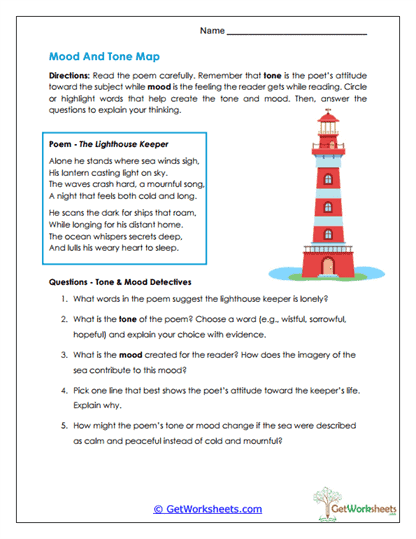
This poetry analysis worksheet is designed for students in Grades 7, 8, and 9 to deepen understanding of how language shapes emotional experience in poetry. Using the poem The Lighthouse Keeper, students examine descriptive words, imagery, and figurative language to identify tone (the poet’s attitude) and mood (the reader’s emotional response), strengthening analytical reading, emotional vocabulary, and interpretive writing skills.
Learning Goals
- Poetry Analysis & Interpretation (Grades 7-9)
Students analyze how poetic language conveys meaning and emotion. - Mood vs. Tone Identification
Learners distinguish between the poet’s attitude and the feelings created for the reader. - Imagery & Figurative Language
Students examine sensory details that evoke loneliness, sorrow, or hope. - Literary Response & Critique
The activity encourages thoughtful explanation supported by textual evidence.
Instructional Benefits
- Teacher-Created Resource
Designed by educators to align with middle school ELA poetry standards. - Visual & Analytical Mapping
The “map” structure helps organize emotional and textual evidence. - Vocabulary for Emotional Analysis
Builds precise language for discussing literary tone and mood. - Flexible Classroom Use
Ideal for poetry units, close-reading lessons, discussion prep, or assessment.
This printable worksheet gives students meaningful practice with analyzing mood, tone, and imagery in poetry. By mapping how word choice and imagery affect emotional impact, learners strengthen close reading, interpretive thinking, and literary appreciation. Suitable for classroom instruction or homeschool use, this no-prep resource supports confident poetry analysis and deeper understanding of how poets use language to shape feeling and meaning.
This worksheet is part of our Grade 7 Reading Comprehension collection.
Bookmark Us Now!
New, high-quality worksheets are added every week! Do not miss out!