Reasoning Through Evidence
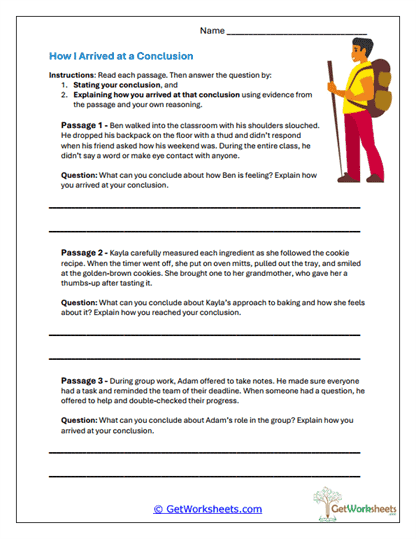
This worksheet helps students in Grades 5 and 6 strengthen reading comprehension, critical thinking, and written reasoning by drawing conclusions from short narrative passages. Learners read three realistic scenarios and analyze character behavior, emotional cues, tone, and situational details, then explain how specific evidence from the text supports their conclusions.
Learning Goals
- Drawing Evidence-Based Conclusions (Grades 5-6)
Students form logical conclusions grounded in details from the passage rather than assumptions. - Citing Textual Evidence
Learners practice referencing clear examples from the text to justify their thinking. - Analyzing Behavior & Emotional Cues
Students interpret body language, dialogue, and reactions to uncover implied meaning. - Connecting Evidence to Reasoning
The activity reinforces how evidence leads directly to a supported conclusion.
Instructional Benefits
- Teacher-Created Resource
Designed by educators to align with upper elementary ELA comprehension and writing standards. - Explicit Reasoning Practice
Requires students to explain how they reached a conclusion, not just what they think. - Flexible Classroom Use
Ideal for guided reading, independent work, assessment, homework, or writing-focused lessons. - Builds Clear Written Expression
Supports students in organizing thoughts and explaining reasoning logically.
This printable worksheet helps students strengthen the connection between close reading and clear explanation. By analyzing subtle clues and articulating how evidence supports a conclusion, learners build stronger inference skills, analytical reading abilities, and confidence in evidence-based writing. It’s a meaningful, no-prep resource for both classroom instruction and homeschool learning.
This worksheet is part of our Drawing Conclusions Worksheets collection.
Bookmark Us Now!
New, high-quality worksheets are added every week! Do not miss out!