Sensory Detail Explorer
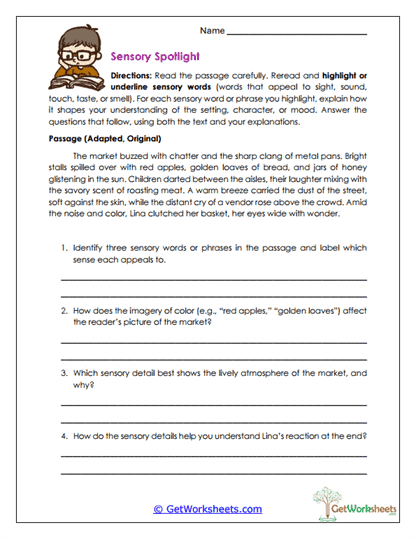
This worksheet supports students in Grades 4, 5, and 6 as they closely reread a descriptive passage to identify and analyze sensory language. Through highlighting words related to sight, sound, smell, taste, and touch, students practice imagery analysis, mood interpretation, and evidence-based explanation while exploring how vivid details shape setting, atmosphere, and character response.
Skills Reinforced
- Sensory Language Identification (Grades 4-6) – Locate and categorize descriptive words connected to the five senses.
- Imagery & Descriptive Analysis – Explain how sensory details help readers visualize scenes and understand meaning.
- Setting & Mood Interpretation – Analyze how imagery contributes to atmosphere and emotional tone.
- Character Reaction Analysis – Examine how sensory cues reveal a character’s feelings or emotional state.
Instructional Support
- Teacher-Created Resource – Designed by educators to align with upper elementary ELA standards.
- Active Highlighting Task – Encourages close rereading and purposeful interaction with the text.
- Evidence-Based Explanations – Students explain how each sensory detail affects understanding.
- Focus on Author’s Craft – Helps learners recognize how vivid description enhances storytelling.
- Low-Prep Printable – Easy to use for whole-class lessons, small groups, independent practice, or homeschool instruction.
This sensory detail explorer worksheet helps students strengthen descriptive analysis, close reading, and interpretive thinking. By examining how sensory language shapes mood, setting, and character emotion, learners gain deeper insight into how authors use imagery to enhance meaning. It’s a practical, engaging resource that supports thoughtful literary analysis in both classroom and homeschool environments.
This worksheet is part of our close reading passages worksheets collection.
Bookmark Us Now!
New, high-quality worksheets are added every week! Do not miss out!