Dialogue Identification
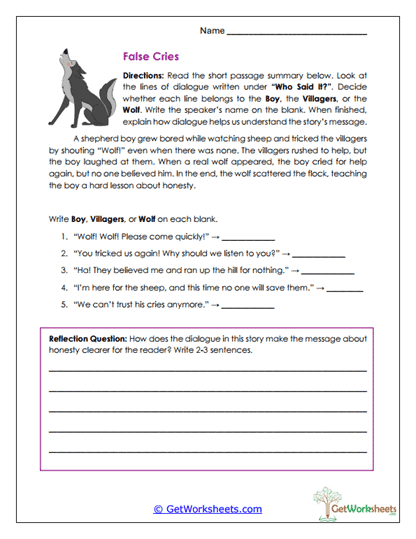
This worksheet supports students in Grades 2 and 3 as they read a summary of The Boy Who Cried Wolf and identify which character is speaking in each line of dialogue. By labeling dialogue as spoken by the Boy, the Villagers, or the Wolf, students practice recognizing speakers, understanding character perspective, and seeing how dialogue contributes to the story’s overall message.
Skills Reinforced
- Identifying Dialogue & Speakers (Grades 2-3) – Determine who is speaking in a story using dialogue cues.
- Character Perspective Understanding – Analyze how different characters’ words reflect their roles and intentions.
- Thematic Analysis – Explain how dialogue helps reinforce the theme of honesty.
- Reading Comprehension – Demonstrate understanding of story events and character interactions.
Instructional Support
- Teacher-Created Resource – Designed by educators to align with early elementary ELA standards.
- Clear Labeling Task – Provides structured practice in identifying speakers within dialogue.
- Theme Connection Prompt – Encourages students to link dialogue to the story’s lesson.
- Student-Friendly Format – Familiar content and clear directions build confidence.
- Low-Prep Printable – Easy to use for classroom lessons, literacy centers, independent work, or homeschool instruction.
This dialogue identification worksheet helps young learners strengthen comprehension, perspective awareness, and thematic understanding. By examining who speaks and why in The Boy Who Cried Wolf, students gain insight into how dialogue shapes meaning and reinforces important lessons. It’s a simple, effective resource for building foundational reading skills in both classroom and homeschool settings.
This worksheet is part of our children’s stories worksheets collection.
Bookmark Us Now!
New, high-quality worksheets are added every week! Do not miss out!