Spain Worksheets



About This Worksheet Collection
This Spain worksheet collection offers a rich blend of geography, culture, history, and environmental studies, giving students a well-rounded introduction to one of Europe's most vibrant countries. Through informational passages, matching tasks, multiple-choice questions, and comparative writing, learners gain a deeper understanding of Spain's diverse regions, traditions, landscapes, and historical influences. The activities are designed to be both accessible and engaging, making them ideal for social studies units, world cultures lessons, and integrated literacy practice.
Students across grade levels strengthen key academic skills as they work through the collection. They practice reading for detail, interpreting cultural and geographic information, writing explanatory responses, and analyzing regional differences. Vocabulary development, critical thinking, and evidence-based writing are emphasized throughout, helping learners make meaningful connections between physical geography, cultural identity, and historical events.
Detailed Descriptions Of These Worksheets
Country Overview
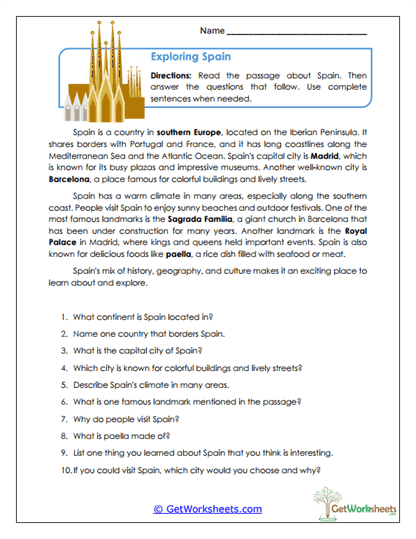
Students read a concise passage introducing Spain's location on the Iberian Peninsula, its major cities, and cultural landmarks. They answer comprehension questions that encourage them to pull key facts from the text and explain ideas in complete sentences. The worksheet blends physical and cultural geography, giving learners grounding in topics such as climate, regional traditions, and well-known foods. It supports careful reading and helps students build foundational knowledge about Spain.
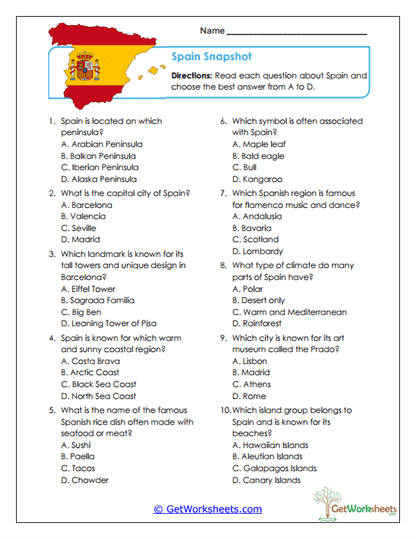
Spainish Quiz
This multiple-choice worksheet reviews essential facts about Spain's geography, cultural regions, and famous landmarks. Students examine each question closely and choose the correct answer from four options, practicing test-taking strategies as they go. The activity reinforces quick recall of information related to cities, the peninsula, and climatic patterns. It also builds confidence in interpreting content-based questions.
Spanish Landmarks Reading
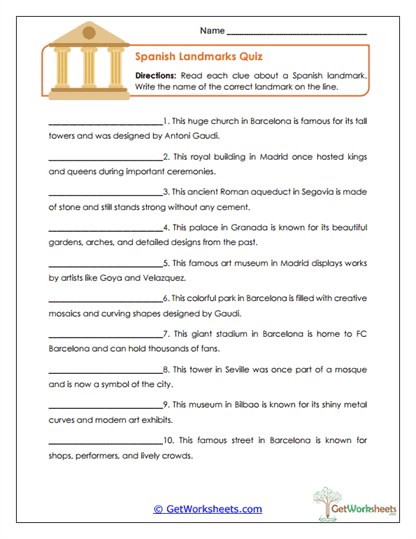
Students read descriptive clues about significant Spanish landmarks and record the name of each site. The worksheet highlights architectural and cultural treasures such as Sagrada Familia and the Royal Palace, helping learners recognize important destinations across Spain. It promotes close reading and strengthens attention to detail. Students gain familiarity with major historical and tourist sites.
Region Fill-In
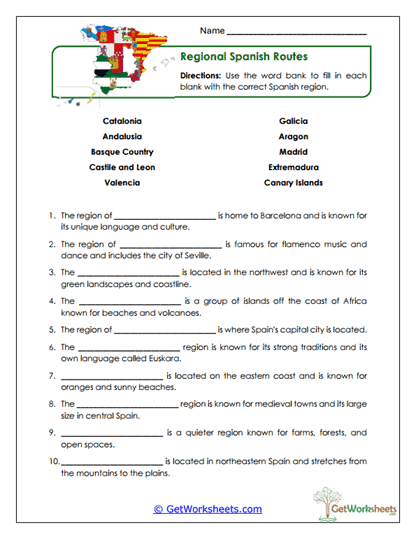
Using a word bank, students complete statements that describe several of Spain's major regions, including Catalonia, Andalusia, and Galicia. The worksheet introduces learners to each region's landscapes, languages, climates, and cultural practices. As they fill in the correct terms, students deepen their understanding of regional diversity. It supports vocabulary development and reinforces European geography knowledge.
Spanish Foods Match
This matching activity introduces well-known Spanish foods and their descriptions, helping learners identify dishes such as paella, churros, and gazpacho. Students connect each food to its defining characteristics, strengthening cultural literacy and vocabulary. The worksheet encourages attention to detail and builds familiarity with culinary traditions. It provides an engaging look at Spain's food culture.
Country True/False
Students analyze statements about Spain's geography, language, climate, and cultural features, marking each as true or false. When a statement is incorrect, they revise it to make it accurate. The worksheet builds critical reading skills and helps learners correct common misconceptions. It also reinforces essential facts students need to understand Spain's identity.
Climate Reading
Learners read an informative passage about Spain's Mediterranean, oceanic, and semi-arid climate zones. They answer analysis questions requiring complete-sentence explanations that connect climate to farming, tourism, and daily life. The worksheet strengthens understanding of regional climate differences and their impacts on human activity. It also supports analytical reading and clear communication.
Population Geography
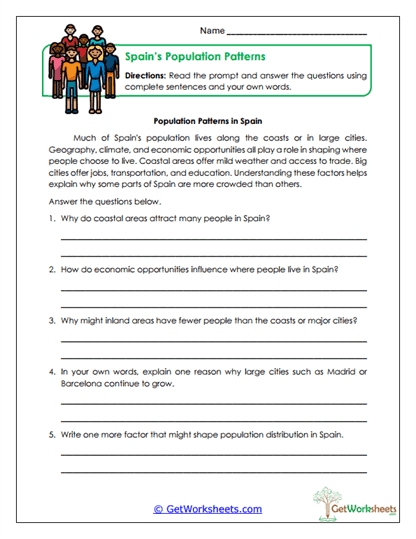
Students explore Spain's population patterns by answering questions about settlement near coasts, major cities, and economic hubs. The activity encourages learners to think about how physical geography and economic opportunity influence population distribution. It promotes geographic reasoning and clear written explanations. Students gain insight into how people choose where to live.
Festivals Reading
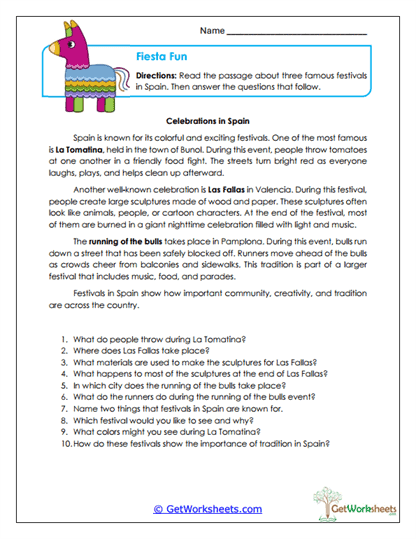
Students read a passage describing La Tomatina, Las Fallas, and the Running of the Bulls, three major Spanish celebrations. They answer detailed questions that highlight traditions, materials, symbolism, and cultural significance. The worksheet deepens understanding of community life and the creative expressions that define Spanish culture. It also reinforces strong reading-for-detail skills.
Region Comparison
In this comparative writing activity, students analyze Catalonia and Andalusia by answering guided questions. They explore differences in climate, language, economy, major cities, and cultural traditions. The worksheet builds compare-and-contrast writing skills and encourages thoughtful evaluation of regional identity. Students gain a clearer understanding of the diversity within Spain.
Cultural Diffusion
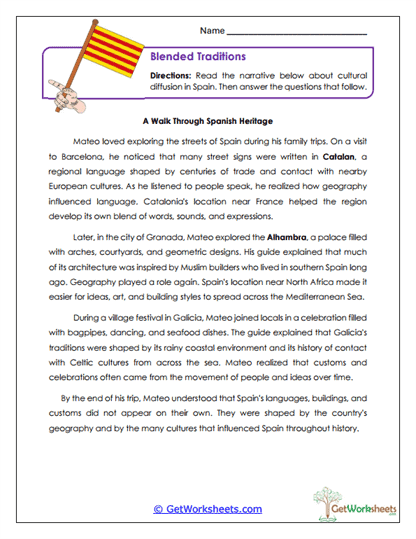
Students read a narrative following Mateo as he travels through Spain and observes examples of cultural blending. The worksheet highlights architectural influences, linguistic diversity, and regional customs shaped by migration and history. Learners answer reflective questions using evidence from the text, strengthening comprehension and cultural analysis skills. It provides a meaningful introduction to cultural diffusion in Spain.
Exploration Geography
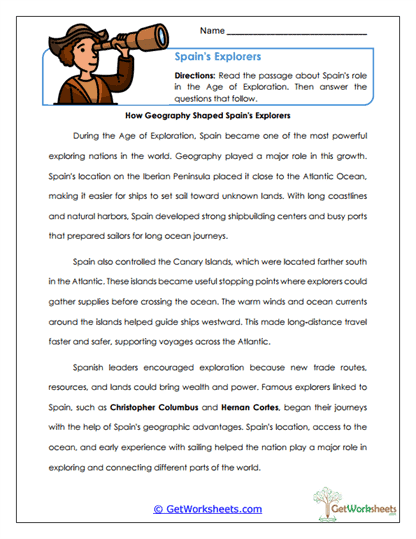
This worksheet explains how Spain's geographic position supported its role in the Age of Exploration. Students read about harbors, ocean access, the Canary Islands, and the winds and currents that enabled westward voyages. They answer constructed-response questions to demonstrate their understanding of cause-and-effect relationships in exploration. The activity reinforces informational reading and strengthens connections between geography and global history.
Bookmark Us Now!
New, high-quality worksheets are added every week! Do not miss out!