South America Worksheets
About This Worksheet Collection
This South America worksheet collection offers a diverse range of activities that introduce students to the continent's physical landscapes, cultural traditions, ecosystems, and contemporary issues. Each worksheet is designed to blend engaging geography content with strong literacy development, giving teachers a flexible set of tools for social studies and reading instruction. From rainforest exploration to cultural analysis, students encounter meaningful topics that deepen their understanding of one of the world's most dynamic regions.
Throughout the collection, learners strengthen skills such as reading informational text, applying vocabulary in context, evaluating environmental challenges, and writing evidence-based responses. The worksheets promote critical thinking, geographic reasoning, and the ability to connect physical features with human experiences. These varied tasks support students as they build both disciplinary knowledge and higher-order academic skills.
Detailed Descriptions Of These Worksheets
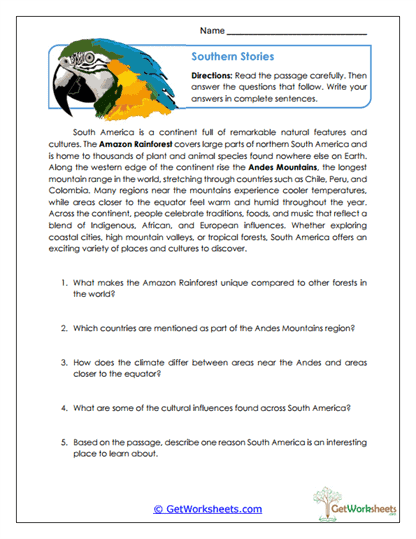
Southern Stories
Students read an accessible passage that introduces the landscapes, climates, and cultural diversity of South America. They answer open-ended questions requiring complete-sentence explanations and close attention to key ideas. The worksheet encourages learners to interpret details about regions such as the Amazon and Andes while practicing inferencing and explanation. It supports strong comprehension and clear written expression.
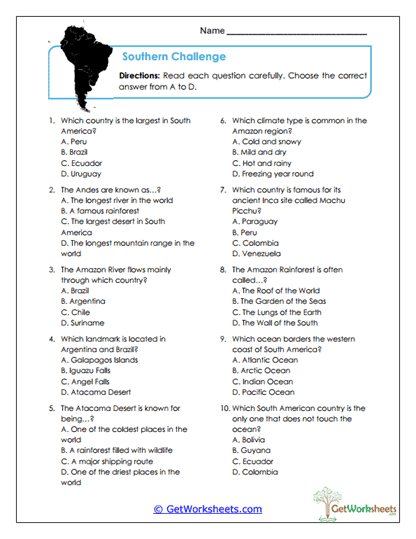
Southern Challenge
This multiple-choice review helps students consolidate key facts about South America's physical features, climate zones, and cultural elements. Learners evaluate each set of options carefully, practicing the reasoning needed for standardized test formats. The worksheet highlights important topics such as the Amazon River, Atacama Desert, and major countries. It builds accuracy, attention to detail, and confidence in geography-based assessments.
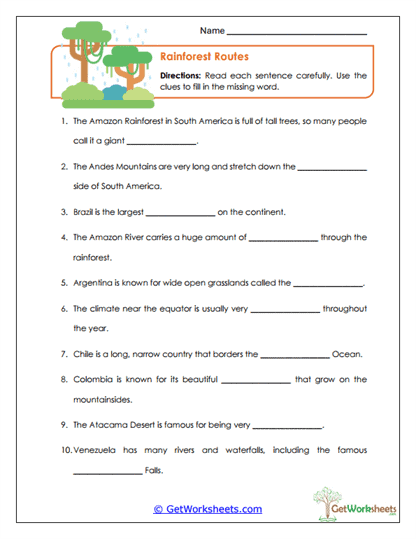
Rainforest Routes
In this fill-in-the-blank activity, students use context clues to complete sentences with vocabulary tied to South American geography. They reinforce terms related to rainforests, coastlines, mountains, and deserts while practicing precise word choice. The worksheet encourages learners to interpret clues carefully and apply prior knowledge. It strengthens vocabulary development and content comprehension.
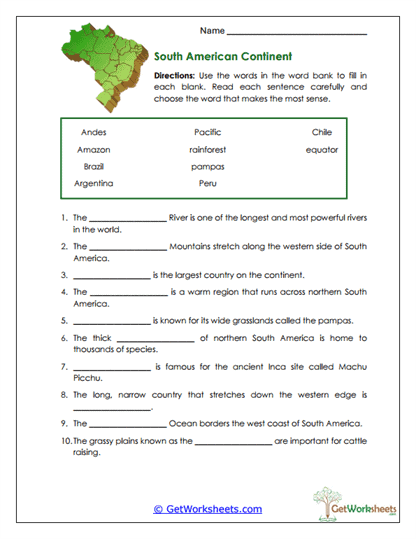
The Continent
Students fill in sentences using a word bank containing major geographic and cultural terms. The activity covers important concepts such as the equator, Andes, Amazon, and surrounding oceans. As learners choose the correct words, they deepen their understanding of landforms, climate, and ecosystems. The worksheet reinforces content mastery and builds confidence in reading for meaning.
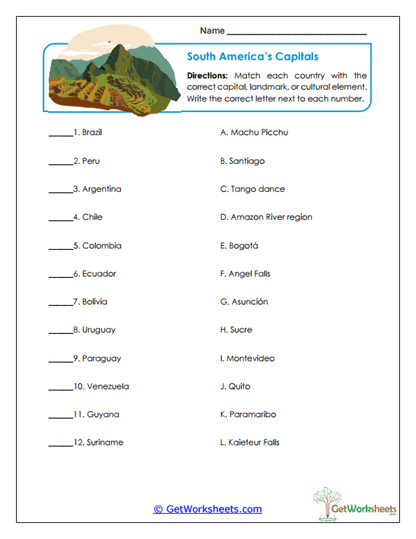
Southern Capitals
This matching task challenges students to pair South American countries with their capitals, landmarks, or cultural identifiers. By making these connections, learners strengthen map knowledge and cultural awareness. The worksheet includes references to well-known places such as Quito and Machu Picchu, broadening students' understanding of regional identity. It encourages memory recall and careful categorization.
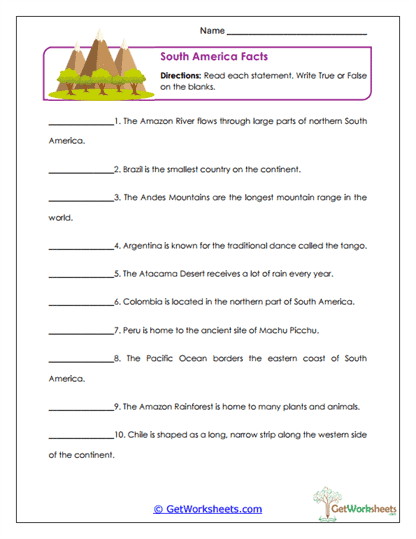
What Facts
Students evaluate ten statements about South America and determine whether they are true or false. The activity reviews major concepts such as river systems, deserts, mountain ranges, and cultural practices. Learners strengthen accuracy and recall by identifying misconceptions and confirming correct information. It serves as an effective check for understanding across geographical topics.
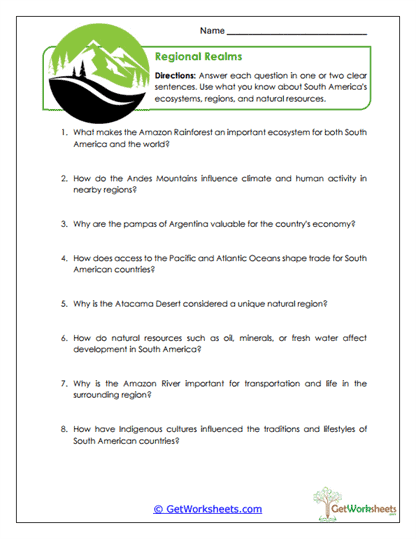
Regional Realms
This written-response worksheet asks students to explain key concepts about South America's ecosystems, resources, and geographic regions. Learners respond to prompts requiring them to cite details and reason about environmental and economic factors. The activity supports deeper comprehension of areas like the Andes, Amazon Rainforest, and Atacama Desert. It strengthens analytical writing and conceptual understanding.
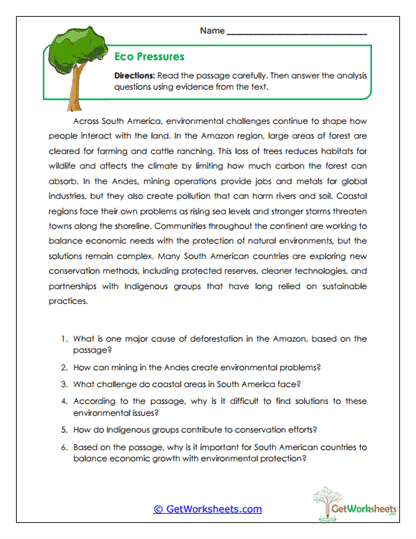
Eco Pressures
Students read a passage describing environmental challenges across South America, including deforestation, mining, and coastal risks. They answer text-dependent questions that require them to use evidence and analyze cause-and-effect relationships. The worksheet promotes critical thinking about sustainability and development. It builds strong skills in informational reading and environmental literacy.
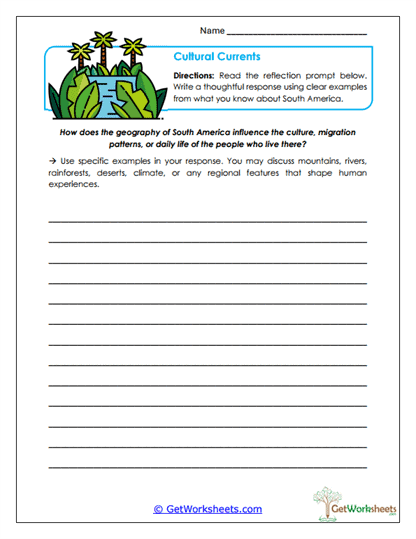
Cultural Currents
This reflective writing worksheet asks students to consider how geography shapes traditions, daily life, and movement across the continent. Learners use specific examples involving mountains, rainforests, deserts, or climate zones to support their ideas. The activity helps students practice extended writing and organize their reasoning clearly. It develops both geographic insight and thoughtful written expression.
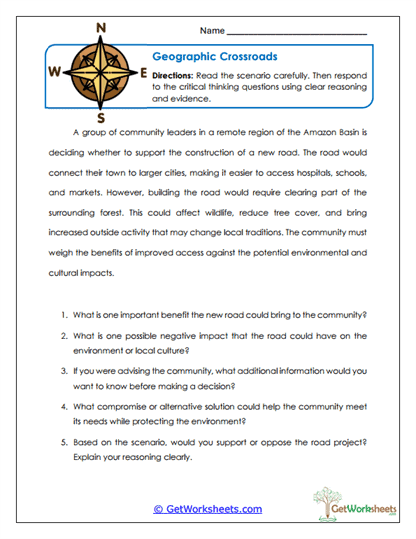
Geographic Crossroads
Students examine a scenario about building a new road in the Amazon Basin and consider its potential benefits and consequences. They answer questions requiring evaluation of environmental concerns, cultural impacts, and economic needs. The worksheet encourages students to weigh trade-offs and justify their reasoning. It strengthens problem-solving skills and supports evidence-based decision making.
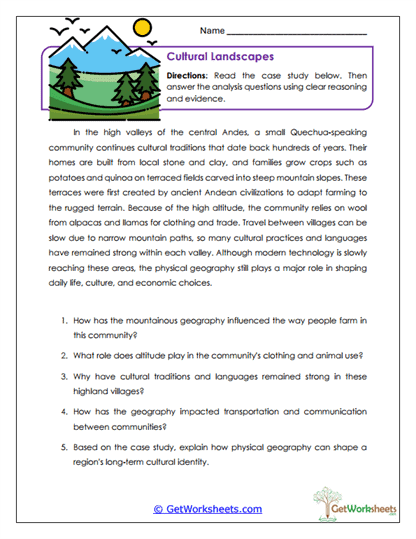
Cultural Landscapes
This case study introduces learners to a Quechua-speaking community in the Andes and explores how altitude, terrain, and traditions shape daily life. Students answer analytical questions using evidence from the passage. The activity deepens understanding of cultural geography and human-environment interaction. It builds skills in text analysis and critical reasoning.
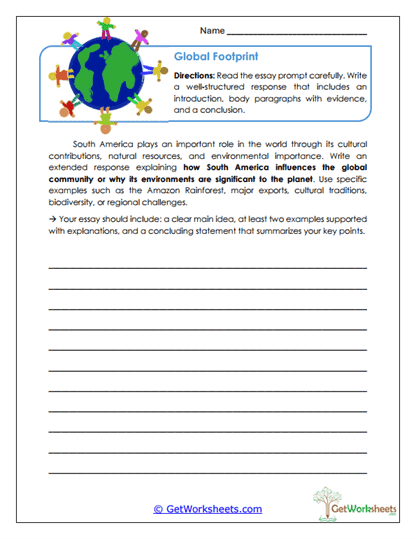
Global Footprint
In this extended writing task, students compose an essay explaining South America's global significance or the worldwide importance of its environments. They use examples related to biodiversity, cultural contributions, and natural resources to support their claims. The worksheet guides them in structuring a clear introduction, body, and conclusion. It strengthens expository writing, evidence-based reasoning, and global awareness.
Bookmark Us Now!
New, high-quality worksheets are added every week! Do not miss out!