Role Playing Social Scenarios Worksheets
About This Worksheet Collection
This Role Playing Social Scenarios collection provides students with structured, supportive opportunities to rehearse real-life social interactions in safe, guided ways. Through scripts, scenario choices, dialogue rewrites, emotional reflections, and partner-based role-play tasks, learners practice communication skills they can immediately apply in classrooms, on the playground, online, and eventually in workplace settings. The worksheets emphasize tone, empathy, collaboration, and respectful problem-solving-key skills that help students navigate social moments with confidence.
As students work through these activities, they strengthen essential social-emotional abilities such as emotional awareness, assertive communication, teamwork, and perspective-taking. They also build academic skills including reading comprehension, writing, vocabulary use, and interpreting scenario-based questions. By practicing social exchanges through role-play, students gain fluency in kindness, develop stronger peer relationships, and learn to respond thoughtfully to a wide range of interpersonal challenges.
Detailed Descriptions Of These Worksheets
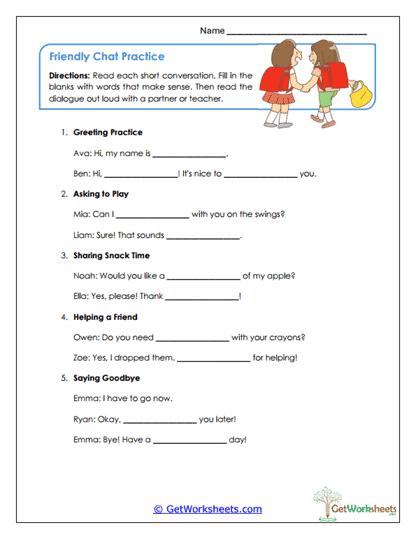
Friendly Chat Practice
Students complete short conversational scripts by filling in missing polite words and phrases. After writing, they read the dialogues aloud to practice tone and friendly communication. The activity builds confidence with greetings, sharing, helping, and closing conversations. It supports vocabulary development and models respectful everyday interactions.
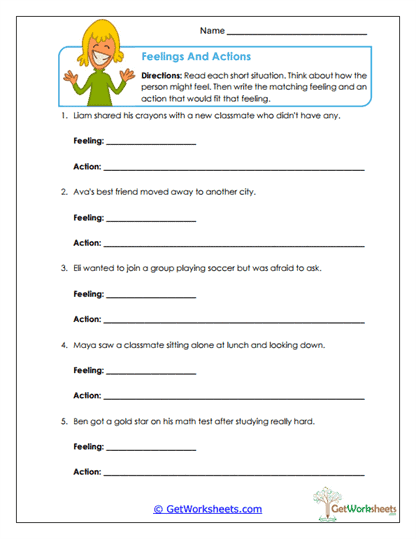
Feelings and Actions
Learners read school-based scenarios and identify the likely emotion a character feels. They then write an action that matches the feeling in a healthy, empathetic way. The activity strengthens emotional awareness and encourages thoughtful, responsible responses. It reinforces the connection between understanding feelings and choosing kind behaviors.
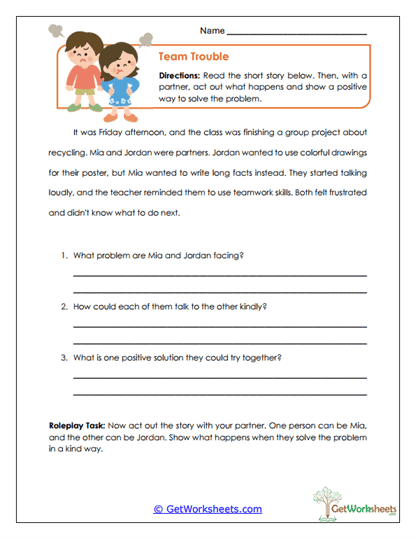
Team Trouble
Students read a story about a group project disagreement and answer questions about communication, conflict, and solutions. They then role-play a positive way to resolve the issue. This activity teaches respectful dialogue and collaborative problem-solving. It builds empathy, listening skills, and teamwork.
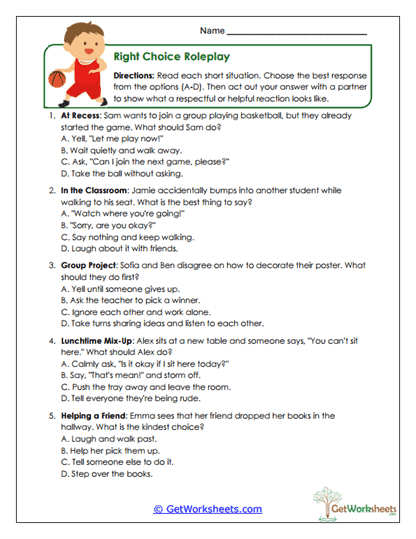
Right Choice Roleplay
Learners choose the most respectful response to common school situations and then act out the positive choice with a partner. They practice making helpful decisions in settings like recess or group work. The worksheet encourages empathy and reinforces healthy social behavior. Role-playing helps students internalize respectful actions.
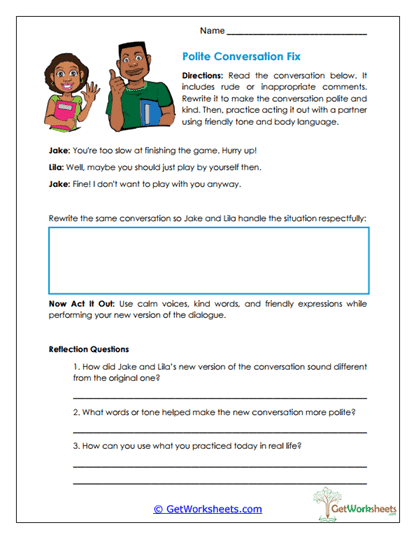
Polite Conversation Fix
Students revise a dialogue containing rude or inappropriate comments, improving tone, wording, and body language. After rewriting, they act out the new version using calm, polite voices. The activity teaches respectful communication and de-escalation skills. It promotes social awareness and conflict resolution.
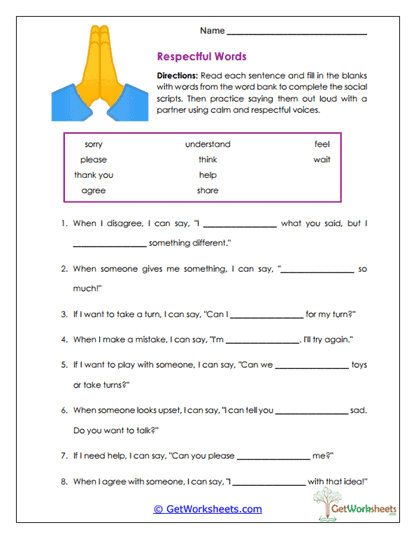
Respectful Words
Learners complete sentences using a word bank of polite terms such as "please" and "thank you." They practice making requests, disagreeing kindly, and offering help. Afterward, they rehearse the statements aloud with respectful tone. The activity strengthens vocabulary and prepares students for real peer interactions.
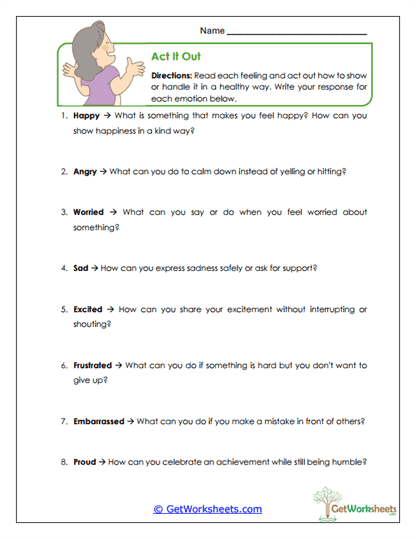
Act It Out
Students write healthy responses for expressing or managing emotions such as anger, excitement, or embarrassment. They reflect on emotional regulation strategies and may role-play their examples. The activity builds self-awareness and positive coping skills. It teaches constructive expression without harming others.
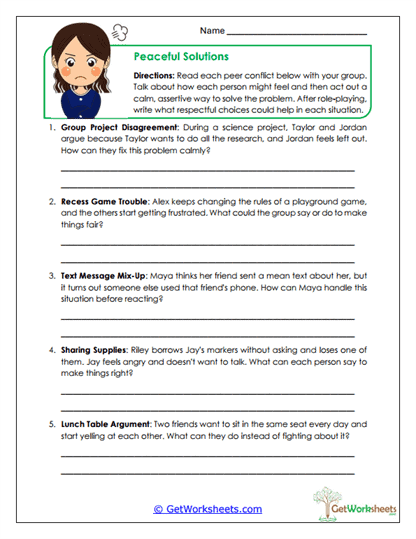
Peaceful Solutions
Learners examine peer conflict scenarios and write calm, assertive resolutions for each one. They describe how both sides feel and propose respectful solutions. The worksheet promotes empathy, communication, and constructive problem-solving. It strengthens reflective writing and teamwork skills.
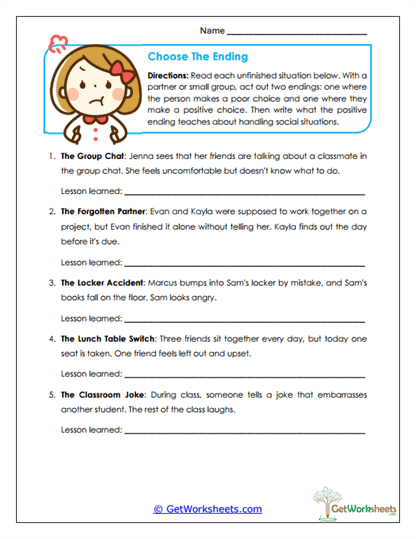
Choose the Ending
Students read incomplete social situations and write both a negative and a positive ending. They then identify the lesson learned from the positive version. This activity encourages foresight, empathy, and responsible decision-making. It improves writing skills and helps students understand consequences.
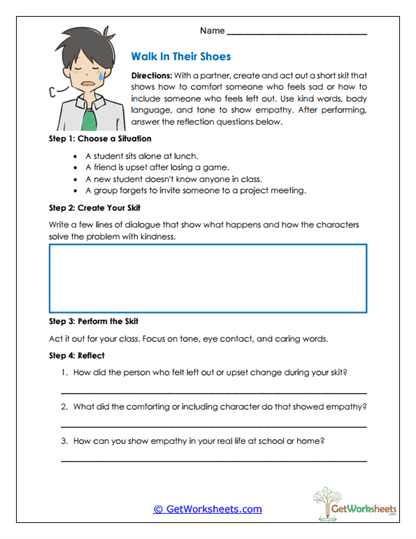
Walk in Their Shoes
Learners create and perform short skits showing how to respond kindly when someone feels upset or excluded. They write dialogue that demonstrates empathy and supportive communication. After performing, they reflect on what made the interaction caring. The activity builds emotional intelligence and relationship skills.
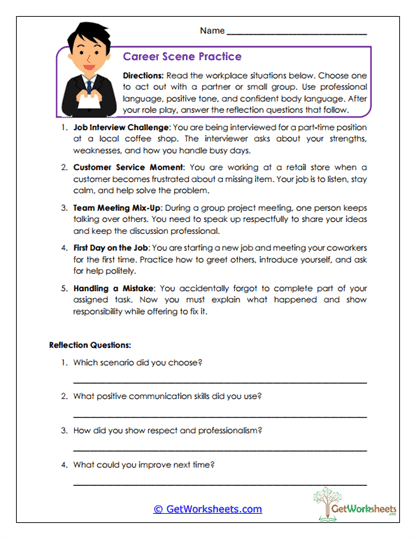
Career Scene Practice
Students choose from workplace scenarios-such as job interviews or teamwork challenges-and act them out using professional tone, language, and body posture. Reflection questions help them evaluate their communication and professionalism. This activity builds career readiness and verbal confidence. It prepares students for real-world workplace interactions.
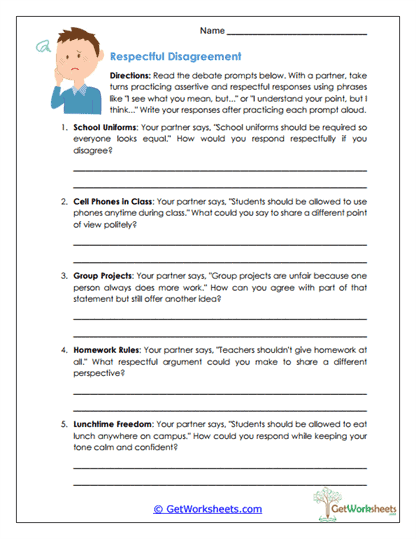
Respectful Disagreement
Learners practice expressing differing opinions politely by writing responses using sentence starters that encourage respectful tone. They explore topics like homework, lunchtime rules, and group work. The activity promotes empathy, assertiveness, and constructive debate skills. It strengthens opinion writing and polite communication.
Bookmark Us Now!
New, high-quality worksheets are added every week! Do not miss out!