Reading Fiction Texts Worksheets
About This Worksheet Collection
This reading fiction texts collection is designed to help students explore narrative craft, deepen comprehension, and think critically about how stories work. Each worksheet pairs an engaging fictional passage with a targeted reading skill-such as identifying theme, analyzing dialogue, recognizing foreshadowing, or exploring point of view. Students learn to break down stories into meaningful components and examine how characters, conflicts, and literary techniques shape a narrative.
As they progress through the collection, learners strengthen their ability to cite evidence, interpret character motivations, analyze structure, summarize effectively, and experiment with creative responses. These activities promote a rich understanding of fiction while building transferable skills such as inferential thinking, expressive writing, and appreciation for author craft. The worksheets support students in becoming confident, thoughtful readers of literature.
Detailed Descriptions Of These Worksheets
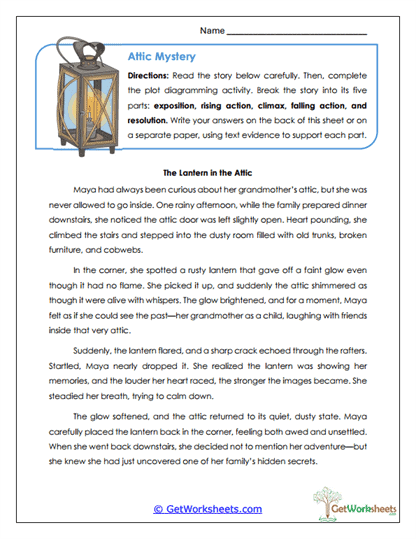
Attic Mystery
Students read a narrative about Maya discovering a mysterious lantern and complete a plot diagram identifying the exposition, rising action, climax, falling action, and resolution. They support their choices with text evidence and analyze how each event fits within the plot. This activity strengthens understanding of narrative structure and reinforces cause-and-effect relationships in storytelling.
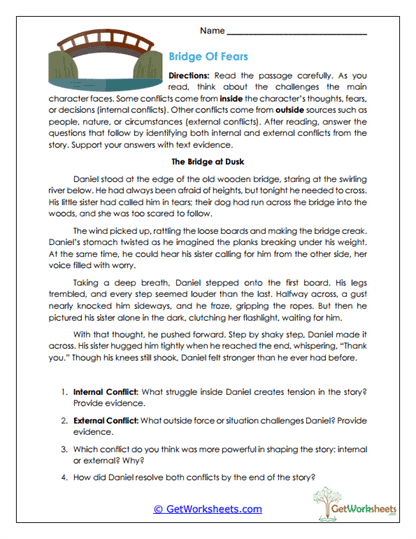
Bridge of Fears
Learners read a passage about Daniel confronting fear while crossing an old bridge and identify both internal and external conflicts. They cite text evidence to explain each type of conflict and evaluate which one shaped the story most. The worksheet deepens comprehension of character struggle and builds analytical thinking about plot development.
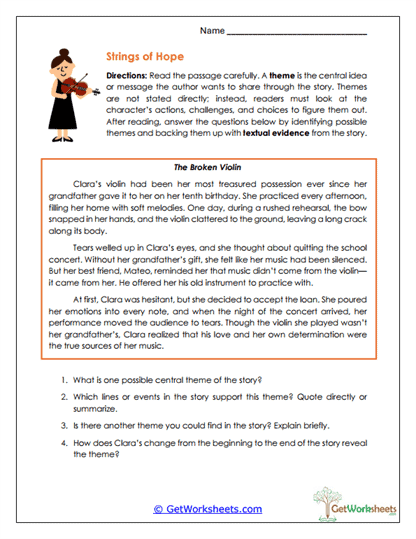
Strings of Hope
Students read about Clara and her cherished violin, determine the story's theme, and support their interpretation with lines from the text. They analyze additional messages conveyed through Clara's growth and challenges. This worksheet strengthens theme analysis, character development understanding, and evidence-based reasoning.
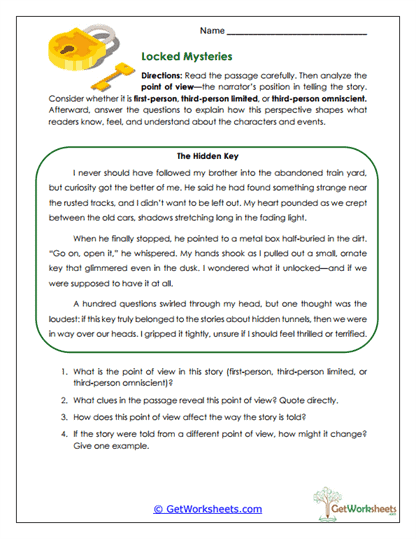
Locked Mysteries
In this worksheet, students determine whether a suspenseful passage is told in first-person, third-person limited, or third-person omniscient. They identify clues that reveal the point of view and explain how perspective shapes reader understanding. Learners also consider how the story might change if told differently, supporting deeper comprehension of narrative voice.
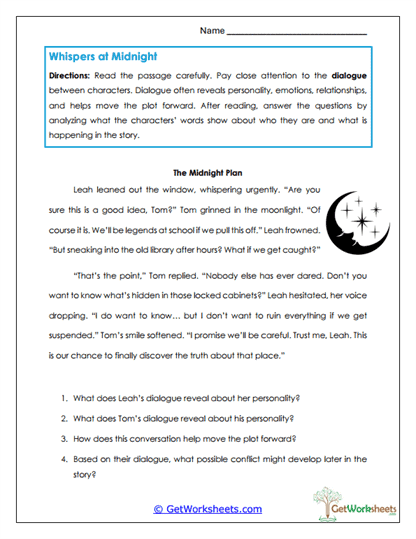
Whispers at Midnight
Students analyze dialogue between two characters planning a nighttime adventure, examining what their conversations reveal about personality and motivation. They explain how dialogue advances the plot and predict upcoming conflicts. This activity builds understanding of how dialogue functions as a tool for characterization and narrative movement.
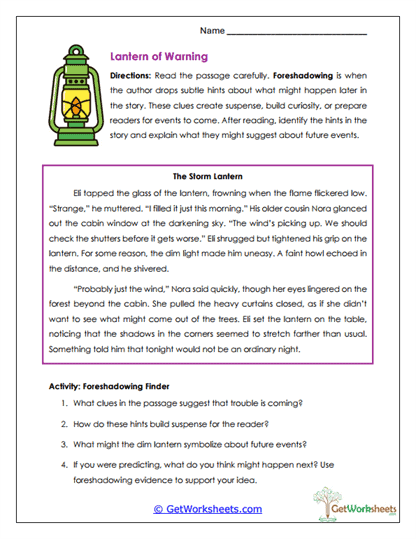
Lantern of Warning
Learners identify textual clues that foreshadow future events in a suspenseful passage. They explain how foreshadowing builds tension and consider symbols that hint at trouble. Students then make predictions supported by evidence, strengthening inferential thinking and appreciation for author craft.
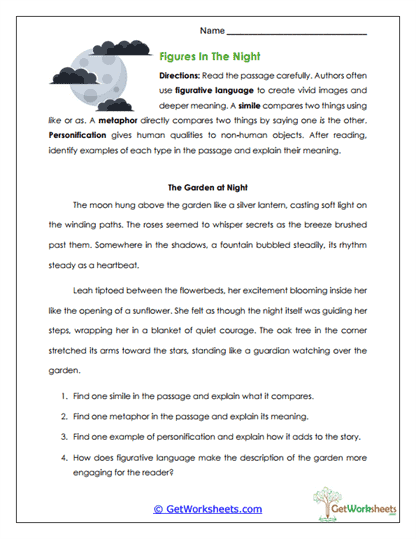
Figures in the Night
Students locate and analyze similes, metaphors, and personification in a descriptive passage. They explain each device's meaning and describe how it enhances imagery and mood. This worksheet develops close reading and teaches students how figurative language enriches storytelling.
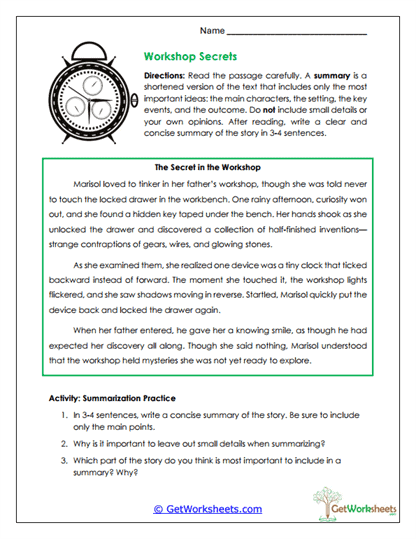
Workshop Secrets
Learners read a short narrative and write a 3-4 sentence summary that captures the characters, setting, conflict, and outcome. They reflect on which details to omit and why. This activity builds summarizing skills and encourages clear, concise expression.
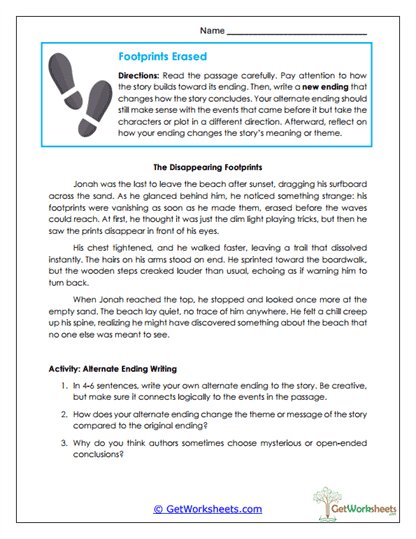
Footprints Erased
Students read a mysterious beach passage and write an alternate ending of 4-6 sentences that logically extends the plot. They reflect on how changing the ending can shift the theme or tone. This worksheet blends creative writing with narrative comprehension.
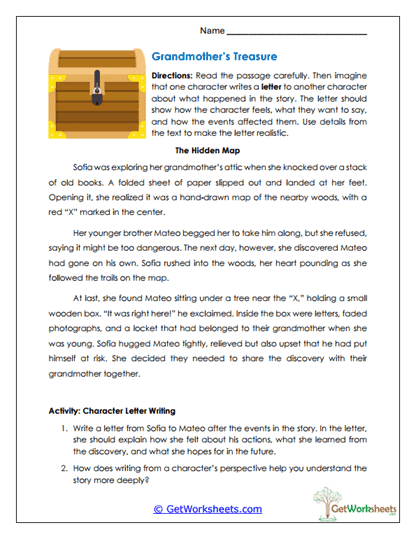
Grandmother's Treasure
Learners read about Sofia discovering a map and childhood treasures in her grandmother's attic, then write a character letter from Sofia to her brother-or the reverse. They describe emotions, key events, and reactions through the character's perspective. This activity strengthens functional writing, empathy, and character analysis.
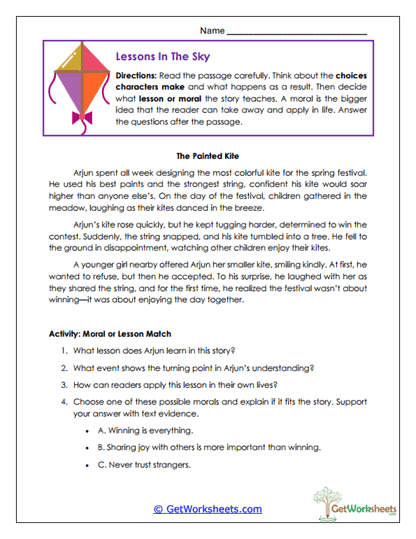
Lessons in the Sky
Students read about Arjun entering a kite-flying contest and identify the story's theme and moral lesson. They analyze the turning point in Arjun's understanding and connect the lesson to real-life situations. The worksheet builds skills in theme determination and text-to-self application.
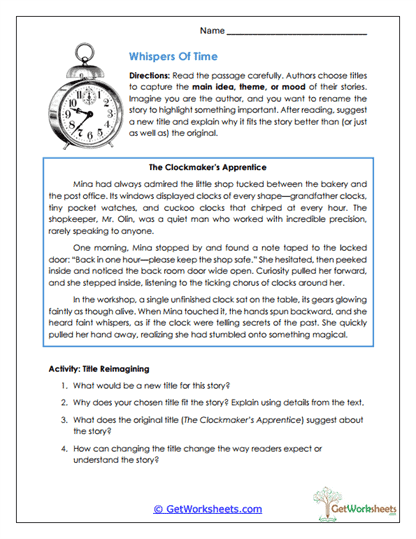
Whispers of Time
Learners read a descriptive passage about a clockmaker's mysterious room and create a new title for the story. They explain how the title shapes reader expectations and how different choices can highlight theme or mood. This activity builds interpretive thinking and understanding of how titles influence narrative interpretation.
Bookmark Us Now!
New, high-quality worksheets are added every week! Do not miss out!