Primary vs. Secondary Sources Worksheets
About This Worksheet Collection
This primary vs. secondary sources collection introduces students to one of the most essential skills in historical inquiry: understanding where information comes from and how it shapes interpretation. Each worksheet engages learners in classifying, evaluating, and reasoning about evidence, helping them recognize the difference between firsthand accounts and later analyses. The activities use real-world examples, short passages, and guided scenarios to make source evaluation concrete and accessible.
As students work through the collection, they learn to read more critically by identifying clues that reveal whether a source provides direct evidence or an interpretation of events. They examine how different types of materials-letters, photographs, textbooks, documentaries, articles, and more-contribute unique perspectives to historical understanding. Through written explanations and classification tasks, learners strengthen their analytical thinking, build research literacy, and develop confidence in navigating informational texts.
Detailed Descriptions Of These Worksheets
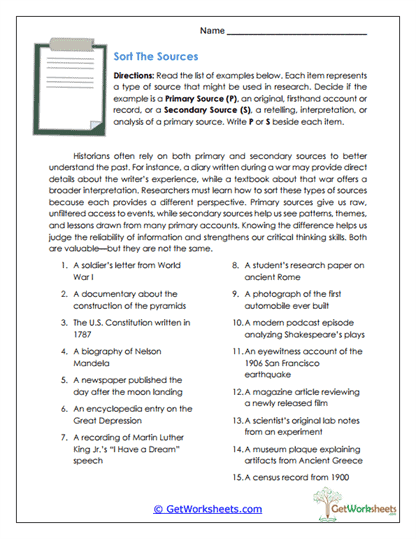
Sorting Sources
Students examine a list of various items and classify each as a primary or secondary source. They use definitions provided in the introduction to guide their decisions and label each example with the correct letter. This activity builds foundational understanding of evidence types and strengthens historical thinking. It also encourages learners to consider how firsthand materials differ from later interpretations.
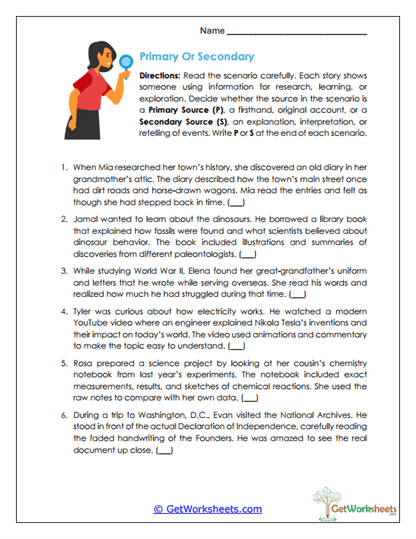
Source Scenario Sort
In this worksheet, students read everyday scenarios in which people use different sources of information. For each situation, they decide whether the source described is primary or secondary. This practical application helps learners transfer definitions into real-world thinking. It also supports analytical reasoning as students justify their choices.
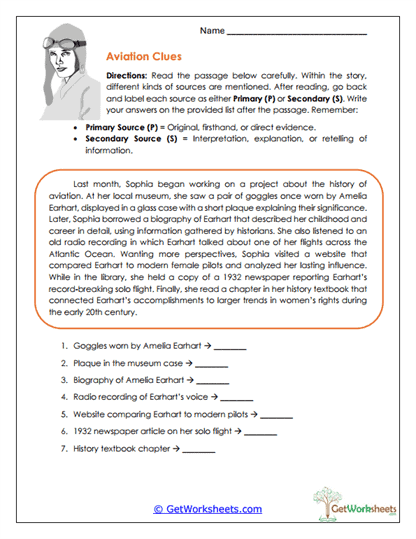
Aviation Source Clues
Students read a passage about a student's aviation history research and identify each source mentioned. They then determine whether each one is primary or secondary, deepening their ability to detect evidence embedded in text. This activity strengthens close reading and encourages thoughtful evaluation of research materials.
Quote or Summary
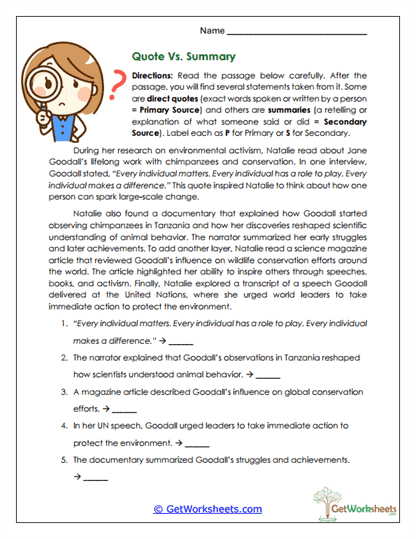
Learners examine statements from a passage about Jane Goodall and distinguish whether each is a direct quote (primary) or a summary (secondary). They label each item and explain their reasoning. The activity sharpens students' ability to identify original wording and understand how summarization transforms information.
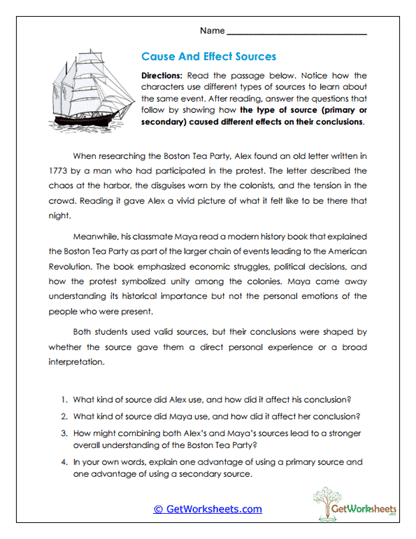
Cause and Effect Sources
This worksheet describes two classmates researching the Boston Tea Party using different kinds of sources. Students analyze how the chosen source types influence the conclusions each student forms. The activity highlights how perspective and accuracy shift depending on whether evidence is firsthand or interpreted. It supports stronger historical reasoning.
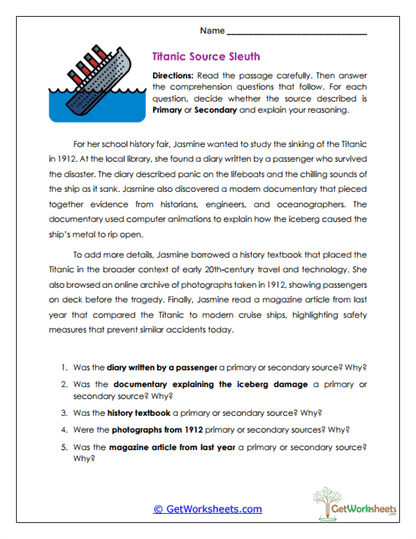
Titanic Evidence Review
Students read a passage describing various Titanic research sources and classify each one as primary or secondary. They explain their reasoning to reinforce an understanding of original documents versus later analyses. The worksheet builds comprehension of how historians piece together evidence from multiple types of sources.
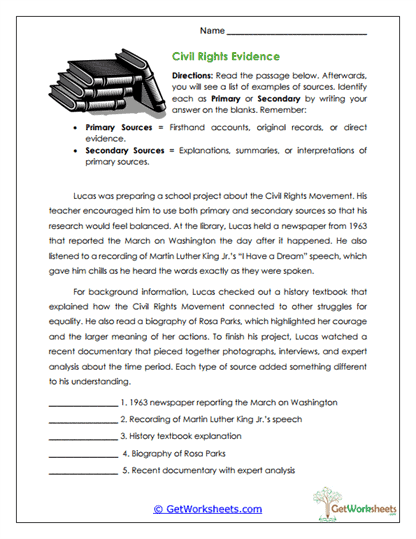
Civil Rights Source Types
Learners explore a passage about Civil Rights Movement research and classify each source mentioned-newspapers, recordings, textbooks, documentaries, and more. They justify their classifications using textual clues. This activity teaches students how different sources contribute to understanding complex historical eras.
Evidence Color Coding
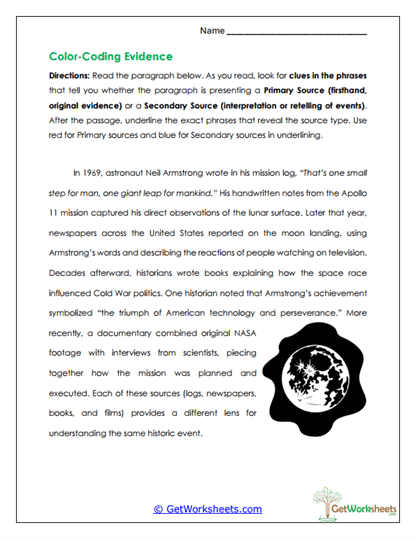
Students underline text clues that reveal whether parts of a passage about the moon landing describe primary or secondary sources. This close-reading task trains learners to identify specific language that indicates firsthand observation or later retelling. It supports precision and strengthens source-analysis skills.
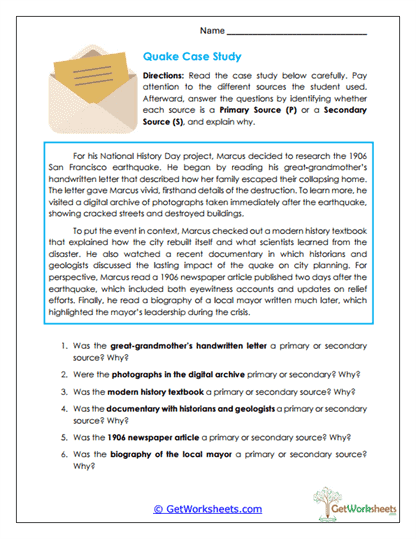
Earthquake Case Study
In this worksheet, students study a passage about researching the 1906 San Francisco earthquake. They classify letters, photographs, textbooks, documentaries, and other materials as primary or secondary. By providing reasoning, learners strengthen their understanding of how historians compare diverse evidence types.
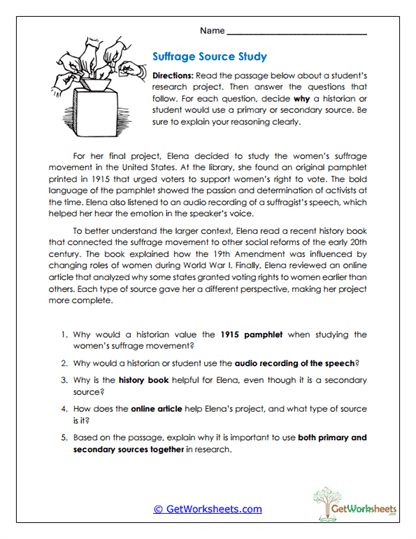
Suffrage Research Review
Students read a passage about a student researching the women's suffrage movement and evaluate different sources used. They classify each as primary or secondary and reflect on why multiple perspectives are valuable. This activity fosters deeper inquiry and highlights the roles each type of source plays in research.
Fact or Interpretation
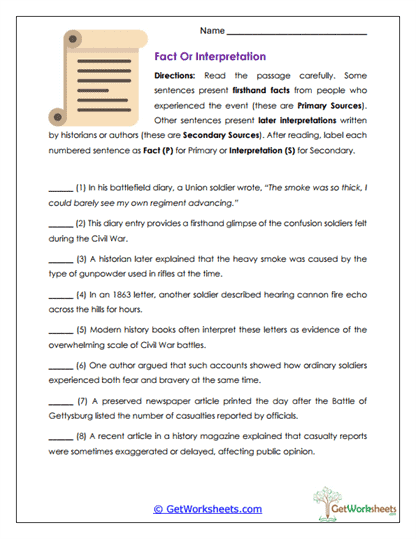
Learners classify statements about Civil War experiences as either primary facts or secondary interpretations. They examine word choice to determine whether each sentence reflects direct evidence or later commentary. This worksheet strengthens critical thinking and helps students distinguish historical evidence from explanatory analysis.
Significance of Sources
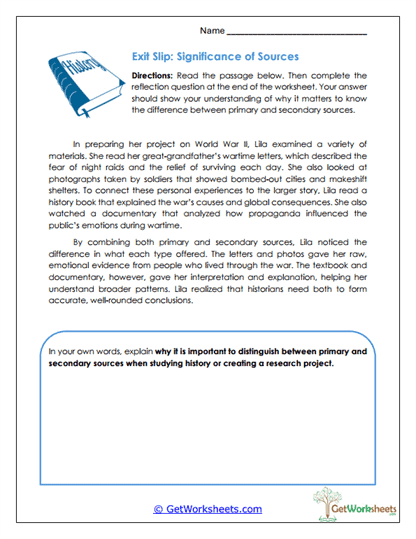
In the final worksheet, students read a reflection about researching World War II and write an explanation of why distinguishing between primary and secondary sources matters. They consider how firsthand accounts provide personal insights and how secondary sources offer broader context. This task deepens historical reasoning and supports clear, analytical writing.

Bookmark Us Now!
New, high-quality worksheets are added every week! Do not miss out!