Prediction Worksheets
About This Worksheet Collection
The Prediction collection helps students strengthen inferential and analytical reading skills by teaching them how to make logical, evidence-based predictions before and during reading. Each worksheet guides learners to examine clues in titles, images, dialogue, or context to anticipate what might happen next in a story or informational passage. By moving beyond guessing to supported reasoning, students develop critical comprehension strategies that prepare them for deeper literary analysis.
Throughout the collection, learners combine observation, textual evidence, and creative thinking to form and test their predictions. They learn to revise their ideas as new information appears, fostering metacognitive awareness and reflection. These activities integrate reading, writing, and reasoning, encouraging students to think like detectives-always searching for clues that connect what they know to what comes next.
Detailed Descriptions Of These Worksheets
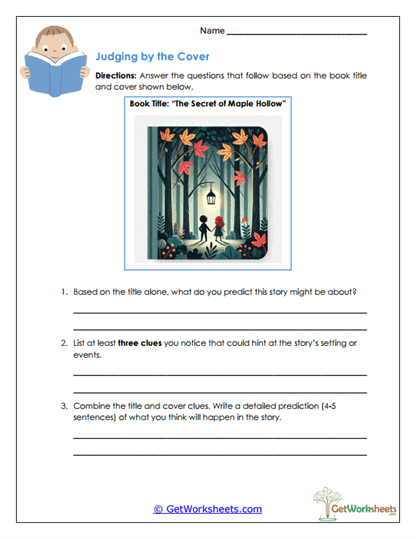
Judging by the Cover
Students use a book's title and cover art to make predictions about its topic, setting, and possible plot. They list three visual or textual clues and explain how each supports their reasoning. A written paragraph combines these details into a cohesive prediction. The task strengthens inferential thinking and visual-textual analysis.
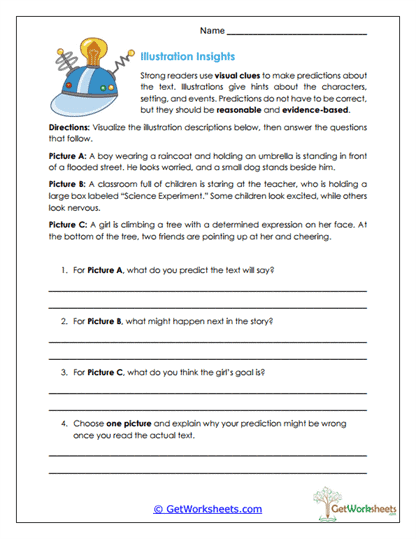
Illustration Insights
Learners visualize described scenes, such as a stormy day or a science experiment, to predict what may happen next. They base their reasoning on textual description rather than imagination alone. The exercise enhances visualization and comprehension through contextual inference. It connects visual literacy with logical prediction skills.
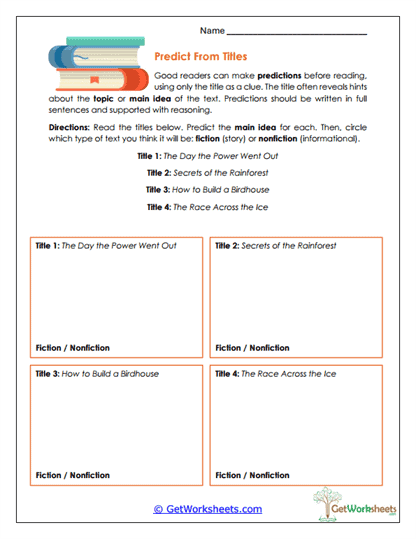
Predict from Titles
Students analyze several book or article titles to infer each text's main idea and genre. They determine whether the text is likely fiction or nonfiction and justify their reasoning. This worksheet teaches how phrasing and word choice reveal content focus. It supports pre-reading strategy development and genre awareness.
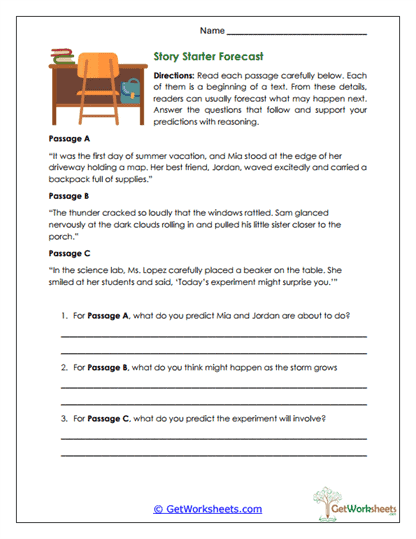
Story Starter Forecast
Learners read the beginnings of three short stories and use narrative details to predict future events. They identify character goals, problems, and settings that hint at outcomes. The written responses require explanation using text evidence. This task builds understanding of plot progression and narrative logic.
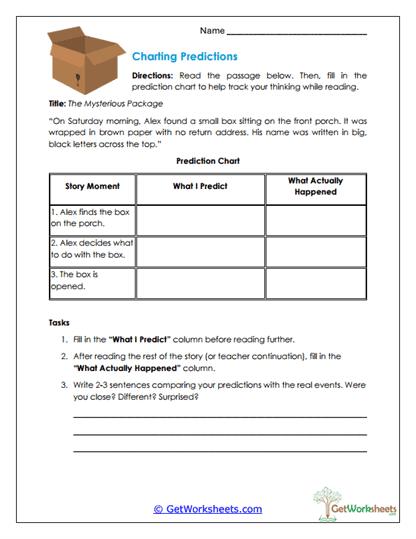
Charting Predictions
Students track their evolving predictions using a three-column chart to record story moments, forecasts, and actual outcomes. They reflect on the accuracy of their reasoning after reading. This process encourages metacognitive awareness and active reading habits. It helps learners self-assess comprehension while identifying textual cause-and-effect.
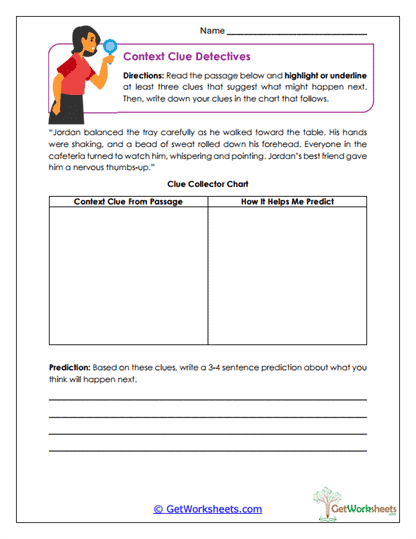
Context Clue Detectives
Learners act as investigators, highlighting three textual clues that foreshadow future events. They explain how each clue supports a prediction, then write a paragraph summarizing their reasoning. This hands-on approach promotes analytical reading and text-based justification. It strengthens evidence gathering and logical reasoning.
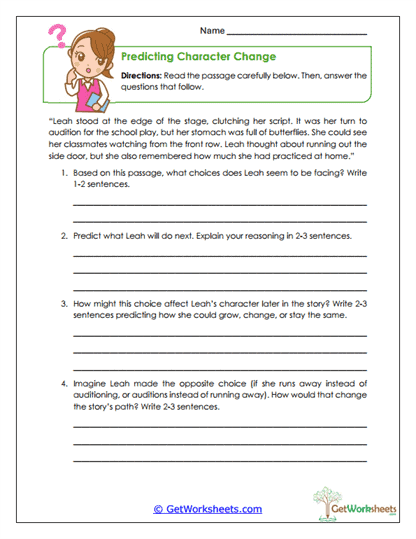
Predicting Character Change
Students predict a character's choices and growth based on internal conflict described in a short passage. They discuss alternative actions and their likely effects on the story. The exercise builds empathy and deepens comprehension of motivation and consequence. It enhances reasoning about how characters evolve through decisions.
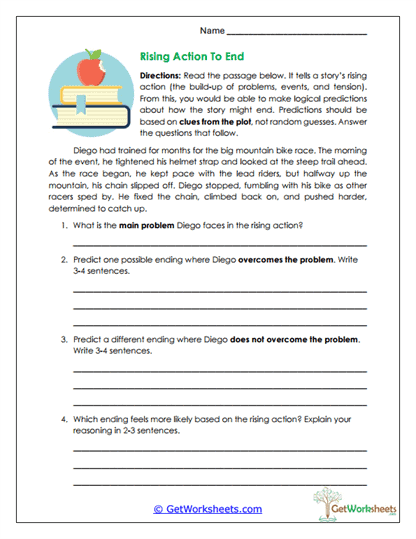
Rising Action to End
Learners read a story excerpt and write two possible endings-one optimistic, one unfavorable-using plot tension as evidence. They then decide which is more likely and explain why. This activity reinforces understanding of rising action and resolution. It helps students connect narrative structure with prediction accuracy.
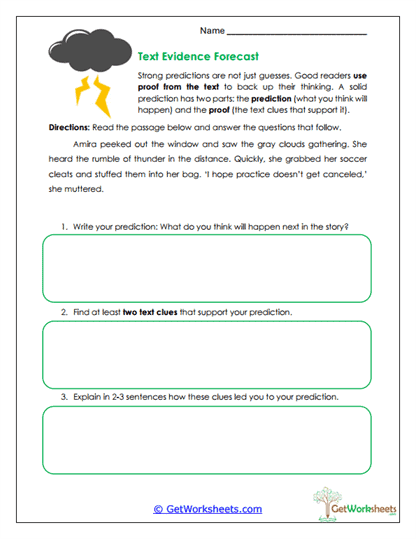
Text Evidence Forecast
Students practice supporting their predictions with at least two textual clues from a passage. They explain how each piece of evidence justifies their conclusion. This task differentiates between unsupported guesses and informed predictions. It cultivates close reading and textual justification skills.
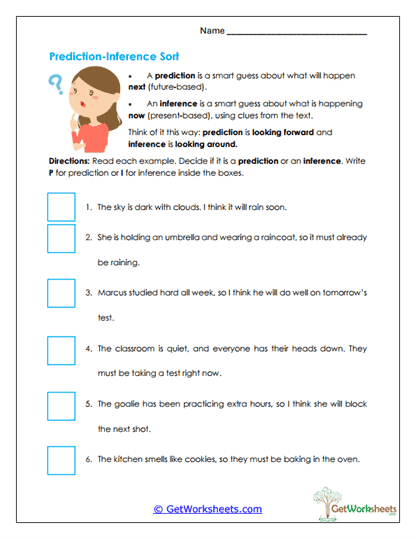
Prediction-Inference Sort
Learners distinguish between predictions about the future and inferences about the present by labeling six short examples. They explain their reasoning to demonstrate comprehension of timing and context. This exercise clarifies a common reading confusion while strengthening analytical precision. It builds foundational reasoning for literature and informational text.
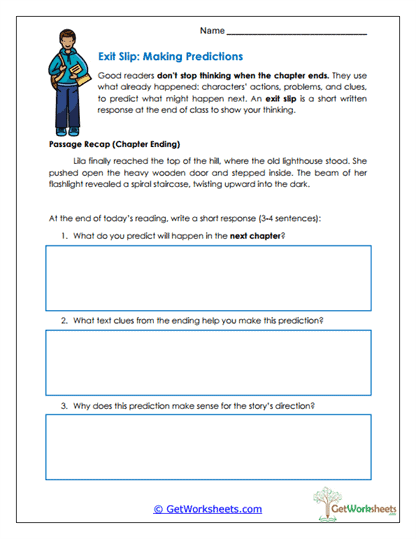
Exit Slip: Making Predictions
This brief assessment asks students to predict what happens next after reading a suspenseful paragraph. They must cite at least one textual clue to support their idea. The concise written format encourages clear reasoning and reflection. It's ideal for evaluating understanding of prediction and inference at the lesson's close.
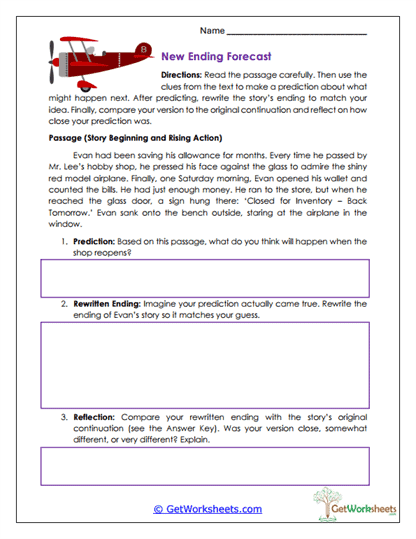
New Ending Forecast
Students write a new conclusion for a short story passage using clues from the rising action to guide their prediction. They compare their ending with the original and reflect on narrative consistency. The activity blends creativity with analytical reasoning. It reinforces comprehension, imagination, and understanding of story structure.

Bookmark Us Now!
New, high-quality worksheets are added every week! Do not miss out!