Point of View Worksheets
About This Worksheet Collection
The Point of View collection teaches students to recognize how perspective shapes storytelling. Each worksheet introduces essential narrative viewpoints-first-person, second-person, and third-person limited or omniscient-through short reading and writing exercises. Learners analyze pronouns, tone, and narration style to identify who is telling the story and how that affects the reader's understanding. By comparing narrators, shifting perspectives, and evaluating reliability, students gain deeper insight into character voice, mood, and author intent.
Across the collection, activities blend textual analysis with creative rewriting to strengthen both comprehension and composition. Learners explore how changes in point of view transform tone, emotional impact, and meaning. This integrated approach develops close reading, empathy, and writing flexibility-skills that help students read and craft stories with greater awareness of narrative perspective.
Detailed Descriptions Of These Worksheets
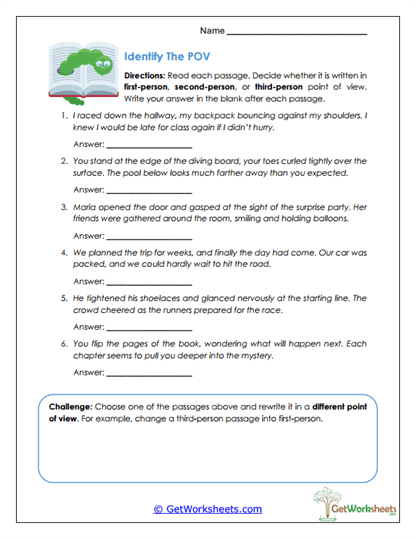
Identify the POV
Students read six short passages and determine whether each uses first-, second-, or third-person point of view. They analyze pronoun use and narration style to support their answers. A creative challenge asks learners to rewrite a passage from a new perspective. The activity reinforces understanding of how viewpoint defines storytelling voice.
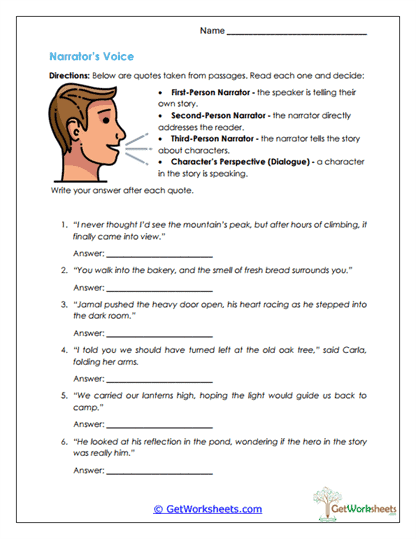
Narrator's Voice
Learners examine quoted examples to identify the narrative perspective-first-, second-, third-person, or dialogue. They note how language and structure reveal who is telling the story. This exercise sharpens comprehension of narrator versus character distinction. It encourages close reading and attention to tone and storytelling cues.
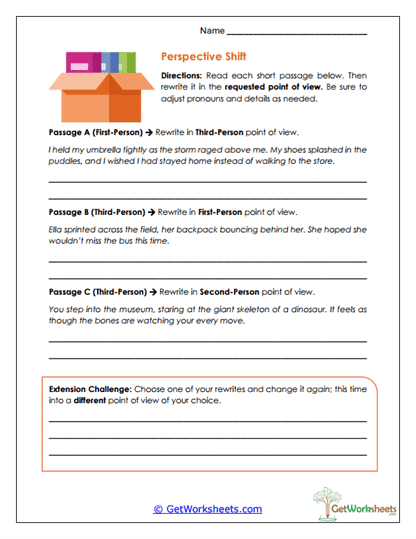
Perspective Shift
Students rewrite short passages by shifting between different narrative perspectives. They adapt pronouns, sentence structure, and tone to reflect new points of view. This process highlights how perspective alters emotion, distance, and style. The task strengthens writing adaptability and awareness of voice.
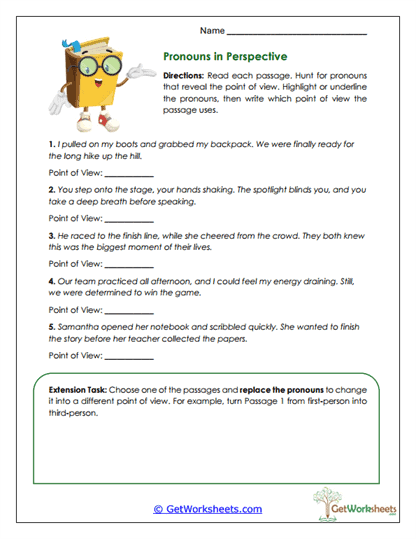
Pronouns in Perspective
Learners identify point of view through pronoun clues, underlining or highlighting key words like I, you, or she. They then rewrite a selected passage to practice shifting perspective. The activity promotes grammar precision and narrative comprehension. It helps students connect pronoun use to narrator identity.
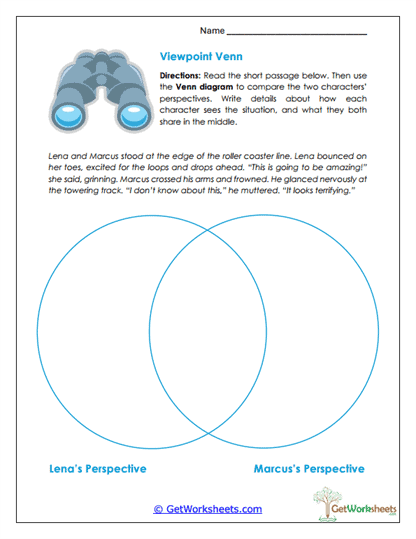
Viewpoint Venn
Students compare two characters' perspectives using a Venn diagram after reading a shared-event passage. They analyze how differing viewpoints shape understanding and emotion. The visual layout supports comprehension and synthesis of character contrast. This exercise encourages empathy and critical reflection on perspective.
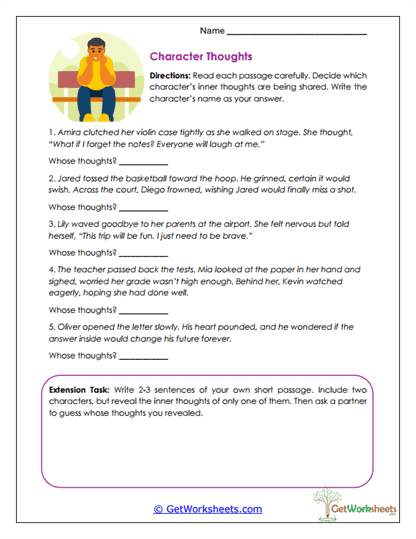
Character Thoughts
Learners identify which character's internal reflections appear in short passages. They practice distinguishing between narrator and thought voice. A creative follow-up invites students to write their own passage containing implied character thoughts. This strengthens awareness of internal narration and third-person limited perspective.
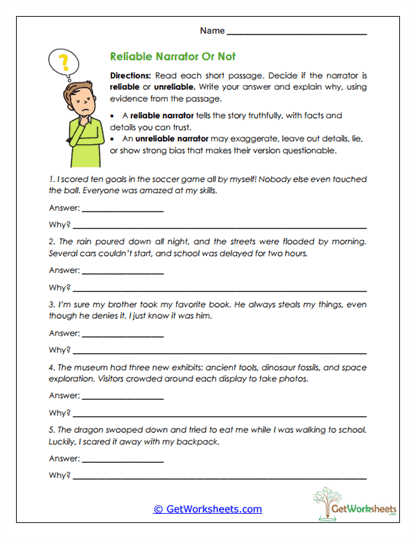
Reliable Narrator or Not
Students evaluate whether narrators in short excerpts are reliable or biased. They cite textual evidence to justify conclusions and discuss how credibility affects reader trust. This analytical task builds inference, reasoning, and awareness of narrative manipulation. It deepens understanding of honesty and bias in storytelling.
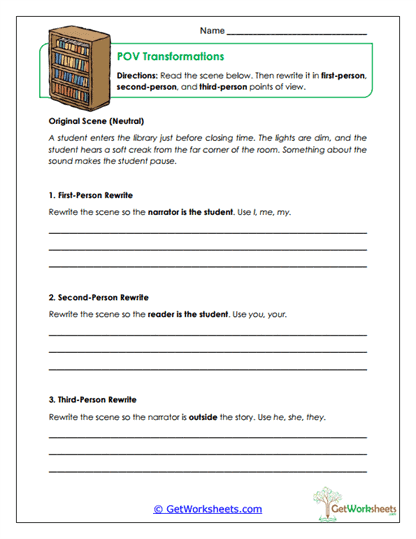
POV Transformations
Learners rewrite a single scene three times-once in first-person, once in second-person, and once in third-person. They observe how perspective alters tone, focus, and emotion. The repetition builds mastery of pronoun control and stylistic precision. It's an engaging way to explore how voice reshapes meaning.
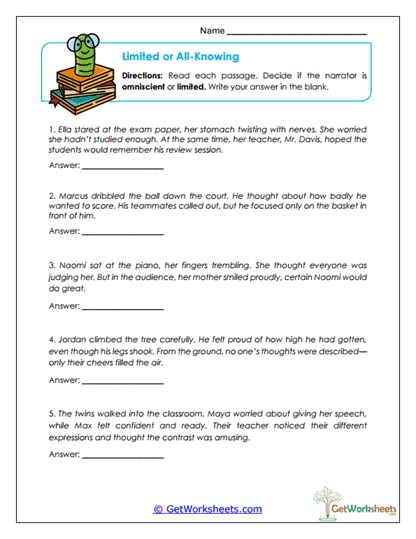
Limited or All-Knowing
Students read examples of third-person narration and determine whether each is limited or omniscient. They justify their answers with clues about the narrator's knowledge of character thoughts. The task promotes close reading and classification of narrative scope. It builds analytical reasoning and evidence-based interpretation.
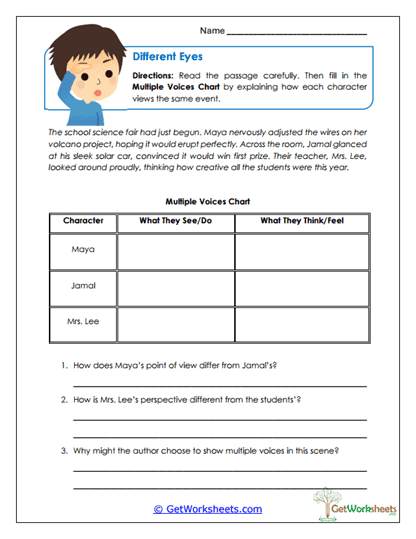
Different Eyes
Learners examine how three characters interpret the same event, recording their thoughts and reactions in a comparison chart. They reflect on how perspective influences emotion and understanding. This activity enhances comprehension, empathy, and text-based reasoning. It reveals how shared experiences can feel different to each participant.
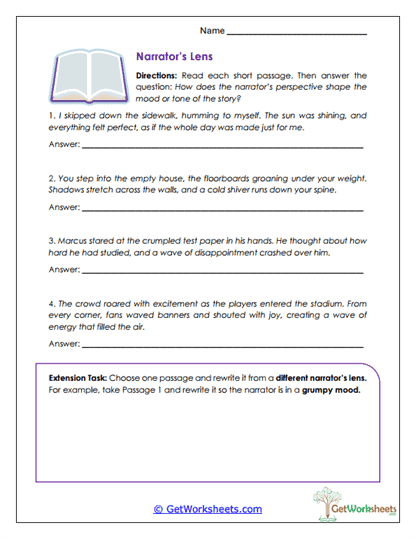
Narrator's Lens
Students analyze how a narrator's attitude shapes tone and reader emotion across multiple short passages. They evaluate how perspective conveys joy, tension, or disappointment. A rewriting challenge asks learners to shift tone by changing the narrator's outlook. The worksheet develops awareness of voice, mood, and interpretive nuance.
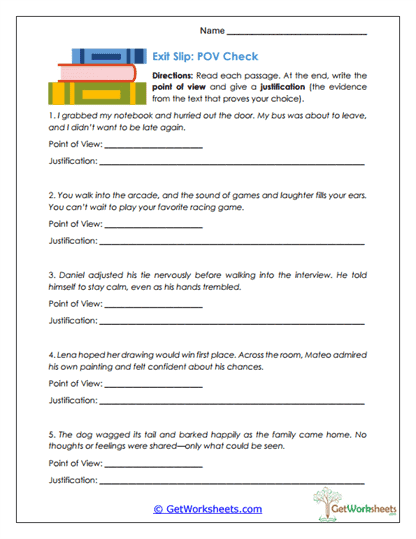
Exit Slip: POV Check
This brief assessment asks students to identify narrative point of view in short excerpts and cite supporting evidence. Learners justify their answers by analyzing pronouns and narration cues. The exercise reinforces comprehension and reasoning in concise form. It provides teachers with a quick measure of mastery in recognizing point of view.
Bookmark Us Now!
New, high-quality worksheets are added every week! Do not miss out!