Personal Space and Boundaries Worksheets




About This Worksheet Collection
This Personal Space and Boundaries collection gives students practical tools to understand physical distance, respect others' comfort levels, and communicate their needs in healthy ways. Through stories, categorization tasks, safety-based scenarios, vocabulary practice, and reflective writing, students learn how boundaries support emotional safety and positive relationships. The worksheets present real-life contexts-from school hallways and playgrounds to digital spaces and future workplaces-helping learners recognize how respectful behavior changes depending on the environment.
As students complete the activities, they develop key social-emotional skills such as self-awareness, empathy, assertive communication, and responsible decision-making. They also build academic skills including reading comprehension, scenario interpretation, categorization, sentence rewriting, and written reflection. Together, these worksheets equip students with the knowledge and language they need to navigate personal space respectfully and protect both their own boundaries and those of others.
Detailed Descriptions Of These Worksheets
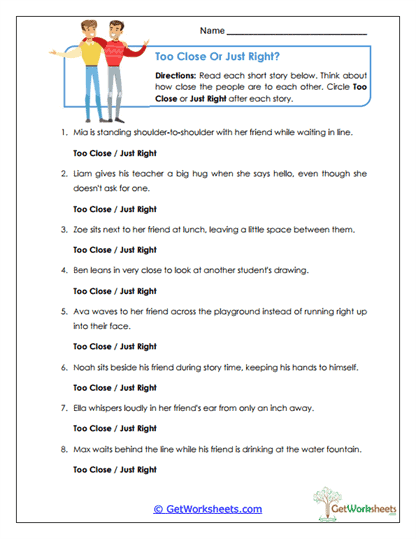
Too Close or Just Right
Students read short scenarios and decide whether the distance between people is appropriate. They circle "Too Close" or "Just Right," helping them think about comfort levels and spacing in everyday school situations. The worksheet teaches respectful physical boundaries. It also strengthens students' ability to interpret social cues and evaluate interactions.
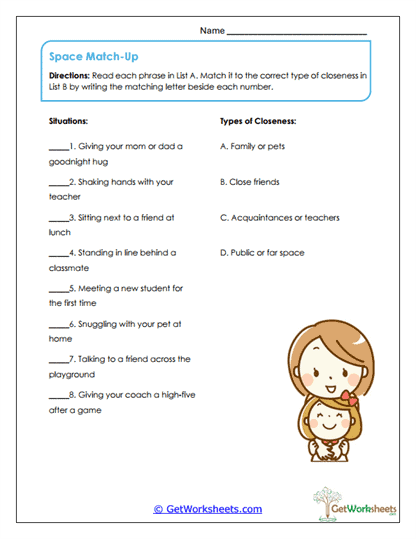
Space Match-Up
Learners match everyday situations to the appropriate relationship category, such as family, friends, teachers, or public space. This helps students understand that different relationships require different levels of closeness. The activity reinforces respectful interactions and contextual decision-making. It supports categorization and awareness of social expectations.
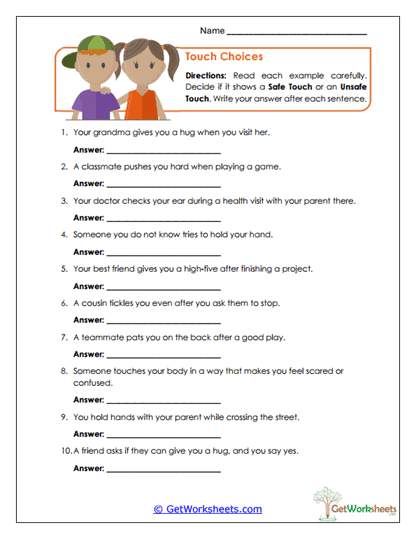
Touch Choices
Students read scenarios and determine whether each example represents a Safe Touch or Unsafe Touch. This helps learners distinguish between caring, helpful touch and inappropriate or unwanted contact. It builds personal safety awareness and confidence in recognizing harmful situations. The activity encourages clear communication about boundaries.
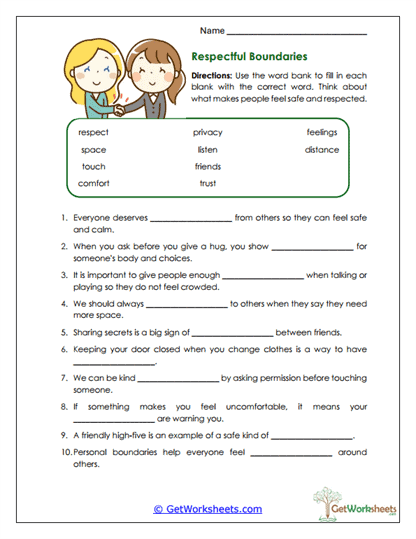
Respectful Boundaries
Using a word bank, students complete sentences related to permission, privacy, trust, and comfort. The worksheet helps students build vocabulary about respectful interactions and personal space. It promotes empathy and thoughtful behavior toward others' needs. Learners gain a clearer understanding of boundary-supportive communication.
Respected or Crossed
Students evaluate short scenarios and decide whether a boundary is being respected or crossed. They think carefully about actions involving privacy, distance, and consent. This activity strengthens judgment and responsible decision-making. It encourages students to identify healthy versus inappropriate behaviors.
Hallway Harmony
Learners read a passage about respecting personal space at school and answer comprehension questions. The text highlights behaviors like waiting your turn, standing at a safe distance, and avoiding leaning over others' desks. The worksheet reinforces understanding of respectful conduct in shared spaces. It builds comprehension and real-world application skills.
Space and Feelings
Students respond to open-ended questions about how personal space affects emotions. They reflect on discomfort, communication strategies, and polite ways to ask for space. This activity builds self-awareness and emotional expression. It encourages learners to advocate for their needs while respecting others.
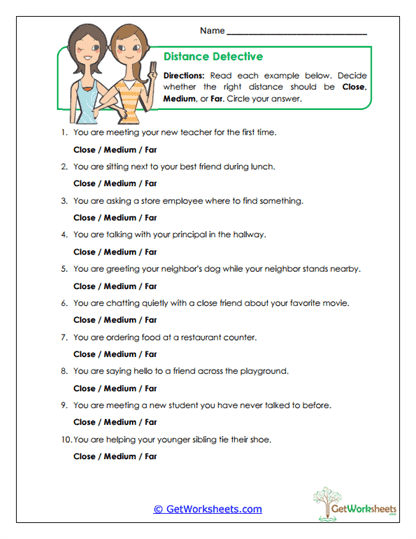
Distance Detective
Learners read scenarios and determine whether the appropriate distance is Close, Medium, or Far. The activity helps students adjust their physical proximity based on context and relationship. It strengthens awareness of social norms and decision-making. Students practice interpreting everyday interactions thoughtfully.
Online Respect
Students read an informational passage about digital boundaries and respond to comprehension questions. They learn how personal space applies online, from asking permission before sharing photos to respecting response time. The worksheet reinforces responsible communication in digital spaces. It encourages students to reflect on healthy, safe online habits.
Rewrite It Kindly
Learners transform blunt or rude statements into polite, assertive requests related to personal space. The activity teaches respectful tone and clear communication. Students practice setting boundaries without sounding harsh. It also supports emotional regulation and sentence rewriting skills.
Professional Boundaries
Students read an informational passage about maintaining personal space in workplace environments and answer multiple-choice questions. They learn why distance, consent, and respect matter in professional interactions. The activity builds comprehension and prepares students for real-world etiquette. It reinforces awareness of workplace norms and boundaries.
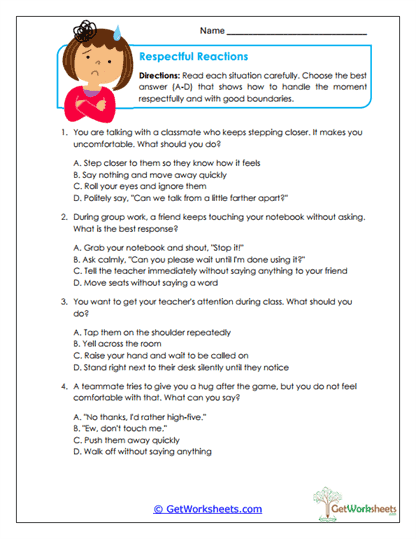
Respectful Reactions
Learners read boundary-related scenarios and choose the response that demonstrates assertive, respectful, and safe communication. They evaluate situations involving unwanted contact, invading privacy, or standing too close. This worksheet strengthens decision-making and interpersonal skills. It teaches students how to respond confidently and kindly when boundaries are challenged.
Bookmark Us Now!
New, high-quality worksheets are added every week! Do not miss out!