Oceania Worksheets



About This Worksheet Collection
This Oceania worksheet collection introduces students to the geography, cultures, climate zones, ecosystems, and modern challenges of Australia, New Zealand, and the Pacific Islands. Through informational passages, cloze activities, matching tasks, map-based reasoning, cause-and-effect analysis, and extended writing prompts, learners explore coral reefs, Indigenous cultures, island landforms, major oceans, and the region's global role. The collection blends physical and human geography to help students understand how environment, culture, and history shape life across Oceania.
Students strengthen key academic skills including informational-text comprehension, vocabulary development, map interpretation, climate analysis, and evidence-based writing. They learn to compare cultural groups, analyze environmental issues like reef decline and rising sea levels, identify landforms, and reason about political and historical developments. Together, these worksheets provide a comprehensive introduction to this unique and diverse world region.
Detailed Descriptions Of These Worksheets
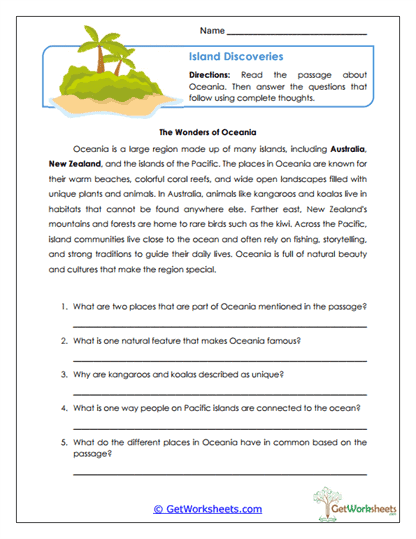
Oceania Reading
Students read an informational passage covering Australia, New Zealand, and the Pacific Islands. They identify natural features like coral reefs, beaches, kangaroos, koalas, and kiwis, and respond to comprehension questions in full sentences. This worksheet strengthens reading comprehension and helps students understand Oceania's diverse cultures and environments.
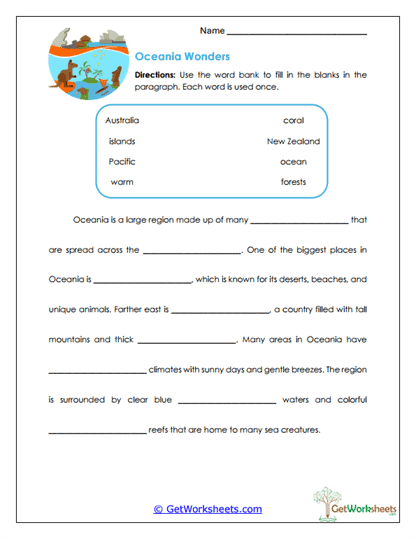
Fill-In
Learners complete a paragraph using key terms such as Pacific, Australia, islands, coral, and forests. The cloze format reinforces vocabulary, context-clue usage, and understanding of Oceania's landscapes, climate, and ecosystems. Students improve both reading fluency and geographic knowledge.
Island Vocabulary
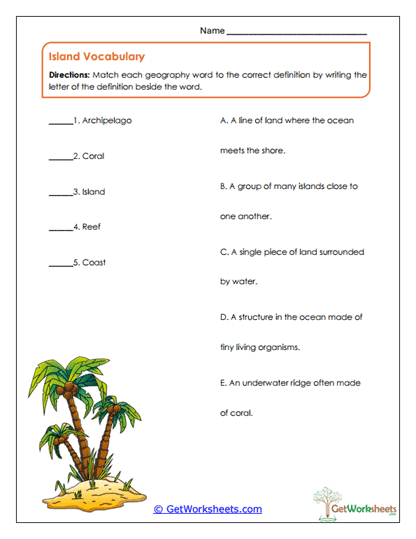
Students match landform and ocean-related terms-archipelago, reef, coast, island, coral-to their correct definitions. This builds academic vocabulary related to Oceania's physical geography and supports classification and concept recognition.
Oceania True/False
Students evaluate statements about climate, coral reefs, wildlife, and culture to determine if they are true or false. They correct inaccurate statements, reinforcing careful reading, factual accuracy, and understanding of Oceania's environmental and cultural features.
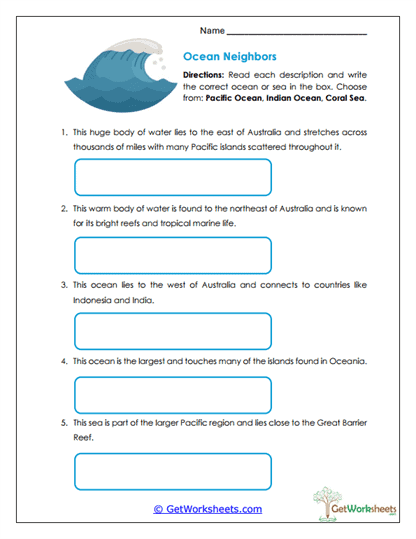
Ocean Regions
Learners read clues describing major bodies of water near Oceania-such as the Pacific Ocean, Indian Ocean, and Coral Sea-and identify each by name. This activity builds spatial reasoning, strengthens map skills, and reinforces geographic vocabulary.
Indigenous Cultures
Students read a passage comparing Aboriginal Australian and Māori cultures. They answer comprehension questions using evidence from the text, strengthening analytical thinking, cultural understanding, and informational-text skills.
Climate Zones Match
Learners identify whether brief climate descriptions match tropical, arid, or temperate zones. This worksheet reinforces environmental-geography vocabulary and helps students analyze how rainfall, temperature, and landscapes differ across Oceania.
Reef Cause & Effect
Students read a passage about threats to the Great Barrier Reef-including warming oceans, sediment, pollution, and overfishing-and identify cause-and-effect relationships. This activity develops environmental literacy and critical reasoning skills.
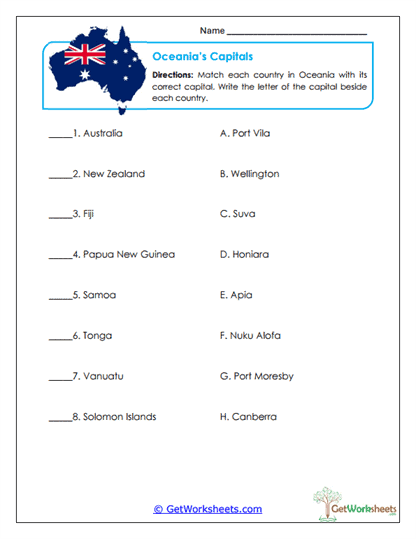
Capitals of Oceania
Students match countries such as Australia, New Zealand, Samoa, Fiji, and Vanuatu to their capitals. This reinforces political-geography knowledge, strengthens memory skills, and supports recognition of national locations throughout the Pacific.
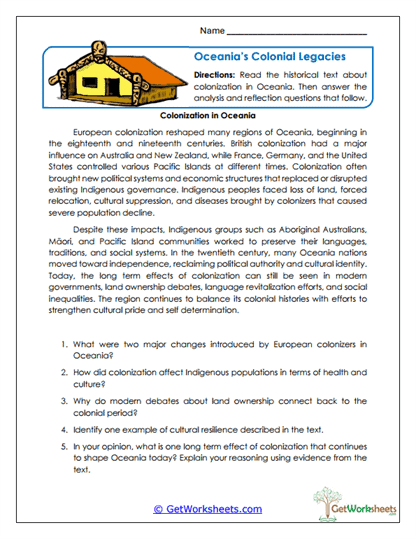
Colonial History
Learners read an informational text explaining colonization by Britain, France, Germany, and the U.S., along with cultural suppression and modern impacts on Indigenous communities. Students answer analysis questions that promote deep historical thinking and evidence-based writing.
Indo-Pacific Analysis
Students write a structured paragraph or short essay analyzing Oceania's role within the broader Indo-Pacific region. They consider natural resources, environmental challenges, major powers, and regional cooperation. This worksheet builds expository writing, global-geography understanding, and critical-thinking skills.
Indigenous Land Rights
Learners read a passage on Aboriginal Australian and Māori land-rights movements and answer reflective questions comparing challenges and progress. This worksheet deepens understanding of Indigenous history, cultural identity, and legal systems while strengthening evidence-based written responses.
Bookmark Us Now!
New, high-quality worksheets are added every week! Do not miss out!