Netherlands Worksheets
About This Worksheet Collection
This Netherlands worksheet collection introduces students to the geography, culture, history, economy, and environmental challenges of one of Europe's most distinctive countries. Through narrative readings, informational passages, cloze exercises, matching tasks, map skills, and analytical writing, learners explore topics such as canals, polders, tulip farming, Dutch landmarks, transportation systems, and rising sea levels. These worksheets offer a rich blend of physical and human geography, helping students understand how the Dutch have adapted creatively to their environment.
Across the activities, students practice essential academic skills including informational-text comprehension, contextual vocabulary use, inference-making, geographic reasoning, and evidence-based writing. They examine how the Netherlands balances innovation, environmental management, cultural preservation, and economic growth. This collection supports world geography units, European studies, environmental science concepts, and cross-curricular literacy development.
Detailed Descriptions Of These Worksheets
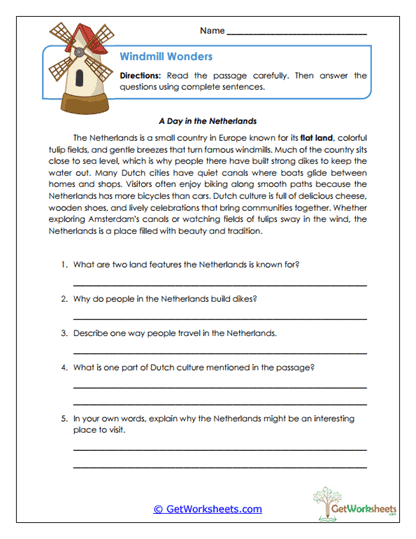
Dutch Reading
Students read an informational passage describing Dutch geography, culture, and daily life-from flat landscapes and canals to biking, dikes, and traditions. They answer comprehension questions using complete sentences and textual evidence. This worksheet strengthens understanding of the Netherlands' physical environment, human-environment interaction, and cultural features.
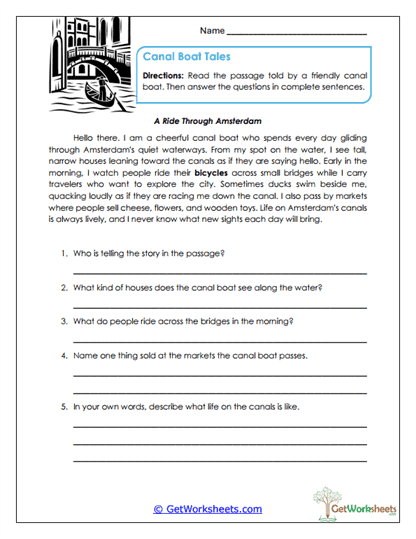
Canal Boat Reading
Learners read a creative first-person narrative told by an Amsterdam canal boat. Through sensory details and observations, students explore Dutch urban life and waterways. They respond to questions that build narrative comprehension, inference skills, and cultural awareness. The activity enhances point-of-view analysis and engagement with setting.
Dutch Quiz
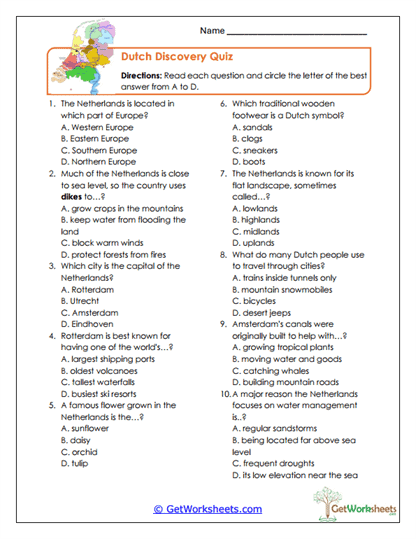
A multiple-choice worksheet assessing knowledge of Dutch geography, landmarks, symbols, and transportation. Students answer questions about elevation, capital cities, tulips, wooden shoes, and famous sites. This helps develop factual recall, critical thinking, and multiple-choice reasoning while reinforcing key concepts.
Holland Landmarks Match
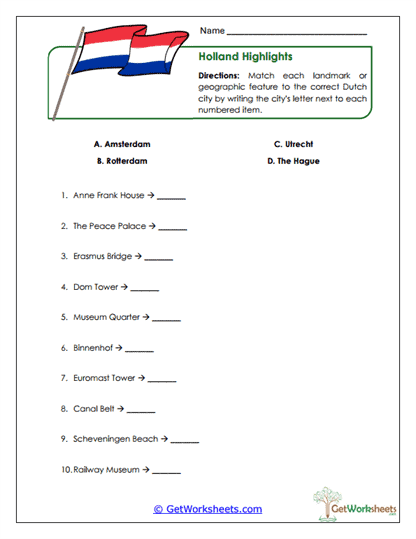
Students match major Dutch landmarks-such as the Anne Frank House, Erasmus Bridge, and Scheveningen Beach-to the correct cities. This task strengthens map skills, regional awareness, and cultural literacy. It encourages careful reading and geographic identification.
Geography Builder
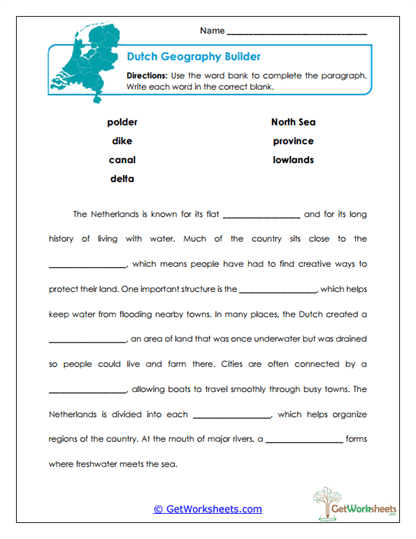
This cloze paragraph asks students to fill in vocabulary terms such as polder, dike, canal, delta, and province. It reinforces understanding of Dutch land management, water systems, and regional organization. Students build vocabulary, apply context clues, and deepen geography comprehension.
Tulip Farming
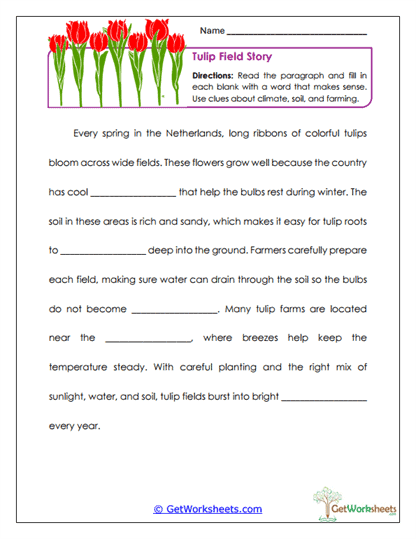
Learners complete a cloze passage about tulip farming, focusing on climate, soil, breezes, and seasonal changes. This worksheet connects agriculture to physical geography and climate science. Students strengthen vocabulary and contextual reasoning while learning why tulips thrive in the Netherlands.
Map Skills Netherlands
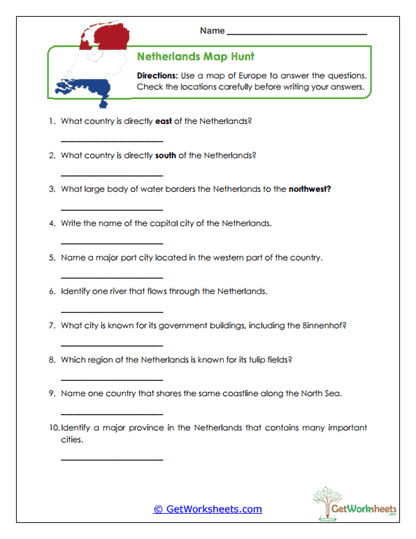
Students use a map to answer questions about borders, rivers, seas, provinces, and major cities. They identify the capital, nearby countries, ports, and farming regions. This worksheet builds spatial reasoning, map interpretation, and regional knowledge of Europe.
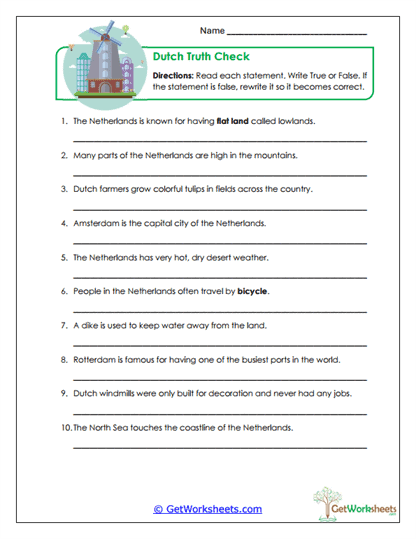
Dutch Fact Check
Students evaluate statements about the Netherlands and rewrite incorrect ones. Topics include climate, canals, transportation, elevation, and cultural traditions. This activity helps students distinguish fact from misconception, promoting accuracy and critical thinking.
Polder Analysis
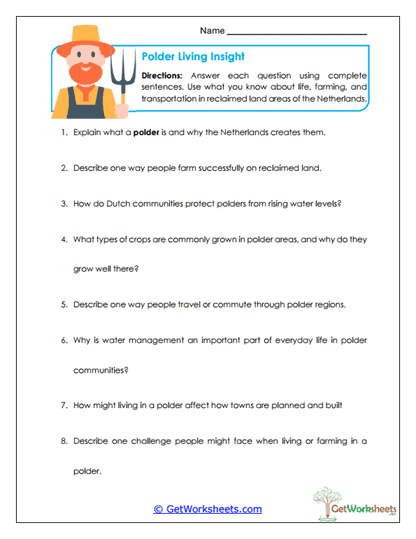
Learners answer open-ended questions about polders, land reclamation, farming, and community protection. They explain how polders are created and why they are important. This worksheet develops analytical writing and reinforces knowledge of Dutch water management strategies.
Rising Sea Analysis
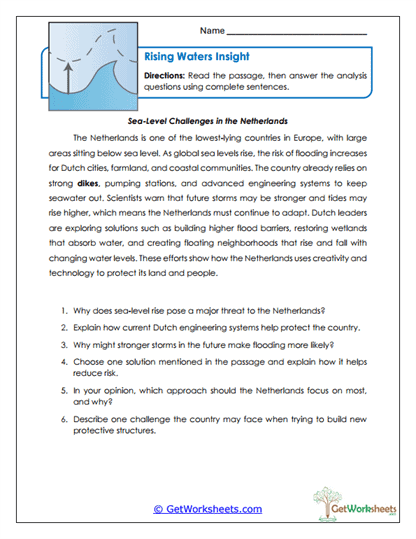
Students read a passage about sea-level threats and Dutch engineering solutions like flood barriers and pumping stations. They answer evidence-based questions analyzing environmental risks and innovative protections. The activity builds comprehension of climate change impacts and strengthens problem-solving skills.
Overtourism Reflection
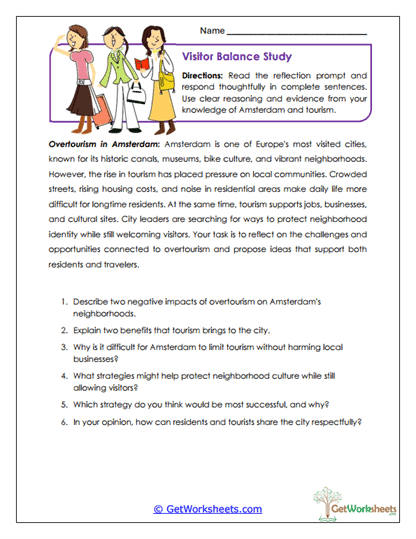
Students examine overtourism in Amsterdam, exploring impacts on traffic, housing, neighborhoods, and culture. They write thoughtful, evidence-based responses proposing solutions and explaining challenges. This worksheet encourages civic awareness, cultural sensitivity, and analytical writing.
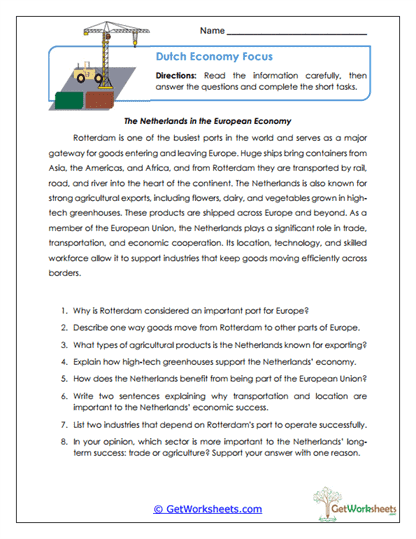
Dutch Economy Study
Learners read about Rotterdam's role in global trade and the Netherlands' economic strengths. They answer questions using complete sentences and evidence, analyzing how agriculture, exports, and EU membership shape economic success. This worksheet builds economic reasoning and understanding of geographic advantages.
Bookmark Us Now!
New, high-quality worksheets are added every week! Do not miss out!