Historical Texts Worksheets
About This Worksheet Collection
This Historical Texts collection gives students a rich window into the past through powerful primary and secondary sources. Each worksheet features an accessible, adapted passage paired with thoughtful questions and tasks, making it easier for learners to step into the shoes of people from different eras-from the American Revolution to the Civil Rights Movement and beyond.
As students work through these pages, they practice close reading, sourcing, and document analysis while building background knowledge about major events in U.S. and world history. They learn to interpret perspective, evaluate credibility, connect past and present, and support their thinking with text evidence-skills that are essential for strong historical thinking and academic success across the curriculum.
Detailed Descriptions Of These Worksheets
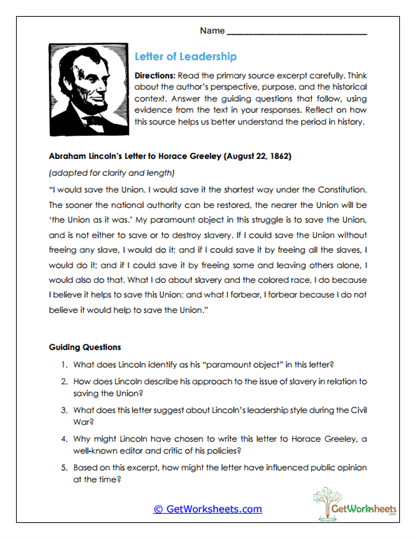
Letter of Leadership
In this activity, students delve into an adapted version of Abraham Lincoln's 1862 letter to Horace Greeley. They closely examine Lincoln's words to uncover what he believed was most important during the Civil War, especially regarding the Union and slavery. Guided questions prompt them to analyze his tone, priorities, and reasoning using direct evidence from the text. As they connect the letter to broader events of the era, students gain a more nuanced understanding of the political and moral tensions surrounding emancipation and union.
Shared Struggles
Students read two firsthand accounts from the Civil War era-one written by a soldier and the other by a woman living in Gettysburg. Using a comparison chart, they explore how each writer describes emotions, daily life, and the impact of war from very different vantage points. Learners examine shifts in tone and point of view, noticing both overlapping experiences and unique concerns. Reflection questions invite them to think about how personal stories shape our picture of the past and how historians use multiple perspectives to build a fuller understanding of historical events.
Vocabulary Time-Travel
This worksheet introduces students to words and phrases from colonial America through a carefully chosen passage. As they encounter bolded terms, they rely on context clues to infer meanings and then record their own definitions in a chart. Students consider how language changes over time and what that means for interpreting older documents accurately. By reflecting on potential misunderstandings, they become more aware of the challenges historians face when working with texts from past centuries.
Revolutionary Reasons
Learners explore an adapted excerpt from Thomas Paine's Common Sense to uncover why he wrote so passionately about independence. They decide whether his purpose is to inform, persuade, record events, or reflect, and then support their conclusion with specific lines from the text. Guiding questions lead them to analyze Paine's rhetorical choices and emotional appeals. Through this process, students see how persuasive writing helped shape public opinion during the American Revolution. The worksheet lays important groundwork for understanding how influential texts can drive political change.
Firsthand Burden
In this worksheet, students read a diary-style account from a nurse living through the 1918 influenza pandemic. They identify the narrative point of view and discuss how it influences the feelings and details that come through. Learners are prompted to imagine how the story might change if it were told from a different perspective, such as an outside observer. The activity highlights the power of personal narratives to convey fear, grief, and resilience during a global crisis. It also reinforces the value of diaries as rich sources for understanding human experiences in history.
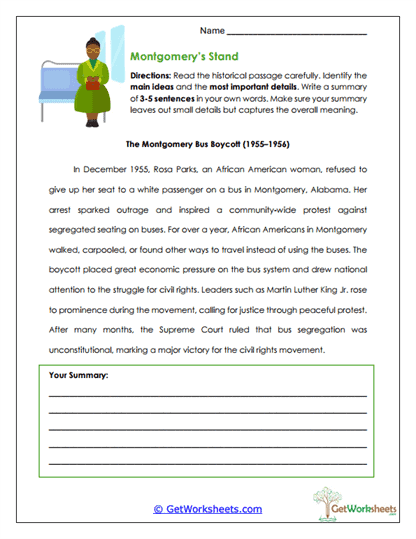
Montgomery's Stand
Students engage with a passage about the Montgomery Bus Boycott and work to identify its central ideas and key supporting details. They craft a focused summary in just a few sentences, deciding what information is essential and what can be left out. This process sharpens their ability to determine importance in historical texts. As they condense the account, learners gain a clearer picture of Rosa Parks' role and the broader significance of the boycott within the Civil Rights Movement.
Bias in Revolution
This activity invites students to analyze a Loyalist pamphlet from the time of the American Revolution. They look for signs of bias, such as loaded language, one-sided claims, or exaggerated descriptions of the Patriots. Guided questions help them unpack how the writer's political loyalties shape the message and influence the reader. By evaluating the reliability of such a source, students learn to recognize that historical documents often reflect particular viewpoints rather than neutral truth. The worksheet encourages them to think about how historians handle partial or slanted accounts.
From Seneca to Today
Learners read about the 1848 Seneca Falls Convention and identify the key demands and ideas raised by early advocates for women's rights. They then choose one issue-such as voting, property rights, or fair treatment-and connect it to a modern struggle for equality or justice. Students write a short paragraph explaining how the historical concern echoes in today's world, drawing on both the passage and their own knowledge. This activity helps them see major reform movements as part of an ongoing story rather than isolated events. It also supports purposeful writing about continuity and change over time.
Revolutionary Words
In this worksheet, students encounter vocabulary tied to the Industrial Revolution through a historical passage. They match bolded terms to definitions, using context to guide their choices. The words highlight key aspects of factory work, new technologies, and social change in the 18th and 19th centuries. A follow-up question asks students to consider how understanding these terms clarifies the author's message. The activity builds both historical background and academic vocabulary that will support future learning.
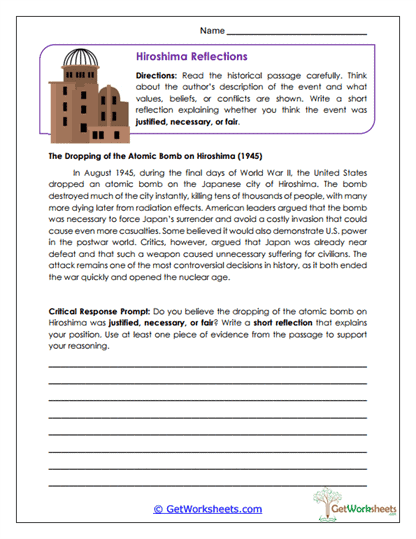
Hiroshima Reflections
Students read a passage about the atomic bombing of Hiroshima and grapple with the moral and historical questions it raises. They must decide what they think about whether the decision was justified or necessary and then support their viewpoint with evidence from the text. The worksheet guides learners to analyze the author's language, the perspectives presented, and the human impact of the event. By weighing different arguments, students strengthen their skills in evidence-based writing and ethical reasoning. The task encourages thoughtful reflection on the complexities of wartime decision-making.
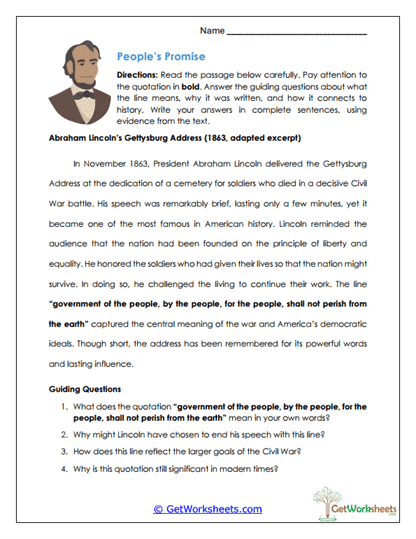
People's Promise
This activity centers on an adapted excerpt from Abraham Lincoln's Gettysburg Address, with special attention to the phrase "government of the people, by the people, for the people." Students unpack what this line suggests about democracy and the purpose of the Civil War. Guiding questions prompt them to connect Lincoln's message to the sacrifices of soldiers and the broader goals of preserving the Union and expanding equality. Learners also consider why these words are still quoted today. The worksheet deepens their ability to interpret iconic speeches and recognize enduring democratic ideals.
From Tea to Tyranny
Students read a historical account of the Boston Tea Party and build a cause-and-effect chain that traces how tensions between colonists and Britain escalated. They identify the decisions that led to the protest and the consequences that followed, organizing these events in a clear sequence. Reflection questions push them to think about colonial motives, reactions to taxation, and the British response. As they analyze each step, learners see the Tea Party as part of a larger path toward revolution rather than a standalone act. This worksheet strengthens historical inquiry skills and helps students connect actions to long-term outcomes.
Bookmark Us Now!
New, high-quality worksheets are added every week! Do not miss out!