Greece Worksheets

About This Worksheet Collection
This Greece worksheet collection introduces students to the geography, culture, history, and natural environment of one of the world's most influential regions. Through informational passages, matching activities, cloze exercises, chronological sequencing, descriptive writing, and evidence-based responses, learners gain a strong foundation in both ancient and modern Greece. Each worksheet showcases a different dimension of Greek life-from islands and landmarks to climate patterns, urban challenges, and regional culture-making this set ideal for world geography or European studies units.
As students read closely, analyze clues, evaluate facts, and construct written explanations, they strengthen key academic skills across social studies, science, and English language arts. These worksheets promote comprehension of informational text, contextual vocabulary use, geographic reasoning, and historical thinking. Students also build critical thinking as they explore tectonic activity, environmental challenges, and Greece's geopolitical roles. Collectively, the collection fosters curiosity while developing well-rounded content knowledge.
Detailed Descriptions Of These Worksheets
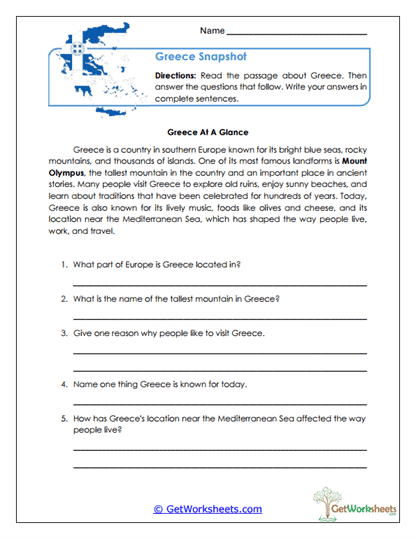
Greece Overview
Students read an informational passage introducing Greece's geography, culture, landmarks, and climate. They respond to comprehension questions using complete sentences, recalling details about Mount Olympus, Mediterranean influences, and reasons people visit Greece. This worksheet strengthens informational reading, factual recall, and evidence-based writing. It also builds foundational knowledge of Greece's environment and cultural identity.
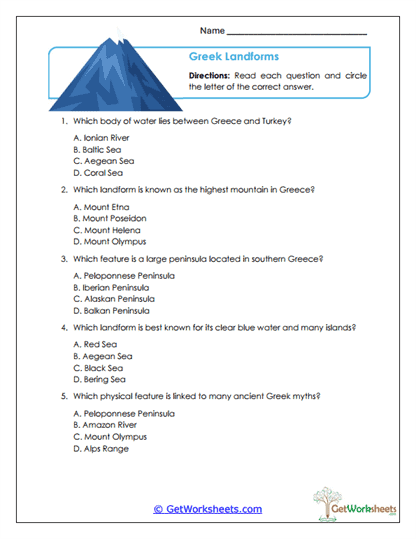
Greek Landforms
Learners answer multiple-choice questions about Greece's physical features, including seas, mountain ranges, and peninsulas. This activity reinforces recognition of major landforms and supports geographic vocabulary development. Students practice evaluating answer choices and applying test-taking strategies. The worksheet helps them connect physical geography to Greece's cultural and historical significance.
Greek Cities Match
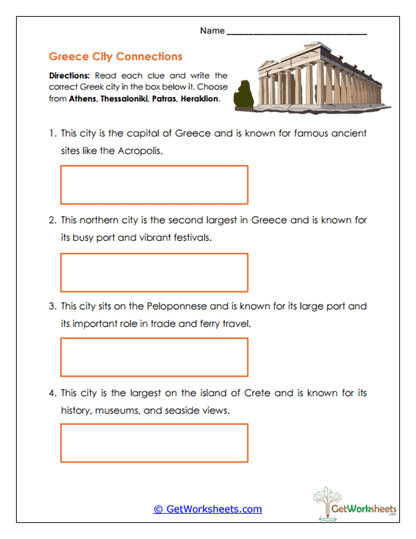
Students use clues to identify major Greek cities such as Athens, Thessaloniki, Patras, and Heraklion. Each clue highlights cultural activities, historical sites, or geographic locations associated with each city. This task strengthens deductive reasoning, urban geography knowledge, and attention to detail. It also builds recall of key urban centers across Greece.
Greek Climate
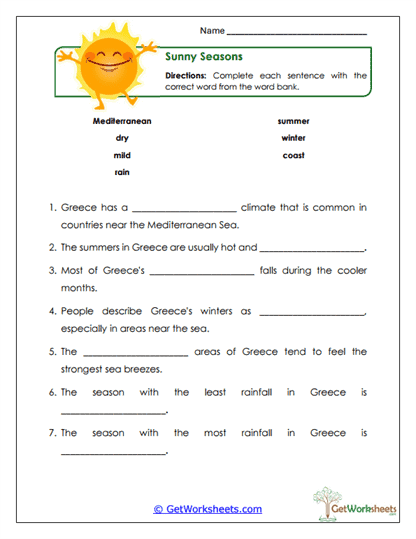
Learners complete fill-in-the-blank statements using a word bank to describe Greece's Mediterranean climate. They explore rainfall patterns, breezes, and seasonal weather changes. This cloze activity reinforces climate vocabulary and improves context-clue interpretation. It helps students understand how climate shapes daily life and regional activities.
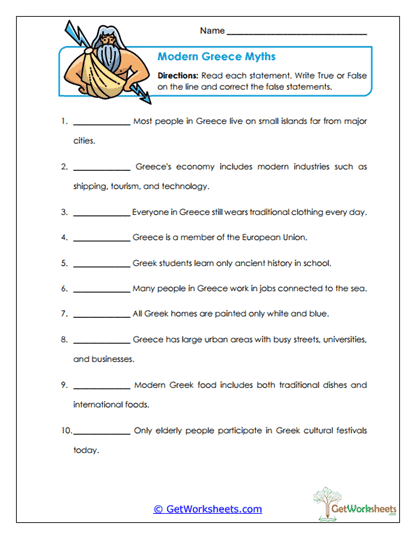
Greece Myth Check
Students assess statements about modern Greece and determine whether each is true or false. When a statement is false, they correct it with accurate information. This activity strengthens critical thinking, cultural awareness, and comprehension of contemporary Greek society. It reinforces accurate fact understanding and challenges misconceptions.
Greek Island Origins
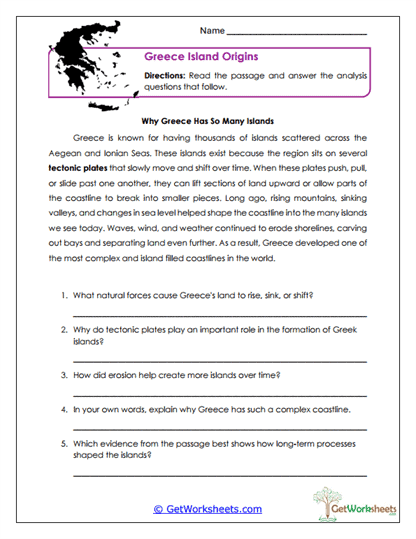
Students read a passage explaining geological processes-such as tectonic movement, erosion, and sea-level changes-that created Greece's many islands. They answer analysis questions using evidence from the text. This worksheet builds scientific literacy and cause-and-effect reasoning while connecting Earth science to regional geography.
Greek Island Writing
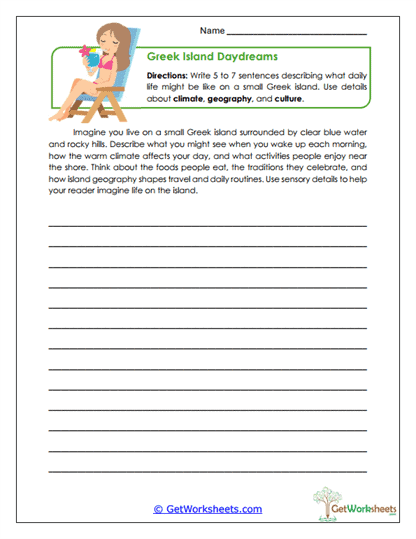
Learners write a descriptive paragraph imagining daily life on a Greek island, using sensory language and cultural details. The activity strengthens narrative and descriptive writing skills. Students connect environment, traditions, and lifestyle in a cohesive paragraph. It encourages creativity while reinforcing geographic understanding.
Landmark Locator
Students identify famous Greek landmarks such as the Acropolis, Meteora, Knossos, and the Santorini caldera using descriptive clues. This strengthens reading for detail and landmark recognition. The worksheet reinforces knowledge of ancient civilizations, geography, and Greek heritage sites.
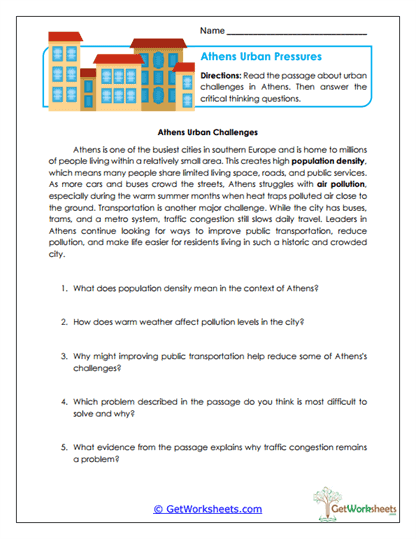
Athens Challenges
Students read a passage about modern urban issues in Athens, including pollution, transportation strain, and public services. They answer critical-thinking questions using evidence from the text. This activity promotes civic understanding, environmental awareness, and analytical reading. It helps students understand the complexities of modern city life.
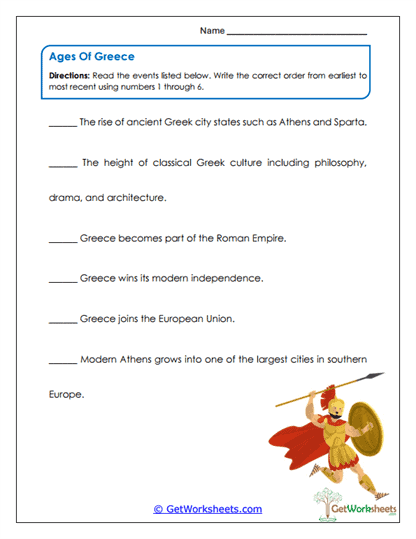
Greece Timeline
Learners place major events in Greek history-from ancient city-states to modern EU membership-in correct chronological order. This strengthens historical reasoning and timeline construction. Students develop clearer understanding of how Greek civilization evolved from antiquity to the present.
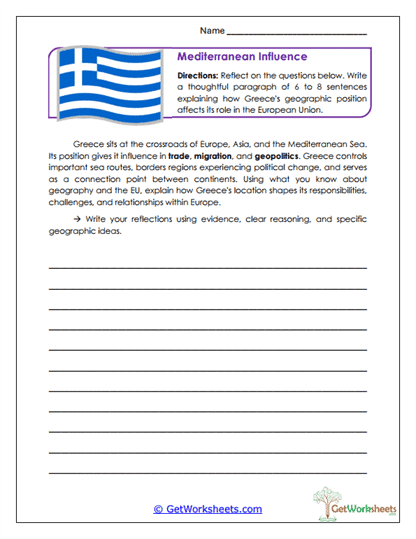
Mediterranean Reflection
Students write a six- to eight-sentence paragraph explaining how Greece's geographic position influences its role in the European Union. They consider trade, migration, and geopolitical connections. The task builds expository writing skills and strengthens geographic reasoning. It also encourages evidence-based thinking about international relationships.
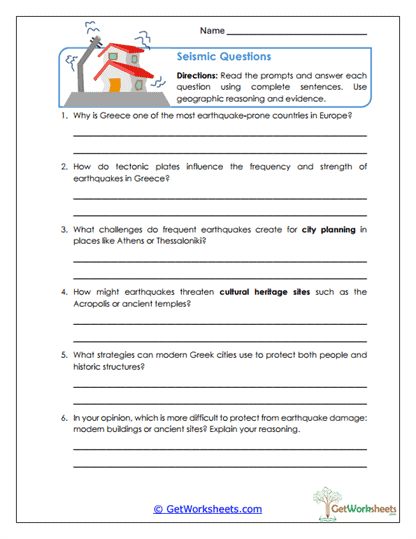
Earthquake Analysis
Learners answer geographic reasoning questions about Greece's high earthquake activity, tectonic processes, and the impact on cities and heritage sites. The activity promotes hazard analysis and problem-solving. Students compare challenges faced in protecting ancient structures versus modern infrastructure. It deepens understanding of Earth processes and human-environment interaction.
Bookmark Us Now!
New, high-quality worksheets are added every week! Do not miss out!