Grade 9 Reading Comprehension Worksheets

About This Worksheet Collection
The Grade 9 Reading Comprehension collection engages high school students with diverse literary and informational texts that challenge them to think critically, evaluate evidence, and analyze language with depth and precision. Each worksheet encourages students to move beyond basic comprehension toward interpretation, synthesis, and argumentation. Through passages spanning fiction, nonfiction, speeches, and contemporary topics, learners practice identifying themes, determining author's purpose, evaluating bias, and analyzing structure and rhetoric.
Across the collection, students engage in evidence-based writing, thematic analysis, and cross-curricular literacy that connects English Language Arts to science, history, and social issues. They explore how tone, perspective, and argument shape meaning, while learning to support their insights with textual evidence. By combining reading comprehension with analytical and reflective writing, this series helps students develop the academic literacy, empathy, and reasoning skills necessary for advanced coursework and real-world communication.
Detailed Descriptions Of These Worksheets
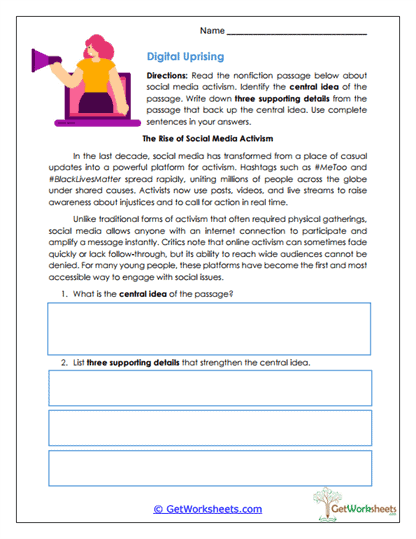
Digital Activism
Students read an informational passage about social media's role in modern activism, including movements like #MeToo and #BlackLivesMatter. They identify the central idea and supporting details, analyzing how technology fosters global change. The worksheet builds comprehension, evidence-based reasoning, and cultural awareness.
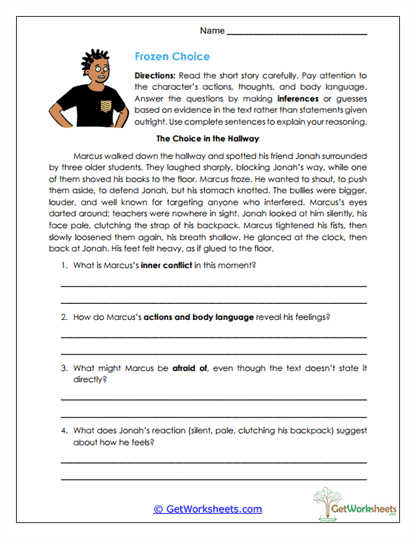
Hallway Dilemma
In this short fiction passage, students infer a character's emotions and motivations as he witnesses bullying. They interpret tone, dialogue, and internal conflict to reveal deeper meaning. The activity strengthens empathy, inferencing, and text-based analysis of ethical decisions.
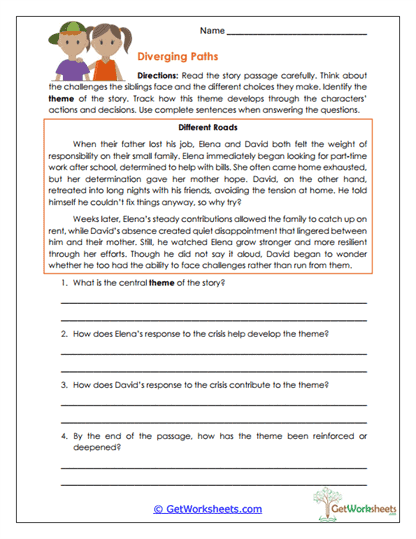
Sibling Strength
Learners analyze a story about two siblings facing hardship to uncover its theme of perseverance. They trace each character's actions to reveal contrasting approaches to responsibility and growth. The exercise promotes thematic interpretation, moral reasoning, and emotional literacy.
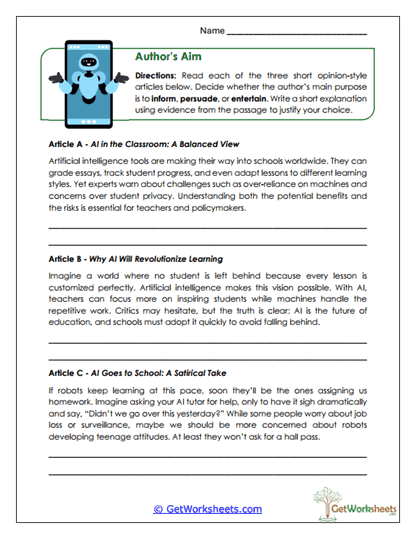
Author's Purpose
Students examine three short opinion-style articles about artificial intelligence and determine whether each author's purpose is to inform, persuade, or entertain. They justify their reasoning with textual evidence, enhancing their ability to evaluate tone, bias, and argumentation in nonfiction writing.
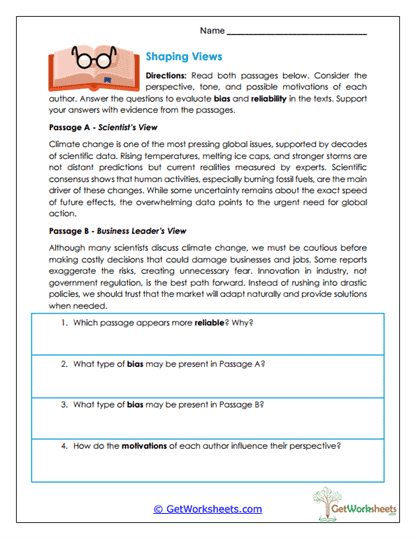
Evaluating Bias
In this comparative task, students read two opposing perspectives on climate change-one from a scientist and another from a business leader. They analyze tone, reliability, and motivation to determine which argument is more credible. The worksheet builds critical reading and source-evaluation skills.
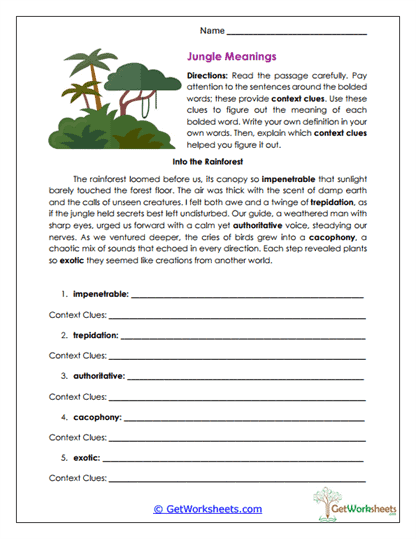
Context Clues
Students learn to infer vocabulary meanings using clues from a rainforest passage. They define words such as impenetrable and cacophony and explain which contextual signals guided them. This task builds inferential reasoning, vocabulary expansion, and reading fluency.
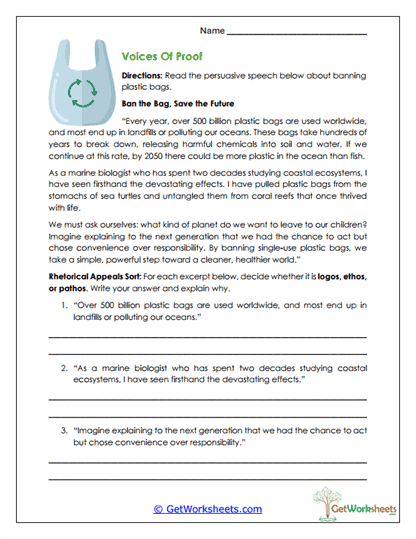
Persuasive Appeals
Through a speech advocating for banning plastic bags, learners identify examples of logos, ethos, and pathos. They classify excerpts by rhetorical appeal and explain how each strengthens the argument. The activity promotes analytical reading and understanding of persuasive techniques.
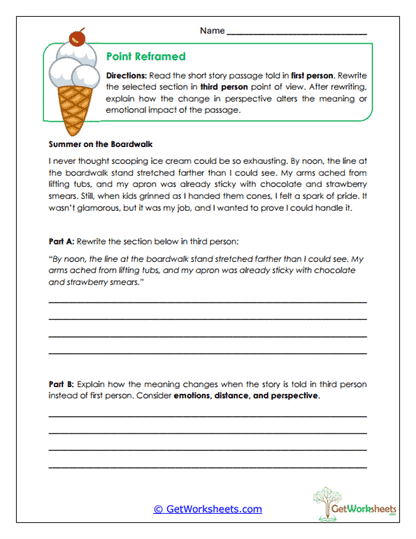
Shifting Perspective
Students rewrite a short story from first-person to third-person point of view, then reflect on how the shift changes tone and meaning. This creative exercise blends grammar with literary analysis, strengthening style awareness and control of narrative perspective.
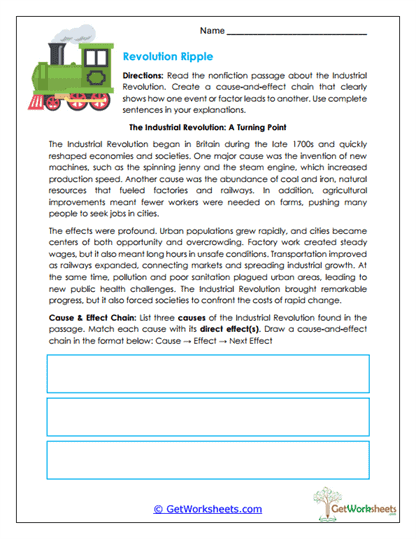
Industrial Impact
Learners explore a nonfiction text about the Industrial Revolution, constructing a cause-and-effect chain that links major innovations to societal change. The worksheet enhances comprehension of informational text structure and historical reasoning through logical organization.
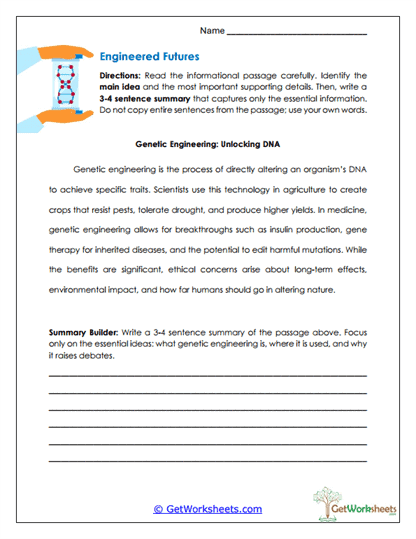
Genetic Innovations
Students read an article about genetic engineering and summarize it in 3-4 sentences. They identify the main idea, key details, and ethical implications of biotechnology. The task builds synthesis, critical reading, and writing precision while integrating science literacy.
Gettysburg Reflections
Students analyze an excerpt from Abraham Lincoln's Gettysburg Address, interpreting its themes of liberty, equality, and national unity. They answer short-response questions citing textual evidence. This activity fosters historical literacy, rhetorical understanding, and analytical writing.
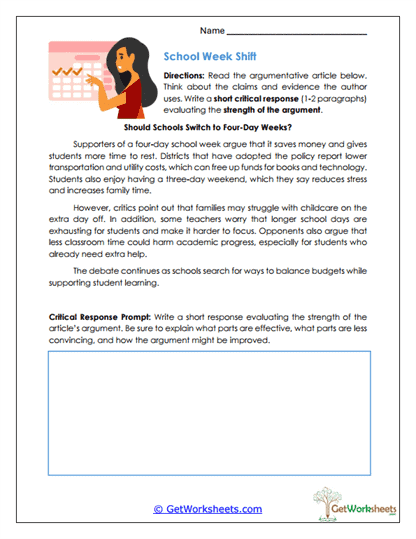
Four-Day Debate
In this argumentative reading, students evaluate a persuasive article about implementing a four-day school week. They assess claims, evidence, and counterarguments to write a short critical response. The worksheet develops analytical reasoning, evaluation of argument quality, and evidence-based writing.

Bookmark Us Now!
New, high-quality worksheets are added every week! Do not miss out!