Grade 2 Reading Comprehension Worksheets
About This Worksheet Collection
The Grade 2 Reading Comprehension collection features engaging short stories, poems, and informational passages that help second graders strengthen key literacy skills. Each worksheet presents a carefully leveled reading followed by comprehension, sequencing, or critical-thinking tasks that reinforce understanding through writing, drawing, and reflection. Students explore relatable themes-friendship, responsibility, creativity, and discovery-while learning to identify main ideas, story structure, and cause-and-effect relationships.
Across the collection, learners develop stronger reading fluency, attention to detail, and reasoning skills. They practice distinguishing fact from inference, comparing characters, summarizing stories, and connecting reading to their own experiences. The mix of literary and informational texts supports Common Core-aligned comprehension goals while promoting curiosity and creativity. These activities build confidence and comprehension, helping students transition from learning to read toward reading to learn.
Detailed Descriptions Of These Worksheets
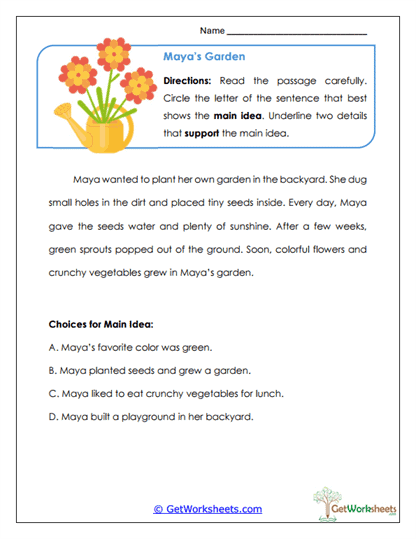
Maya's Garden
Students read a passage about Maya planting her own garden and identify the main idea by choosing the best option from four choices. They underline two details that support their answer. This worksheet builds comprehension and analytical thinking by teaching how supporting details strengthen central ideas in informational text.
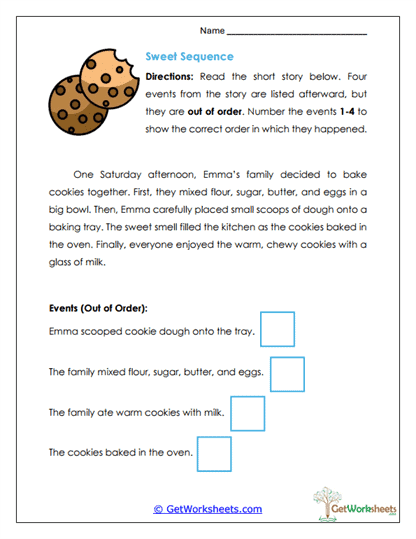
Sweet Sequence
Learners read about Emma baking cookies and number the events in the correct order. The task develops sequencing and logical reasoning skills, helping students recognize time-order words and understand how story structure contributes to meaning. It's a fun and practical way to reinforce narrative comprehension.
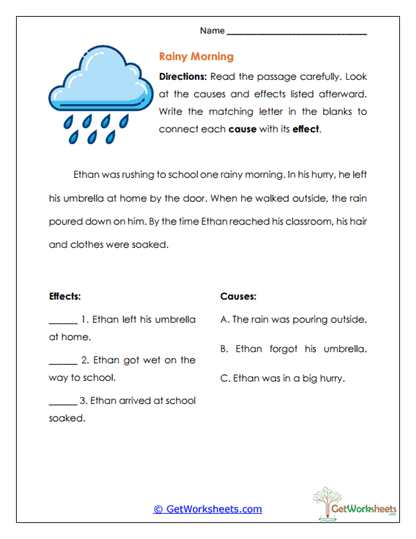
Rainy Morning
Students explore cause and effect by reading a short story about Ethan forgetting his umbrella. They match causes to corresponding effects to understand event relationships. This activity promotes reasoning and comprehension while showing how actions lead to outcomes in both fiction and daily life.
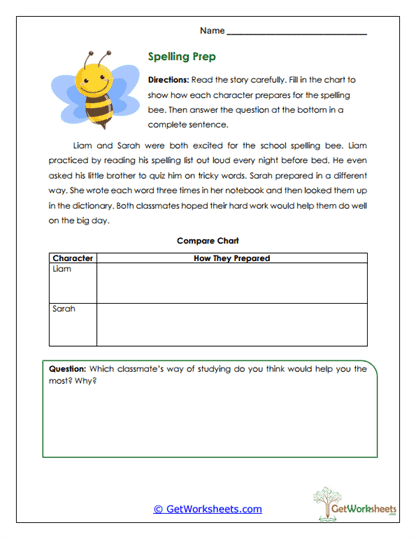
Spelling Prep
In this comparison activity, students read about Liam and Sarah preparing for a spelling bee. They complete a chart comparing their study methods and reflect on which would work best for them. The worksheet strengthens text analysis, compare-and-contrast reasoning, and personal reflection.
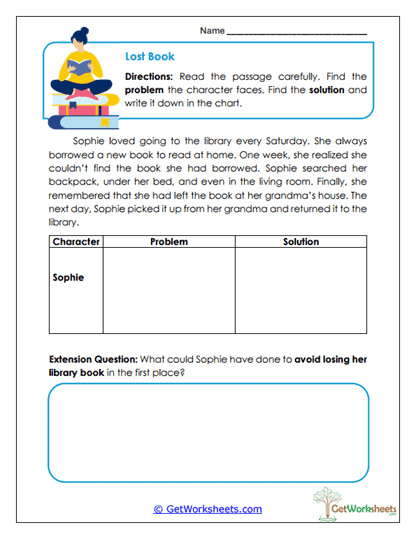
Lost Book
Students read about Sophie losing and finding her library book, then identify the problem and solution in the story. A reflection question encourages personal responsibility and critical thinking. This activity helps students recognize narrative structure and apply lessons to real-world behavior.
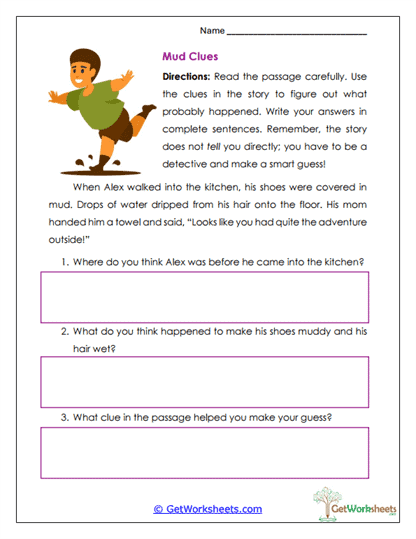
Mud Clues
Acting as "reading detectives," learners use context clues to infer what happened before Alex came home covered in mud. They justify their answers with evidence from the text, promoting inferencing, creativity, and logical reasoning while strengthening comprehension skills.
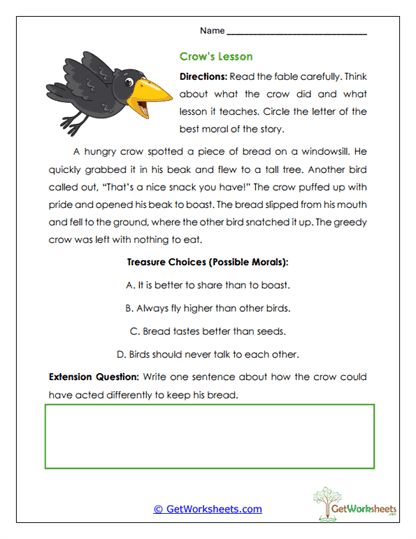
Crow's Lesson
This fable-based worksheet helps students identify a story's moral. After reading about a boastful crow, learners choose the best lesson from a list and explain their reasoning. The task enhances understanding of theme, moral reflection, and character-based analysis.
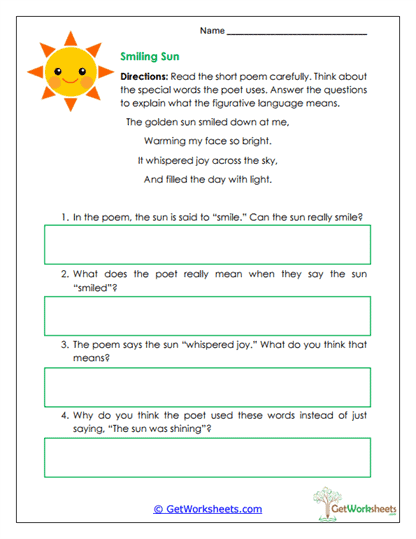
Smiling Sun
Students read a short poem personifying the sun and interpret figurative language such as "the sun smiled." They answer questions about imagery and meaning, learning to read beyond literal text. The exercise builds poetry comprehension, inferential thinking, and appreciation of descriptive language.
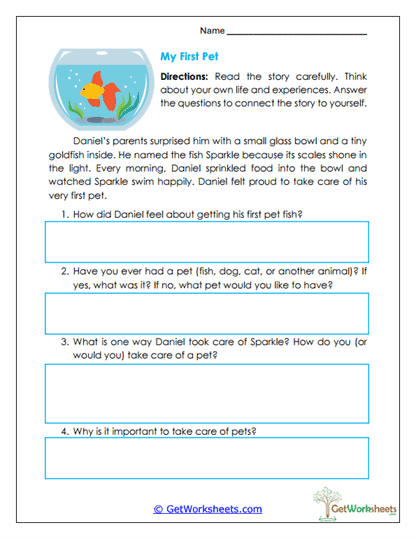
My First Pet
Learners read a heartwarming story about Daniel and his first pet fish, Sparkle. They respond to reflective questions connecting the story to their own experiences with animals. This worksheet develops comprehension, empathy, and text-to-self writing connections.
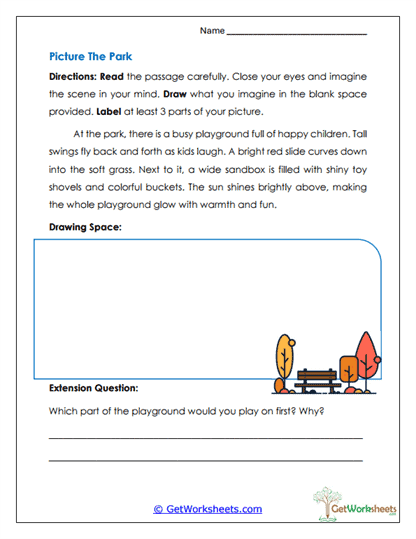
Picture the Park
Students visualize a playground scene described in a passage and draw what they imagine, labeling at least three details. The task combines reading with art to reinforce descriptive comprehension and creativity. It helps learners translate text imagery into visual understanding.
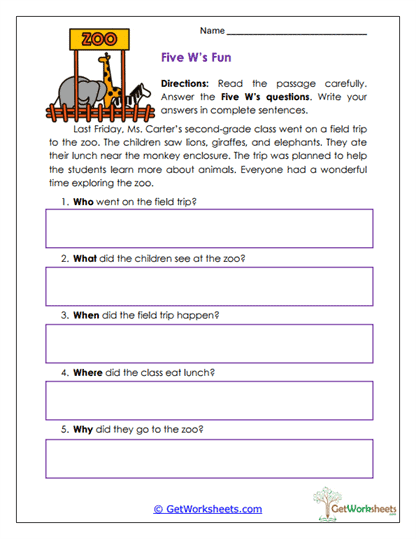
Five W's Fun
Using a short story about a class field trip to the zoo, students answer Who, What, When, Where, and Why questions. The activity builds recall, comprehension, and complete-sentence writing skills. It provides a foundation for identifying key details in both stories and informational texts.
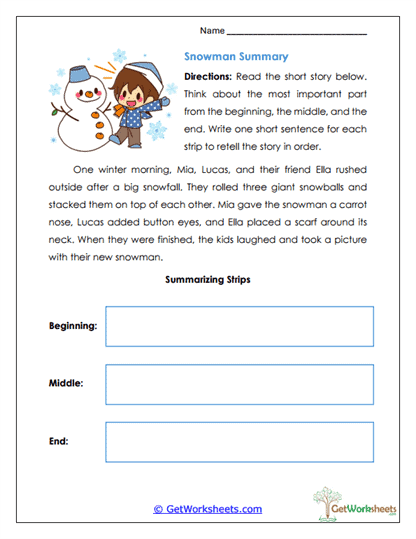
Snowman Summary
Students summarize a winter story about children building a snowman using three boxes labeled Beginning, Middle, and End. They write one concise sentence in each to retell the story. This worksheet builds sequencing, summarization, and narrative structure skills while promoting clear written expression.
Bookmark Us Now!
New, high-quality worksheets are added every week! Do not miss out!