Grade 12 Reading Comprehension Worksheets

About This Worksheet Collection
The Grade 12 Reading Comprehension collection challenges senior high school students to engage deeply with complex literary, informational, and philosophical texts. Designed to prepare learners for college-level analysis and academic writing, each worksheet promotes critical reasoning, rhetorical understanding, and thematic interpretation. Students evaluate arguments, analyze figurative language, and connect literature to history, culture, and ethical inquiry.
Across these activities, learners practice citing evidence, analyzing authorial purpose, and synthesizing multiple perspectives. Texts include speeches, editorials, personal narratives, and allegorical fiction that explore issues of identity, justice, technology, and human responsibility. Through guided annotation, analytical questioning, and written reflection, students develop the literacy and critical thinking skills needed for higher education and civic discourse. This collection cultivates intellectual independence, empathy, and articulate expression across genres.
Detailed Descriptions Of These Worksheets
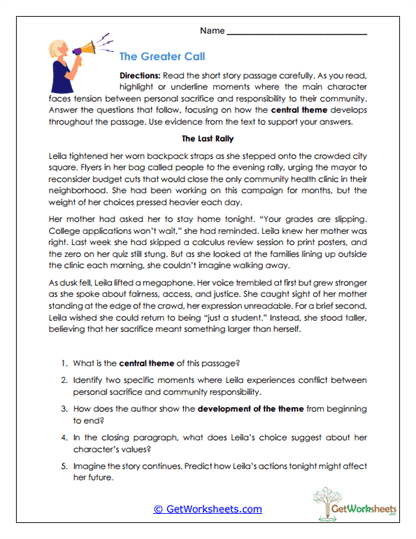
The Greater Call
Students read "The Last Rally," a passage about a young woman torn between personal ambition and social duty. They analyze theme development, character motivation, and moral conflict using textual evidence. The exercise strengthens interpretation, critical reading, and thematic analysis.
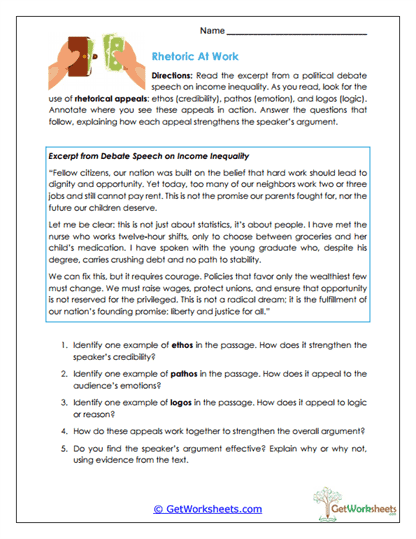
Rhetoric at Work
Learners examine a political debate excerpt about income inequality, identifying ethos, pathos, and logos. They annotate and explain how rhetorical strategies enhance persuasion and credibility. This worksheet develops argument evaluation, rhetorical awareness, and analytical writing.
AI Evidence Check
In this op-ed analysis on artificial intelligence ethics, students assess the validity and balance of the author's claims and evidence. The task enhances reasoning, source evaluation, and comprehension of argument structure within modern informational texts.
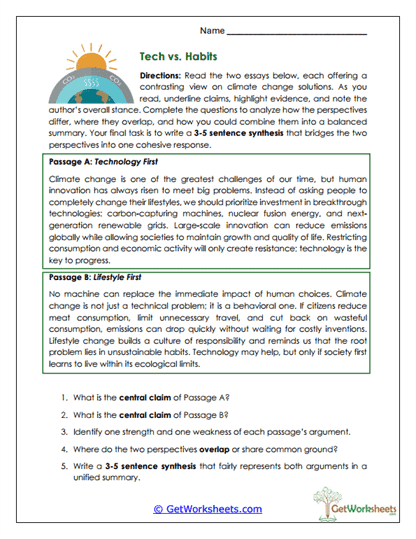
Tech vs. Habits
Students compare two essays offering different climate change solutions-technological innovation versus behavioral reform. They synthesize key ideas into a unified summary, promoting cross-textual analysis, synthesis writing, and balanced evaluation of arguments.
Unspoken Weight
Learners infer meaning in "The Quiet Porch," a narrative rich in silence, gesture, and tone. They interpret unspoken emotions and relationships through subtext, building advanced inferential and emotional reading skills essential for literary study.
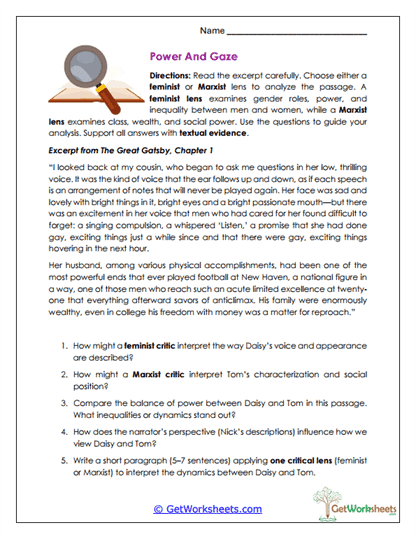
Power and Gaze
Students apply feminist or Marxist criticism to an excerpt from The Great Gatsby, analyzing how class and gender shape character and perspective. The exercise builds skills in literary theory, close reading, and evidence-based argumentation.
History's Promise
Using Dr. Martin Luther King Jr.'s "I Have a Dream," students interpret rhetorical devices, historical context, and civic ideals. They connect metaphors and constitutional references to themes of equality, integrating textual and historical evidence in analysis.
Policy Perspectives
Learners compare opposing editorials on Universal Basic Income, identifying tone, bias, and rhetorical appeal. They evaluate which argument is more persuasive using textual evidence, developing advanced argumentation, media literacy, and evaluative reasoning.
Threads of Choice
In this allegorical story, students analyze symbolic "strings" that represent control and freedom. They connect these themes to philosophical theories of determinism and free will. The worksheet encourages abstract reasoning and interpretation of symbolic meaning.
Water's Dilemma
Students explore global water scarcity through a case-study passage, identifying challenges and evaluating sustainable solutions. The activity integrates reading comprehension with environmental science and social policy, promoting evidence-based global awareness.
Fueling the Case
Learners read "The Case for Renewables" and analyze how the author structures claims, counterarguments, and evidence. They practice blending textual analysis with outside research, developing argument-based writing and synthesis of informational sources.
Layered Identity
In "Between Two Languages," students interpret a bilingual narrator's exploration of belonging and self-expression. They analyze figurative language and cultural contrasts, connecting the story's themes to personal experiences. The worksheet builds empathy and reflective writing skills.
Bookmark Us Now!
New, high-quality worksheets are added every week! Do not miss out!