Decomposing Numbers Worksheets
About This Worksheet Collection
This engaging collection of math worksheets is designed to help students develop a strong understanding of how numbers can be built, broken apart, and recombined. With playful themes, clear layouts, and a wide range of difficulty levels, the activities support both early learners and older students as they explore addition and number structure. Teachers and homeschool families can easily integrate these print-and-go resources into daily routines, math centers, small groups, or independent practice.
Across the collection, students strengthen foundational number sense by working with part-part-whole relationships, composing and decomposing numbers, and solving addition problems with increasing complexity. Visual models encourage conceptual understanding, while repeated practice builds confidence and accuracy. As learners progress from simple sums within 10 to advanced decompositions of larger numbers, they develop flexible thinking and essential problem-solving skills that support long-term math success.
Detailed Descriptions Of These Worksheets
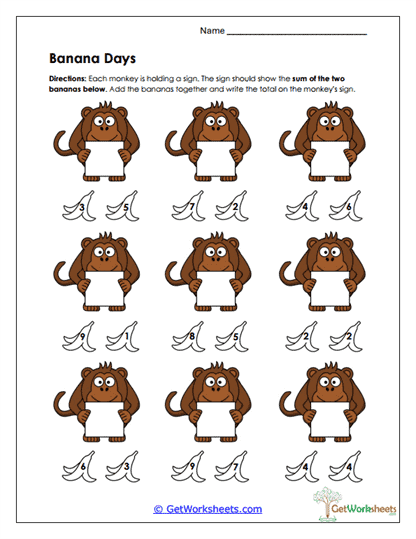
Banana Days - Adding Two Numbers Within 10
Students combine groups of bananas to determine the total shown on each monkey's sign. The visual format encourages learners to count carefully and connect quantities to written numbers. This worksheet supports early addition development through concrete representations. It works well for independent practice or guided instruction in kindergarten and early first grade.
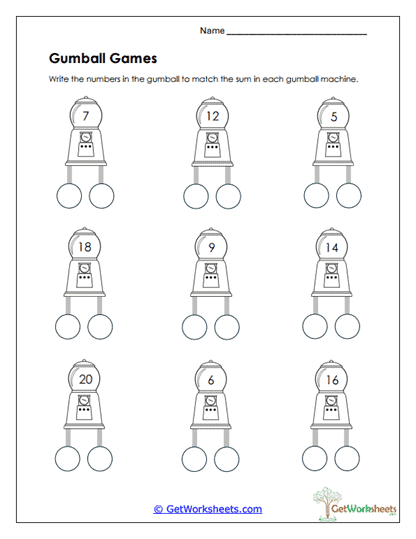
Gumball Games - Making Sums With Two Addends
Learners create their own addition equations by filling gumballs with two numbers that equal a target sum. The open-ended design highlights that numbers can be composed in many correct ways. Students build confidence experimenting with combinations while reinforcing addition reasoning. This activity encourages flexible thinking and discussion about number relationships.
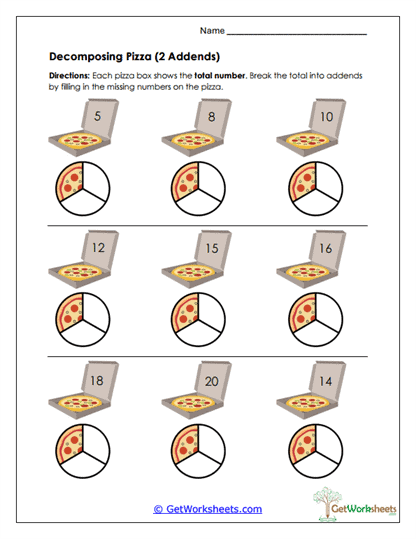
Decomposing Pizza (2 Addends) - Breaking Numbers Apart
Using pizza slices as a visual model, students break a given total into two parts. The worksheet emphasizes understanding how addends work together to form a whole. Learners focus on reasoning rather than memorization as they complete each equation. This activity supports strong part-part-whole foundations in early elementary math.
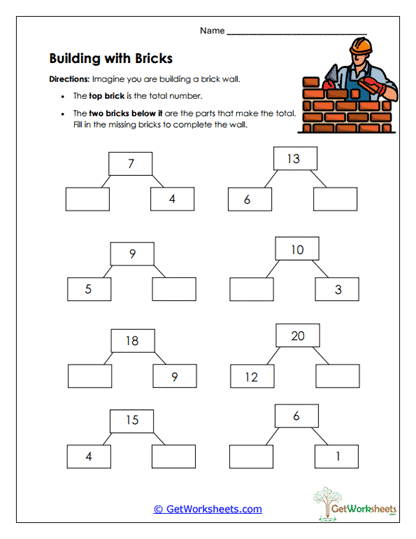
Building With Bricks - Part-Part-Whole Relationships
Students determine missing values needed to complete a total by analyzing brick models. The structured visual layout helps learners see how numbers are constructed from smaller parts. This worksheet strengthens logical thinking and addition reasoning. It is well suited for both independent work and small-group instruction.
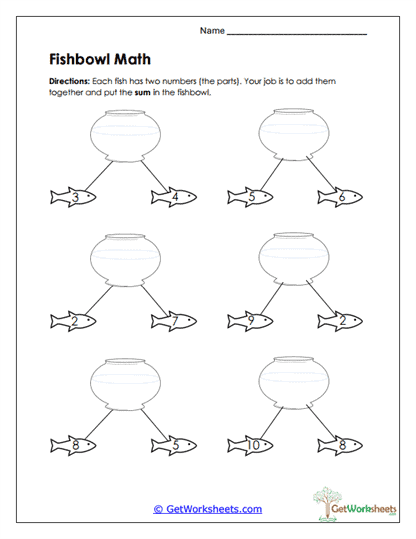
Fishbowl Math - Adding Two Numbers
Learners add two numbers shown on fish and record the sum in the fishbowl. The simple visuals keep attention focused on the math task. Repeated practice supports fluency and counting accuracy. This worksheet can also be used as a quick check for addition understanding.
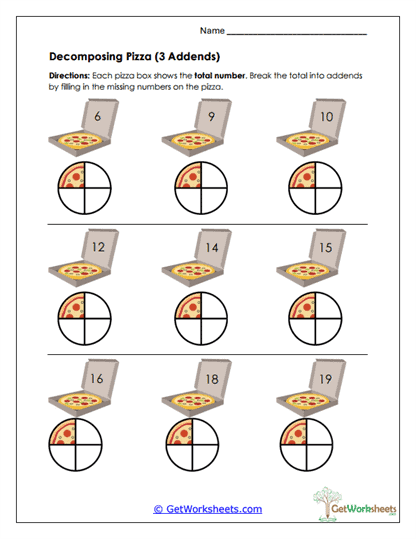
Decomposing Pizza (3 Addends) - Breaking Numbers Into Three Parts
This activity challenges students to represent a total using three addends instead of two. The pizza model helps learners visualize more complex number relationships. Students explore multiple solution paths while maintaining accuracy. It is ideal for enrichment or learners ready for advanced decomposition.
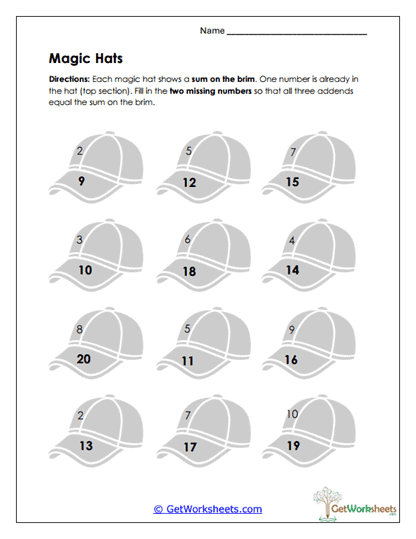
Magic Hats - Finding Missing Addends
Students identify unknown addends when the total and one part are given. The activity promotes reasoning and problem-solving rather than simple counting. Engaging visuals keep learners motivated while they analyze number relationships. This worksheet works well for formative assessment or targeted practice.
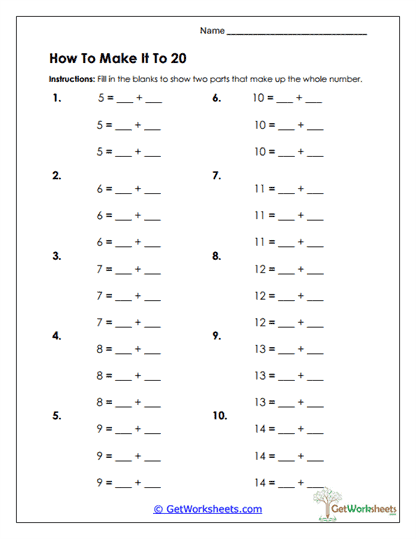
How to Make It to 20 - Composing Numbers
Learners show different ways to build numbers up to 20 using two addends. The repeated structure helps students recognize patterns across equations. This worksheet strengthens number composition and addition fluency. It supports flexible thinking and early math confidence.
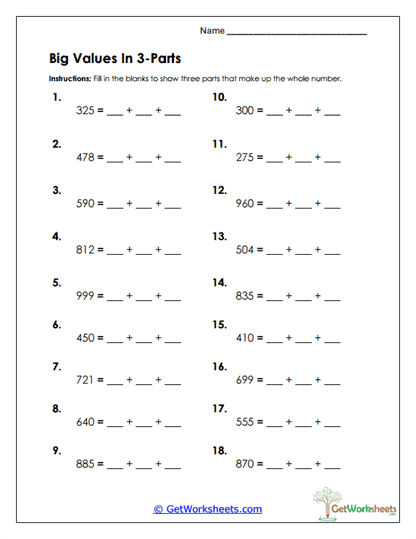
Big Values in 3 Parts - Decomposing Large Numbers
Students break larger numbers into three meaningful parts to demonstrate understanding of number structure. The activity reinforces strategic thinking and accurate addition. Learners practice managing more complex values without relying solely on algorithms. This worksheet is suitable for upper elementary enrichment.
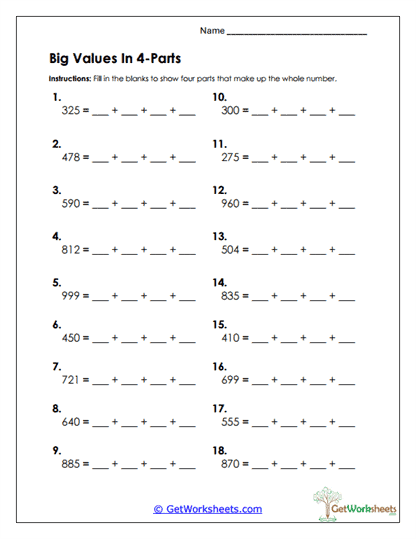
Big Values in 4 Parts - Advanced Number Decomposition
This worksheet extends decomposition skills by requiring four addends to form a whole number. Students deepen their understanding of place value and numerical relationships. The task encourages careful reasoning and precision. It supports advanced learners building strong number sense.
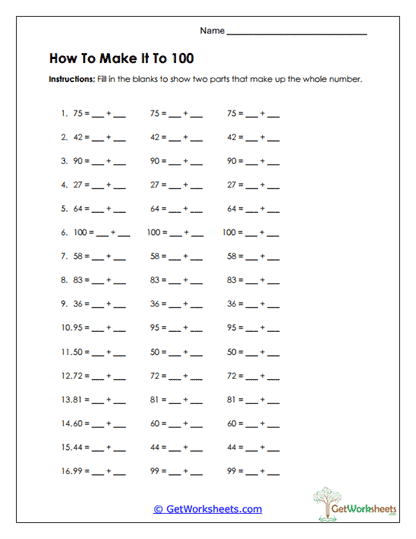
How to Make It to 100 - Composing Numbers to 100
Learners explore multiple ways to represent two-digit numbers using two addends. The activity emphasizes tens and ones while reinforcing addition strategies. Repetition helps students identify patterns across numbers up to 100. This worksheet supports first and second grade place value development.
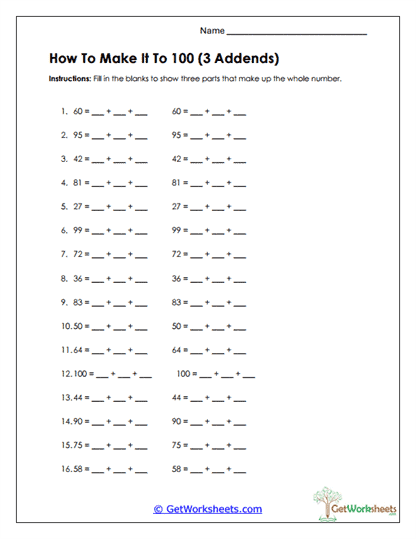
How to Make It to 100 (3 Addends) - Advanced Number Composition
Students compose numbers up to 100 using three addends, increasing the level of challenge. The worksheet promotes deeper understanding of number structure and flexibility. Learners apply accurate addition reasoning across multiple parts. It is well suited for enrichment or targeted skill building in second grade and beyond.
Bookmark Us Now!
New, high-quality worksheets are added every week! Do not miss out!