Critical Comprehension Worksheets
About This Worksheet Collection
This collection of critical comprehension worksheets is designed to help students look beyond the surface of a text and engage deeply with an author's message, techniques, and reasoning. Each activity offers structured opportunities for close reading, analysis, and reflection, giving educators a powerful toolkit for strengthening students' interpretive and evaluative skills. The worksheets support a wide range of instructional goals-from identifying bias and recognizing fallacies to analyzing cause-and-effect relationships and linking literature to real-world issues.
As students work through these resources, they learn to question assumptions, evaluate evidence, and identify persuasive techniques with growing confidence. The collection encourages learners to develop independent thinking, articulate reasoned responses, and engage critically with both informational and argumentative texts. These abilities are essential across academic subjects and directly support students' readiness for high-level reading, writing, and discussion.
Detailed Descriptions Of These Worksheets
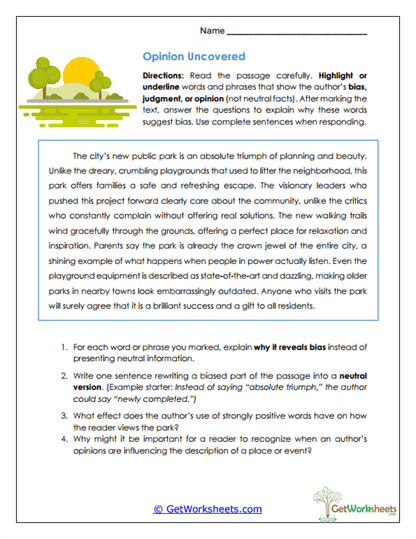
Opinion Uncovered
In this worksheet, students examine a passage rich with opinions and identify language that betrays the author's bias. They analyze why certain phrases signal judgment rather than fact, helping them differentiate objective reporting from subjective commentary. Learners then rewrite part of the passage in a more neutral tone. By reflecting on how these changes shift meaning, students gain insight into how word choice influences perception. This activity deepens their awareness of tone, exaggeration, and persuasive framing in everyday texts.
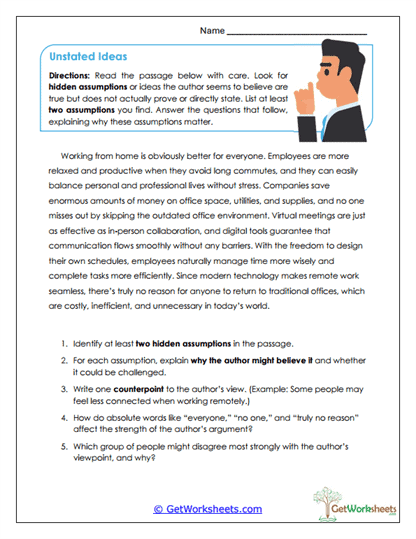
Unstated Ideas
Students focus on identifying the assumptions an author leaves unspoken, learning how implied ideas shape an argument. They explain why these assumptions may be questionable and craft counterarguments that challenge the author's perspective. The worksheet also draws attention to sweeping generalizations and absolute language. Through this analysis, students develop stronger logical reasoning and a more skeptical approach to persuasive writing.
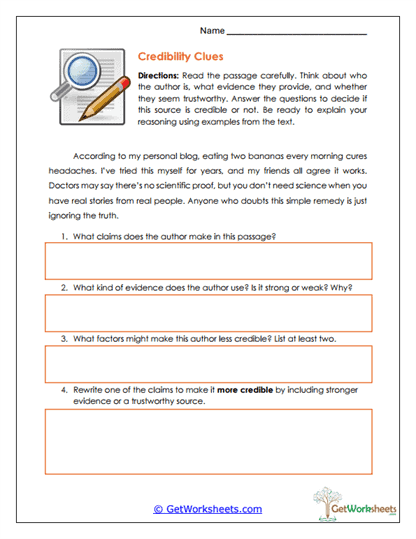
Credibility Clues
Learners evaluate the strength of claims and evidence in a short passage, determining whether the author presents trustworthy information. They identify weaknesses such as missing data or reliance on anecdotal support and consider how these issues affect credibility. Students then strengthen one of the claims by rewriting it with more reliable evidence. The task helps them understand how solid sourcing improves argumentative quality and builds research literacy.
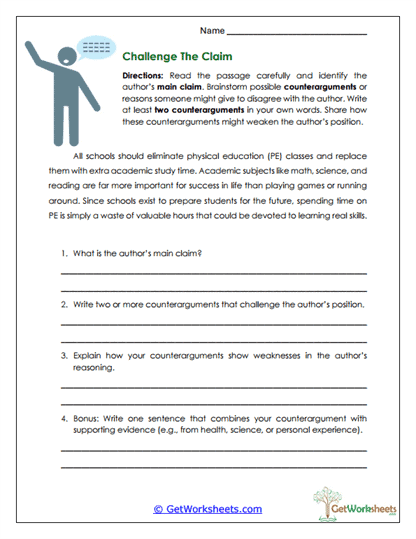
Challenge the Claim
Students identify the central argument in a paragraph and brainstorm counterarguments that expose gaps in the author's reasoning. They write their rebuttals clearly and reflect on how these responses undermine the original claim. A supplemental task invites them to develop a full counterargument supported by evidence. This worksheet strengthens analytical thinking and encourages students to engage actively with persuasive texts.
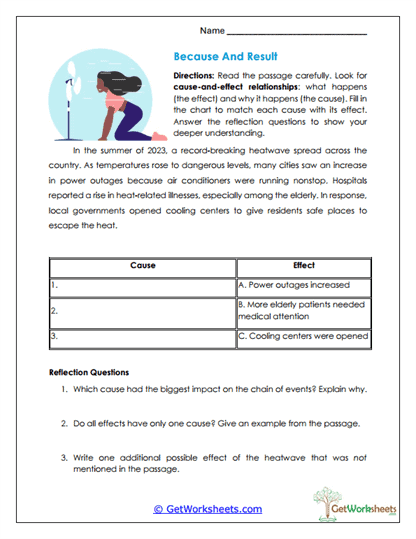
Because and Result
In this activity, students map out cause-and-effect relationships within a passage about a heatwave. They use contextual clues to link each cause to its corresponding effect and reflect on the factors that most significantly shaped the situation. Learners also explore how a single cause can produce multiple outcomes. This practice supports comprehension of complex informational texts and sharpens analytical reading skills.
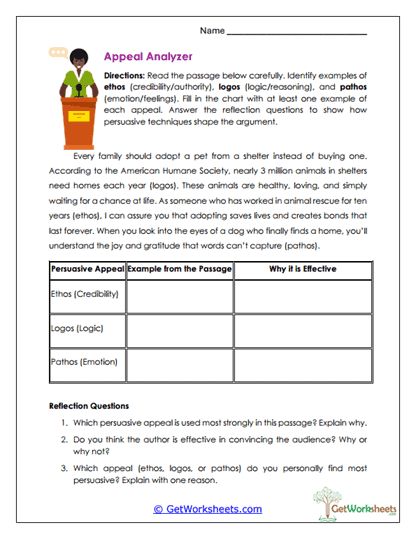
Appeal Analyzer
Students examine a persuasive passage to identify examples of ethos, logos, and pathos. They explain why each appeal works and evaluate which one dominates the author's argument. Reflection prompts encourage them to consider how different audiences might respond to various techniques. The activity deepens their understanding of classical rhetorical strategies and how they function in real writing.
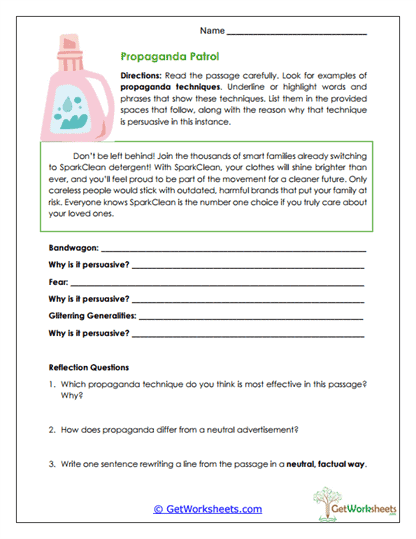
Propaganda Patrol
In this worksheet, students identify propaganda strategies such as bandwagon, fear appeals, and glittering generalities within a promotional passage. They highlight key phrases and explain how each technique attempts to influence readers. Learners then rewrite part of the text in a factual, unbiased tone. This comparison helps them see how manipulative language differs from balanced communication and strengthens media literacy.
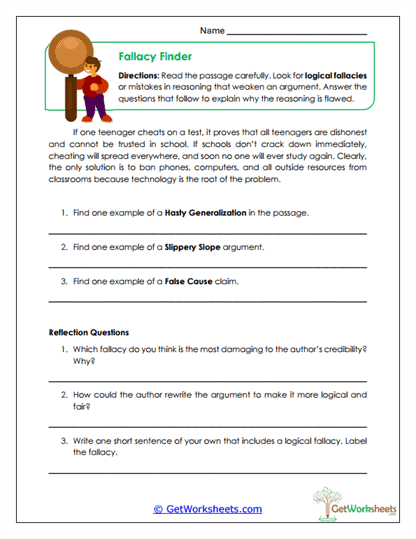
Fallacy Finder
Students analyze a short passage to locate examples of logical fallacies, including hasty generalization, slippery slope, and false cause. They reflect on which fallacy most weakens the argument and why. Learners also practice improving the passage by removing flawed reasoning. To reinforce understanding, they write their own example of a fallacy and label it appropriately. This strengthens their ability to recognize faulty logic in persuasive texts.
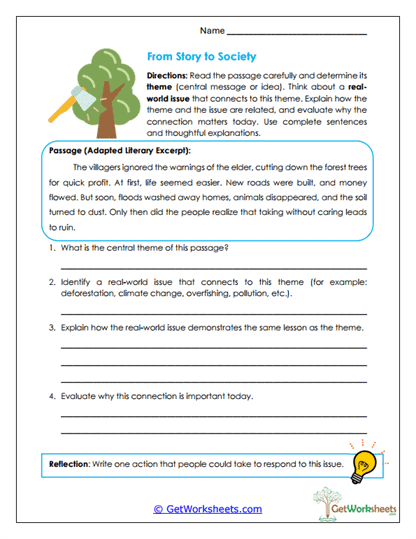
From Story to Society
Learners read a brief literary passage and identify its central theme before connecting it to a contemporary issue. They explain how the real-world example demonstrates the same underlying lesson and reflect on why this connection matters. Students also consider possible solutions to the modern problem. This worksheet supports deep thematic analysis and encourages meaningful text-to-world thinking.
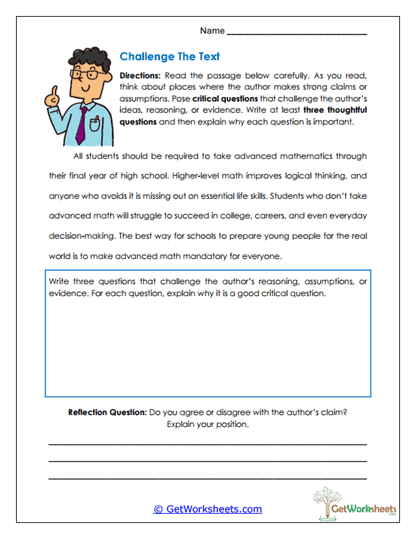
Challenge the Text
Students generate three probing questions that challenge an author's assumptions or evidence within a persuasive passage. They explain how each question reveals weaknesses in the argument and evaluate the overall strength of the author's position. A reflective prompt asks them to articulate their own stance on the issue. This activity builds habits of inquiry and promotes thoughtful engagement with texts.
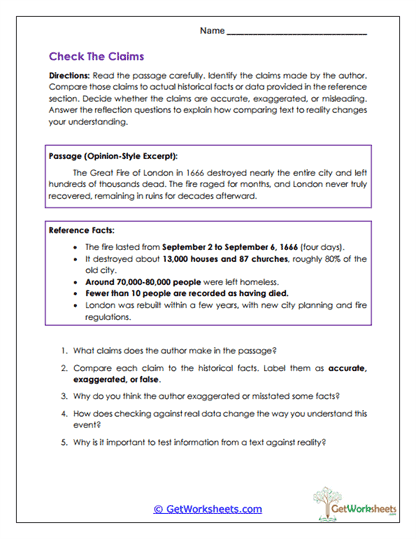
Check the Claims
Learners compare the claims in an opinion-style passage about the Great Fire of London with verified historical facts. They identify which statements are accurate, exaggerated, or misleading and reflect on how fact-checking alters their understanding of the event. The worksheet highlights why authors may distort information and helps students distinguish narrative tone from factual accuracy. It reinforces the value of checking claims against reliable sources.
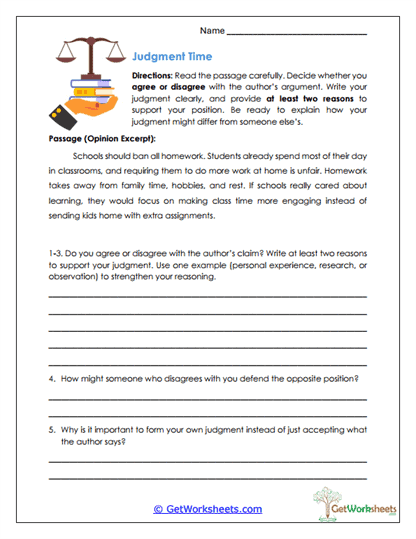
Judgment Time
In this worksheet, students evaluate an argument about banning homework and write a clear judgment supported by reasons and examples. They also consider how someone with an opposing viewpoint might defend a different stance. Reflection prompts encourage them to think about why forming independent judgments is important. This task strengthens argument writing skills and builds confidence in critical evaluation.
Bookmark Us Now!
New, high-quality worksheets are added every week! Do not miss out!