Credibility of Sources Worksheets

About This Worksheet Collection
This collection of credibility-focused worksheets offers teachers a practical, ready-to-use set of activities for guiding students through the complexities of evaluating information. Each worksheet introduces a different angle of source assessment-from fact-checking and expert evaluation to identifying media bias-allowing educators to build comprehensive lessons that strengthen digital and informational literacy. The materials are versatile enough for whole-class instruction, small-group discussion, or independent practice.
As students work through the activities, they develop essential analytical habits that support academic success across subjects. They learn how to question the trustworthiness of information, look for reliable evidence, compare sources, and recognize misleading or biased content. These skills not only deepen reading comprehension but also prepare students to navigate real-world media with discernment and confidence.
Detailed Descriptions Of These Worksheets
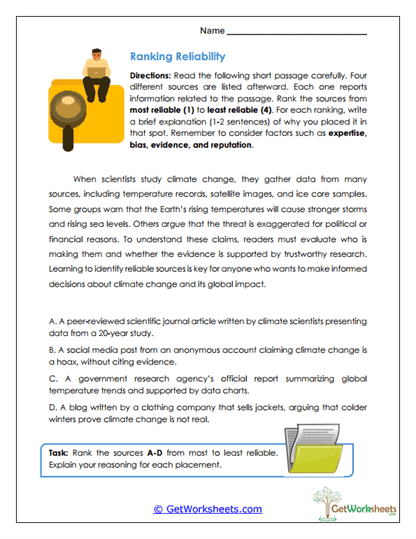
Ranking Reliability
This worksheet invites students to examine a short passage on climate change before comparing four sources that discuss the same topic. Learners must order the sources based on their trustworthiness and support their choices with clear reasoning. By requiring students to justify each rank, the activity helps them recognize how expertise, reputation, and evidence influence credibility. It also encourages thoughtful evaluation rather than surface-level judgments.
Facts vs. Opinions
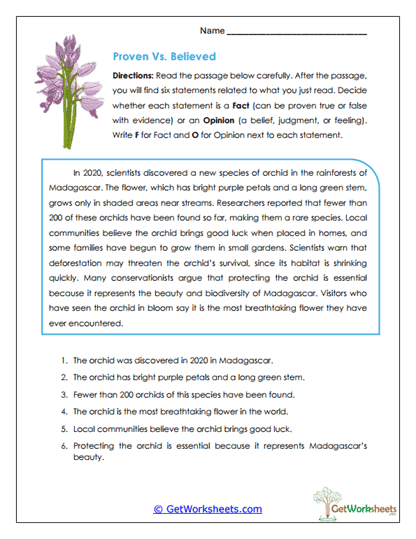
Students explore a passage about a rare orchid discovery and then decide which statements represent factual information and which express opinions. They are asked to cite supporting details from the text, prompting closer reading and reflection. The activity teaches learners to distinguish objective reporting from personal commentary, a key skill in informational literacy.
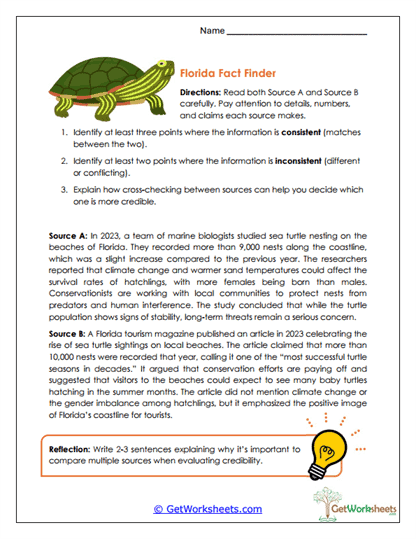
Source Comparison
In this activity, students compare two sources discussing sea turtle nesting patterns in Florida. They identify where the information aligns and where it does not, encouraging them to think critically about consistency between sources. After analyzing the texts, learners determine which source is more credible and explain why. This practice highlights how cross-checking information strengthens accuracy and understanding.
Domain Evaluation
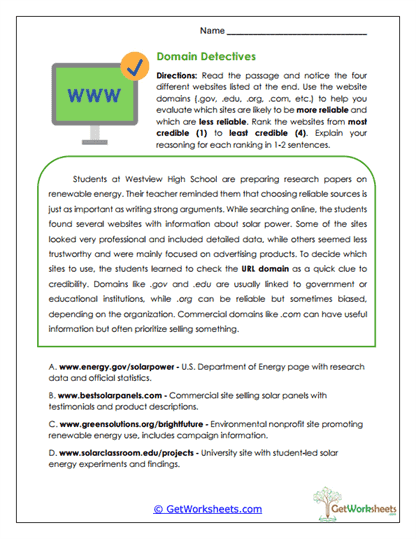
Students examine a set of website URLs to determine how trustworthy each site might be for research on renewable energy. They evaluate the domains and reflect on how extensions such as .gov, .edu, .org, and .com typically differ in reliability. By analyzing these domain cues, learners gain insight into selecting appropriate online sources. The activity reinforces foundational digital literacy skills.
Publication Credibility
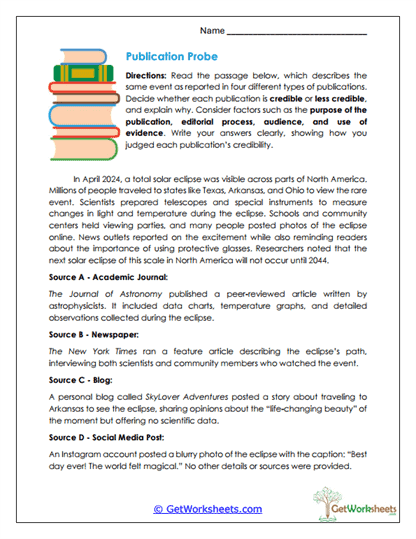
This worksheet asks students to review four types of publications related to a solar eclipse: a journal article, a newspaper, a blog entry, and a social media post. Students must determine which are most dependable and justify their arguments. The comparison helps them understand how editorial oversight and purpose shape the quality of information.
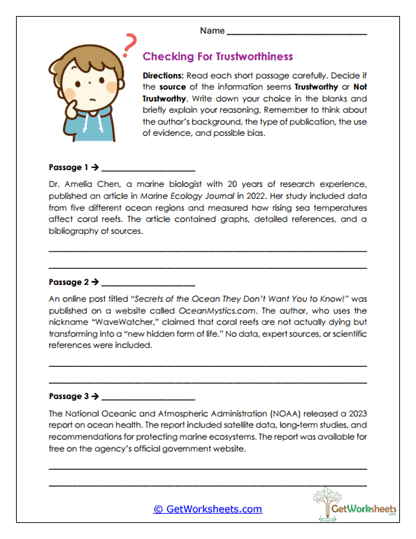
Trustworthiness Check
Students read three brief passages and evaluate whether each one appears trustworthy. They consider author expertise, potential bias, use of evidence, and the nature of the publication. This task encourages quick but thoughtful analysis of credibility cues and strengthens students' ability to assess information in everyday settings.
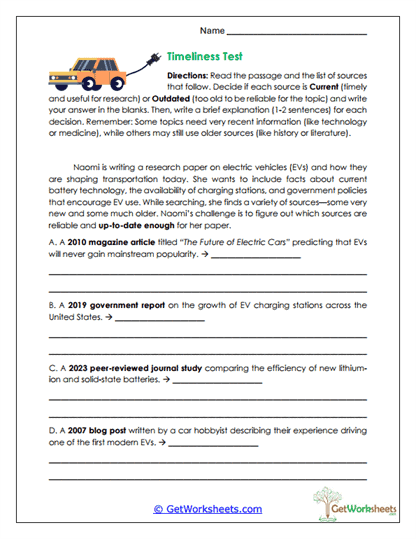
Timeliness of Sources
Learners examine several sources related to electric vehicle research and determine whether each is current or outdated. They assess publication dates and relevance, especially in fast-changing fields. This worksheet highlights how using dated information can affect research accuracy. Students practice justifying their evaluations with logical reasoning.
Expert vs. Non-Expert
In this worksheet, students compare two passages about sleep and memory written by authors with different levels of expertise. They analyze which passage is more reliable by considering knowledge depth, evidence use, and overall clarity. This activity helps learners understand the importance of author qualifications when evaluating claims.
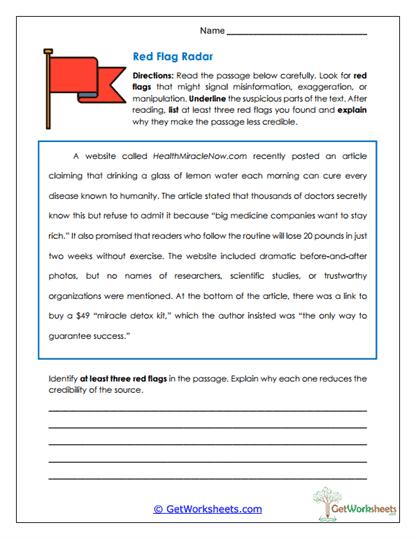
Red Flag Radar
Students read a short passage and search for signs of misinformation or manipulation. They underline questionable phrases or unsupported statements and then reflect on why each one is problematic. The activity helps learners recognize tactics that reduce a source's credibility. It also strengthens their ability to identify emotional or misleading language in media texts.
Headline Reality Check
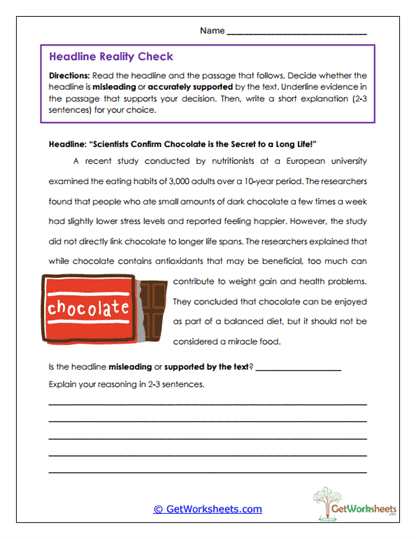
In this worksheet, students analyze a headline alongside a related passage to determine whether the headline accurately reflects the content. They gather evidence from the text and explain whether the headline is sensationalized or fair. The activity teaches learners how media framing can distort information and encourages precise, evidence-based thinking.
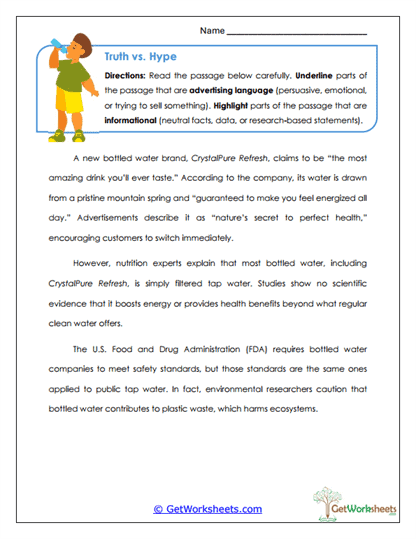
Truth vs. Hype
Students read a passage about a bottled water brand and separate promotional language from factual statements. They underline persuasive or exaggerated claims and highlight neutral information. This task builds awareness of how advertising strategies influence reader perception. It also strengthens comprehension by requiring students to analyze tone and purpose within the text.
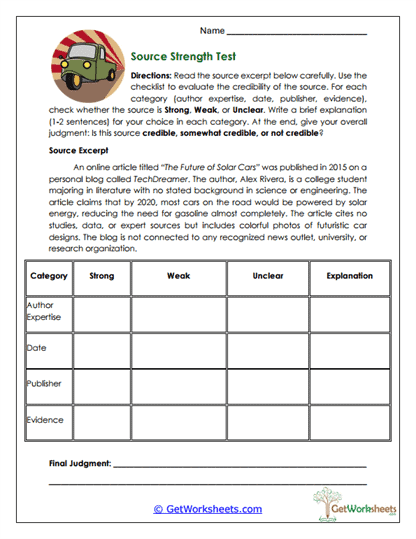
Source Strength Test
Learners evaluate a source excerpt by examining author expertise, publication date, publisher reliability, and evidence quality. Using a structured checklist, they classify each category as strong, weak, or unclear and justify their decisions. This organized approach teaches students how to break down credibility into measurable components. By the end, they develop a well-supported overall judgment of the source's reliability.
Bookmark Us Now!
New, high-quality worksheets are added every week! Do not miss out!