Contextualization Worksheets
About This Worksheet Collection
The Contextualization Worksheets collection teaches students one of the most powerful reading and historical thinking skills: understanding a text within its time, place, culture, and conditions. These worksheets help learners interpret meaning by connecting passages to historical eras, author backgrounds, cultural traditions, and technological change. As students analyze settings, perspectives, and historical influences, they deepen comprehension and develop stronger critical reasoning across both ELA and Social Studies.
Detailed Descriptions Of These Worksheets
Historical Setting Study
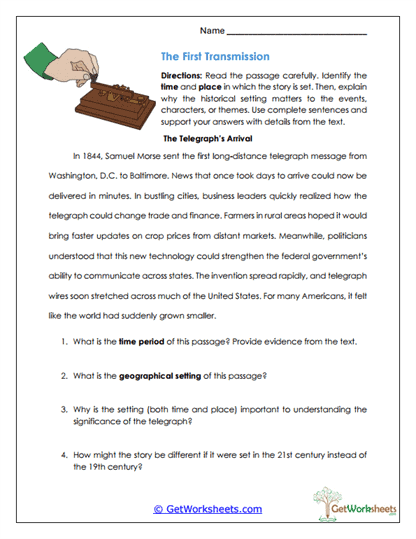
In this worksheet, students read a passage describing the arrival of the telegraph and identify the historical time period and geographical location referenced in the text. After determining the setting, students explain why the historical moment matters-considering factors like communication challenges, public reactions, and the social impact of rapid technological change. They answer four open-ended questions requiring full-sentence responses supported by textual evidence. This activity helps students see how innovations are shaped by the needs, limitations, and beliefs of the era, reinforcing the idea that history directly influences the meaning of events described in a passage. This worksheet is part of our Contextualization Worksheets collection.
Author Background Connections
Students read a short biographical passage about Frederick Douglass alongside an excerpt emphasizing the power of literacy and education. They answer questions that prompt them to connect Douglass's lived experiences-enslavement, self-education, and advocacy-to the message and tone of the passage. Students consider how personal history influences an author's argument, word choice, and emotional force. This worksheet encourages learners to recognize why understanding an author's background is essential for interpreting purpose, theme, and perspective. This worksheet is part of our Contextualization Worksheets collection.
Context Clue Vocabulary
This worksheet provides a passage about colonial resistance and asks students to define bolded words such as tyranny, parchment, treasonous, and resolute using context clues and historical understanding. Students write definitions in their own words and identify the clues that helped them determine meaning. By working with language tied to the American Revolution, students learn how historical context and emotional tone shape word usage. This activity strengthens inferencing, improves vocabulary skills, and builds comfort reading complex historical texts. This worksheet is part of our Contextualization Worksheets collection.
Primary vs. Secondary Sources
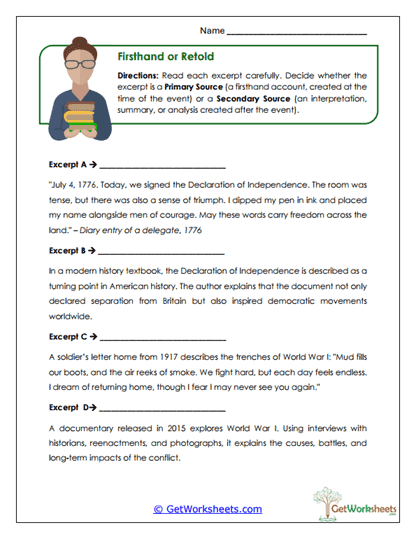
Students read four short excerpts and determine whether each is a primary source or a secondary source. They examine clues such as first-person perspective, time of creation, and purpose to justify their answers. The task helps students understand the differences between firsthand accounts and later interpretations-an essential skill in both Social Studies and informational reading. This worksheet builds students' ability to evaluate evidence, distinguish interpretation from observation, and practice historical inquiry. This worksheet is part of our Contextualization Worksheets collection.
Cultural Context Clues
In this worksheet, students read a passage describing a cultural festival and use contextual clues to interpret references such as red envelopes, traditional foods, and symbolic fireworks. Students answer inferential questions that require them to explain the meaning and significance of these cultural details. This activity promotes cultural awareness and helps learners recognize when understanding traditions and practices enhances text comprehension. It strengthens students' ability to infer meaning even when information is not directly explained. This worksheet is part of our Contextualization Worksheets collection.
Industrial Era Comparison
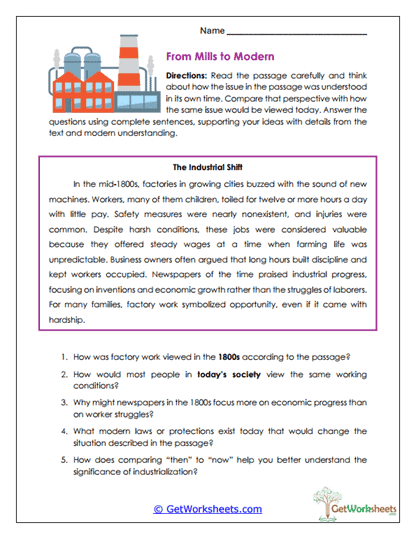
Students read a passage describing mid-1800s factory work and compare its historical conditions to modern standards. They analyze working environments, labor struggles, economic pressures, and societal attitudes across time. Reflection questions encourage students to consider how labor rights evolved, what prompted reforms, and how industrialization reshaped daily life. This worksheet helps learners understand continuity and change, showing how historical context influences perspectives and expectations. This worksheet is part of our Contextualization Worksheets collection.
Revolutionary Purpose Analysis
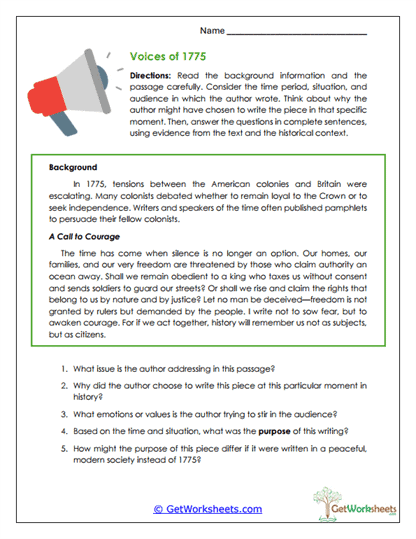
This worksheet provides background information about the year 1775 and an excerpt calling for colonial unity. Students analyze the author's purpose, intended audience, and emotional tone, then support their interpretations using evidence from both the passage and the historical context. By examining connections between rhetoric and the political climate, learners strengthen their ability to interpret persuasive writing within its historical moment. This worksheet is part of our Contextualization Worksheets collection.
Fact vs. Fiction in History
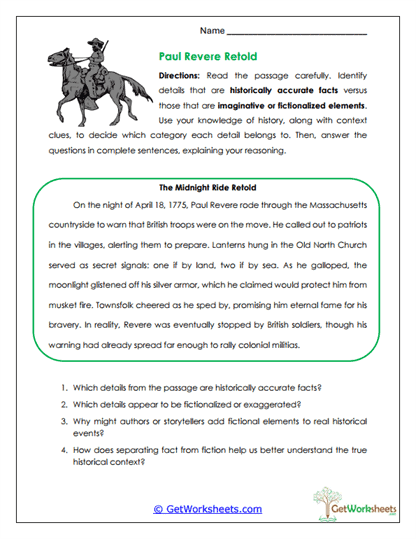
Students read an adapted passage about Paul Revere's midnight ride and evaluate which details are historically accurate and which stem from myth or storytelling. Questions guide students to identify exaggerations, analyze why dramatization occurs, and explain how fictionalized storytelling can influence public understanding of history. This activity builds critical thinking about sources, accuracy, and the difference between historical record and narrative tradition. This worksheet is part of our Contextualization Worksheets collection.
Past-Present Connections
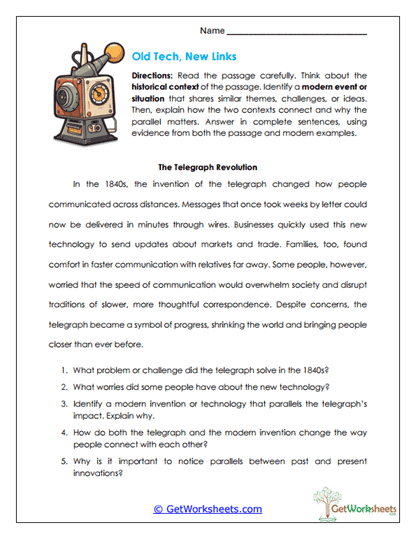
In this worksheet, students read a passage about the telegraph's invention and compare it to a modern-day communication technology. They identify similarities in purpose, public reaction, and impact on society. The activity helps students draw meaningful connections across time, showing how innovations respond to communication needs and reshape daily life. Students practice text-to-world connections while analyzing how history repeats and evolves. This worksheet is part of our Contextualization Worksheets collection.
Quotes in Context
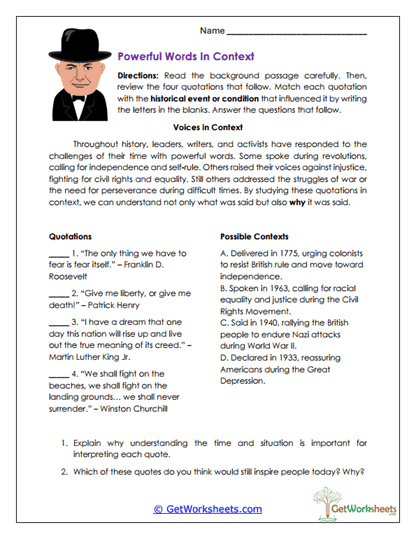
Students learn how historical context shapes the meaning of famous quotations by reading a short background section and then matching each quotation to the event or condition that influenced it. After matching, students answer reflection questions explaining why understanding time and circumstance is essential when analyzing powerful words. This worksheet strengthens students' ability to interpret quotations, connect ideas to historical events, and appreciate the significance of spoken and written language in pivotal moments. This worksheet is part of our Contextualization Worksheets collection.
Context-Based Debate
This worksheet provides students with historical background about the Great Depression along with an excerpt from Franklin D. Roosevelt's first inaugural address. Students prepare for a structured debate on whether historical context deepens the meaning of the passage. They take a position, use evidence from the speech and background text, and develop persuasive arguments. A reflection question encourages students to consider how messages from past crises can apply to modern challenges. This worksheet builds argumentative writing, historical reasoning, and the ability to connect text to context. This worksheet is part of our Contextualization Worksheets collection.

Bookmark Us Now!
New, high-quality worksheets are added every week! Do not miss out!