Constitution Day Worksheets
About This Worksheet Collection
This Constitution Day worksheet collection brings civics to life through a thoughtful mix of reading, writing, sorting, and critical thinking activities. Each resource is designed to be easy to use while still offering meaningful learning experiences that go beyond simple memorization. Whether used in classrooms or homeschool settings, these worksheets provide flexible options for reinforcing key concepts in engaging and approachable ways. The variety ensures that students stay interested while exploring important ideas about government, rights, and national identity.
As students work through these activities, they build a strong foundation in civic understanding while also strengthening essential academic skills. Learners practice reading comprehension, vocabulary development, writing clarity, and logical reasoning in connected and purposeful ways. Many of the worksheets also encourage reflection, discussion, and real-world connections, helping students see the relevance of what they are learning. Together, these resources support both skill development and deeper understanding of how the Constitution shapes everyday life.
Detailed Descriptions Of These Worksheets
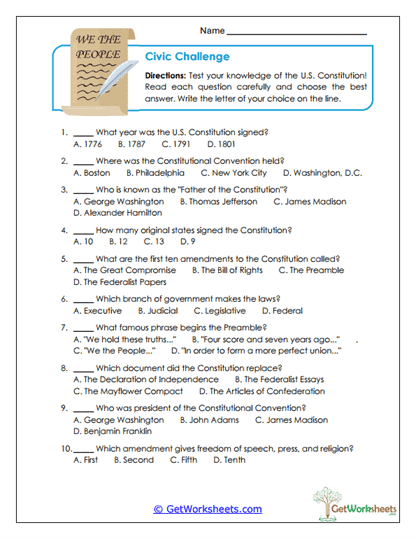
Civic Challenge - Constitution Knowledge Quiz
This multiple-choice activity gives students a structured way to review important ideas related to the Constitution. Each question encourages careful reading and thoughtful selection, helping learners strengthen both recall and reasoning skills. It works well as a quick assessment or as a guided review before a larger test. Students also become more comfortable with standardized question formats, which builds confidence over time.
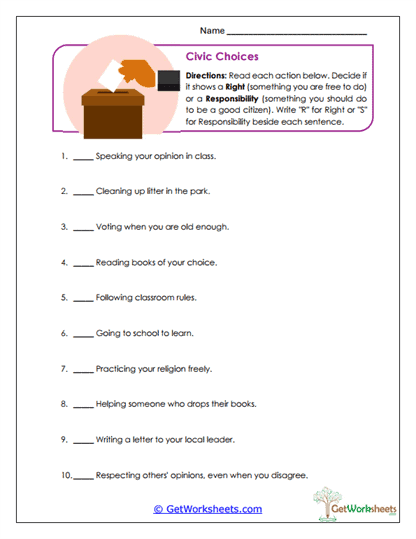
Civic Choices - Rights vs Responsibilities Practice
Students explore everyday situations and decide whether each example represents a right or a responsibility. This process encourages thoughtful reflection and helps learners better understand what it means to participate in a community. The scenarios feel relatable, making the learning more meaningful and easier to connect to real life. It also opens the door for discussions about fairness, accountability, and decision-making.
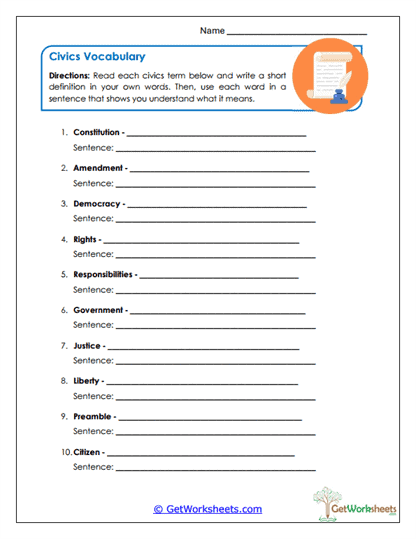
Civics Vocabulary - Definitions & Sentence Writing Practice
This activity asks students to define key civics terms and then use them in their own sentences. That extra step pushes learners to truly understand each word instead of simply copying definitions. It's a practical way to build both vocabulary knowledge and writing confidence at the same time. Over time, students begin to use these terms more naturally in conversations and written work.
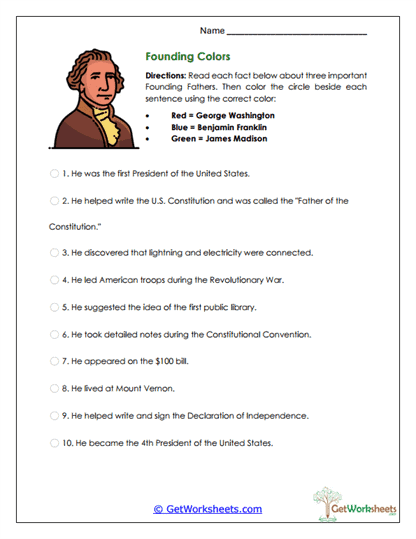
Founding Colors - Founding Fathers Fact Matching
Students match important facts to well-known historical figures using a color-coded system. This format keeps learners engaged while reinforcing reading comprehension and attention to detail. As they work through the activity, students build a clearer understanding of each leader's role in early American history. The visual element also helps improve memory and retention.
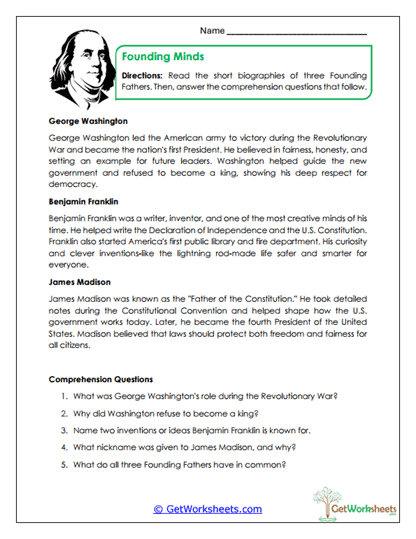
Founding Minds - Reading Comprehension & Historical Understanding
This reading activity presents short biographies of key Founding Fathers in an accessible format. Students read each passage and answer questions that focus on main ideas and important details. The shorter text helps reduce overwhelm while still delivering meaningful content. It's a great way to build both reading stamina and historical knowledge.
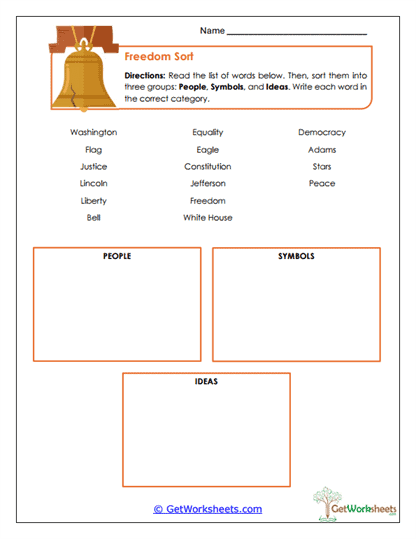
Freedom Sort - Categorizing Civics Concepts
Students sort a list of terms into categories like people, symbols, and ideas. This requires them to think carefully about how each concept fits within a larger system. The activity promotes deeper understanding by encouraging learners to make connections between different elements of civics. It's both interactive and intellectually engaging.
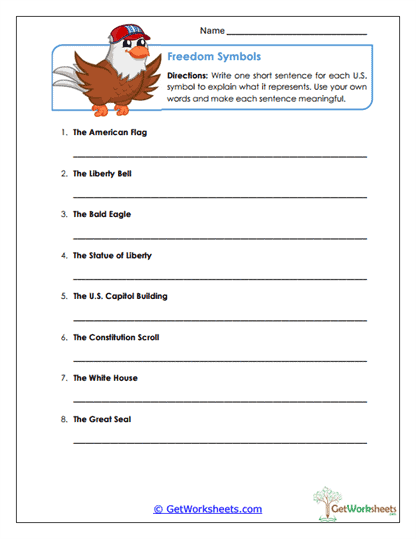
Freedom Symbols - Civic Symbolism Writing Practice
This writing-focused activity invites students to reflect on important national symbols and explain their meanings. Learners connect ideas like freedom and unity to objects such as the flag or Liberty Bell. The process builds both vocabulary and sentence-writing skills while encouraging thoughtful expression. It also helps students better understand how symbols represent deeper values.
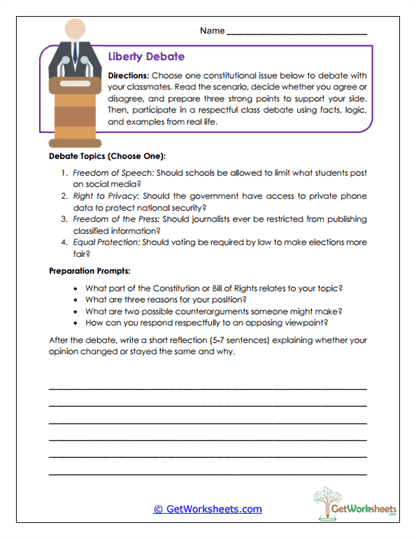
Liberty Debate - Argument Writing & Speaking Skills
Students take on real constitutional topics and develop arguments to support their viewpoints. They are encouraged to use reasoning, examples, and clear explanations to strengthen their position. This activity builds both writing and speaking skills in a meaningful context. It also helps students learn how to respectfully share and defend ideas.
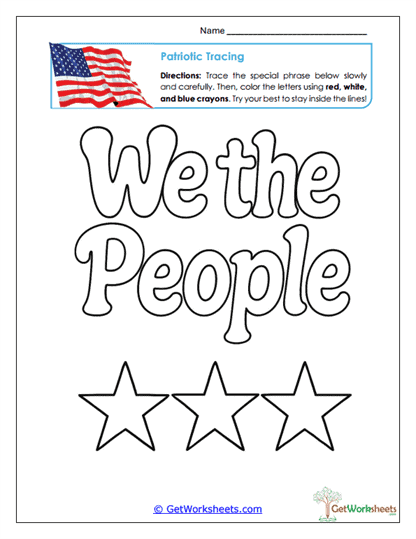
Patriotic Tracing - Fine Motor & Phrase Recognition
Young learners trace the phrase "We the People" while practicing proper letter formation. This repetition helps build fine motor skills and early handwriting confidence. The addition of coloring elements makes the activity more engaging and visually appealing. Students also begin to recognize an important phrase tied to American history.
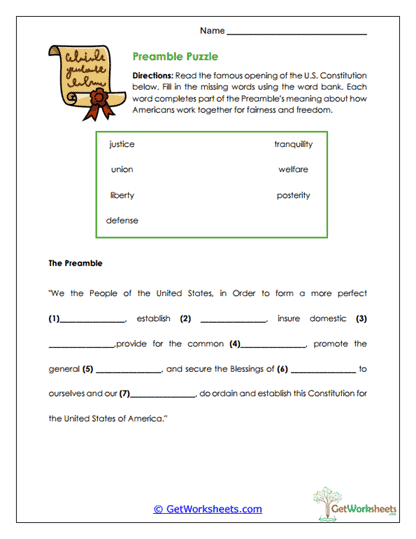
Preamble Puzzle - Constitution Vocabulary & Meaning Practice
Students work through a fill-in-the-blank version of the Constitution's opening lines. By selecting the correct words, they gain a clearer understanding of key ideas like justice and liberty. This approach turns a complex text into something more approachable and interactive. It helps learners connect vocabulary with meaning in a lasting way.
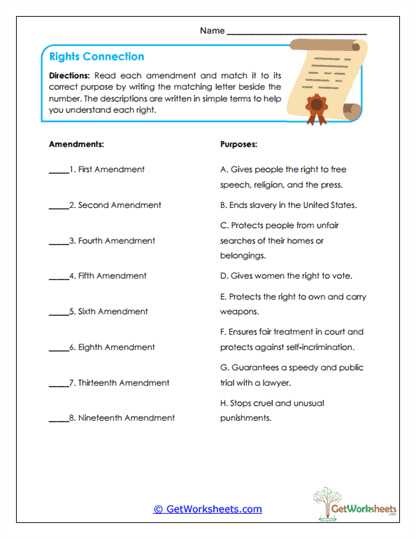
Rights Connection - Amendments Matching Activity
This worksheet challenges students to match each amendment with its purpose. Instead of memorizing, learners must think about what each right actually protects. The activity builds comprehension and helps make abstract ideas feel more concrete. It's especially useful as an introduction or review of the Bill of Rights.
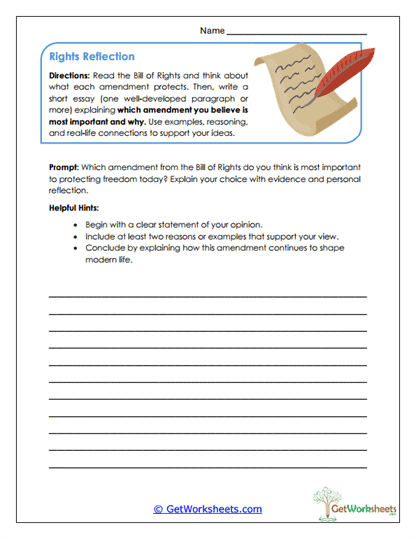
Rights Reflection - Opinion Writing & Civic Reasoning
Students choose an amendment they believe is most important and explain their reasoning. This encourages deeper thinking and gives learners a chance to express their opinions clearly. The writing process helps strengthen organization, clarity, and use of supporting details. It also helps students see how civic concepts connect to their own lives.
Bookmark Us Now!
New, high-quality worksheets are added every week! Do not miss out!