Conflict Resolution Worksheets
About This Worksheet Collection
The Conflict Resolution worksheet collection empowers students with practical tools to manage disagreements, express emotions respectfully, and build empathy in everyday interactions. Through relatable scenarios, creative activities, and structured writing prompts, learners practice calming strategies, perspective-taking, and effective communication. The collection blends emotional intelligence training with literacy and problem-solving, helping students recognize that conflicts are opportunities for understanding and growth.
These worksheets strengthen social-emotional skills such as empathy, self-regulation, and accountability. Students learn to reframe reactive responses, use respectful language, and repair relationships through apologies and solution-focused communication. Each activity supports responsible decision-making and emotional literacy, giving learners the confidence to handle challenges peacefully-both in person and online.
Detailed Descriptions Of These Worksheets
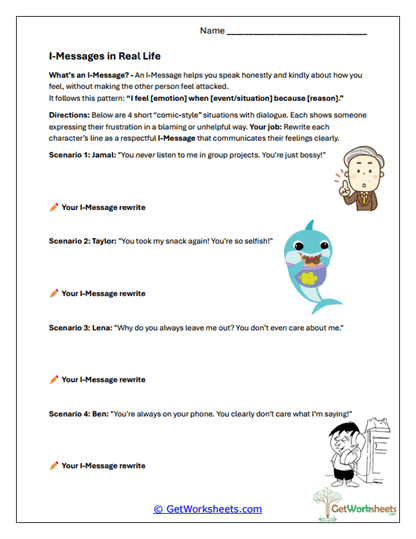
I-Messages in Real Life
Students practice turning blaming or emotional statements into calm, respectful "I-Messages." Using the formula "I feel...when...because...," they rewrite reactive comments into balanced, assertive expressions. The activity builds communication confidence and empathy. It's a foundational exercise in emotional regulation and healthy conflict management.
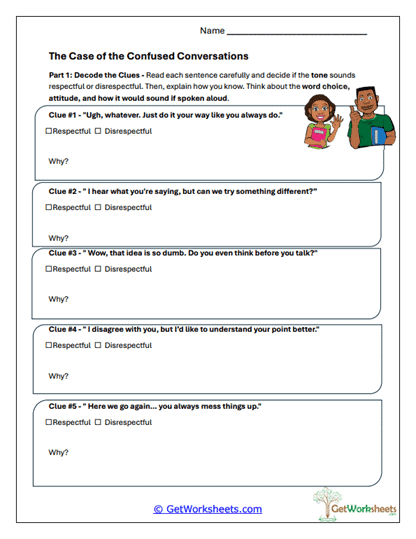
Case of the Confused Conversations
Learners read brief dialogues and determine whether each one sounds respectful or disrespectful, justifying their reasoning based on tone and word choice. This task builds awareness of how phrasing affects outcomes in conversation. It helps students identify the difference between calm communication and reactive dialogue.
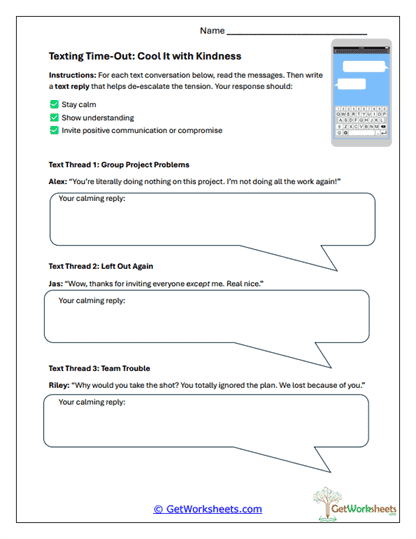
Texting Time-Out: Cool It with Kindness
Students learn to defuse tense text exchanges by writing thoughtful, empathetic replies. They analyze digital messages for tone and craft responses that encourage understanding rather than escalation. This worksheet reinforces kindness and restraint in online communication, promoting responsible digital citizenship.
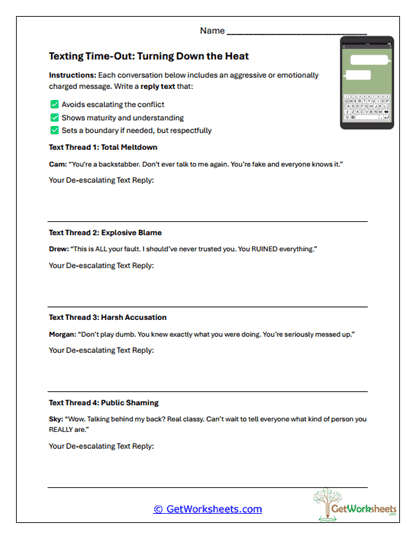
Texting Time-Out: Turning Down the Heat
In this follow-up activity, learners respond to aggressive or emotional texts with composed, boundary-setting messages. They demonstrate maturity and empathy while practicing de-escalation skills. It's an effective lesson in managing emotions and maintaining respect in digital environments.
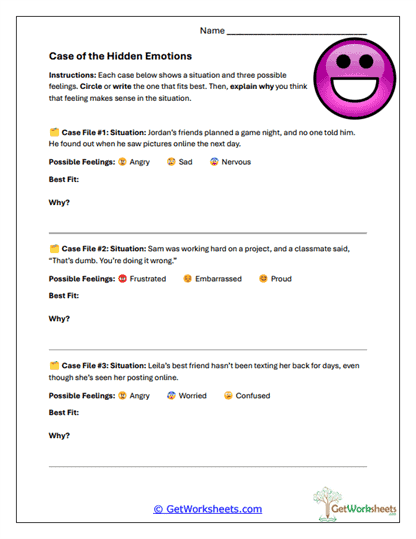
Case of the Hidden Emotions
Students infer emotions behind realistic conflict situations by choosing appropriate feelings and justifying their choices. This inference-based activity develops emotional vocabulary and empathy. It helps learners understand that emotions drive actions and that recognizing feelings can prevent misunderstandings.
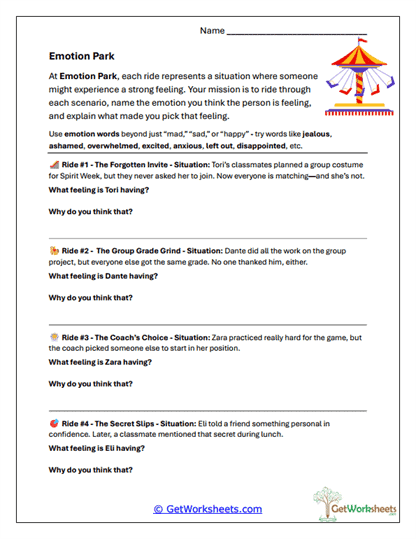
Emotion Park
Through a creative metaphor, students "ride" through different emotional experiences and describe what characters might feel in each scenario. The imaginative format supports emotional literacy and reflective writing. It emphasizes that recognizing emotions is the first step toward healthy conflict resolution.
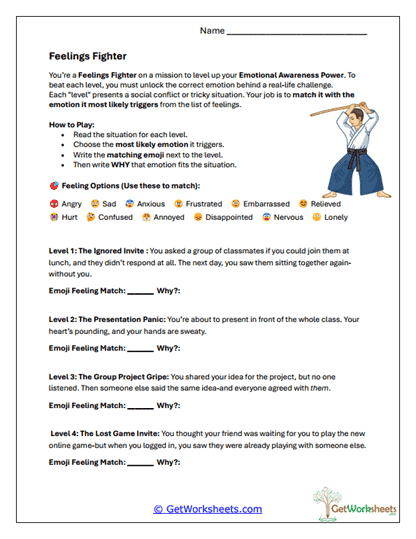
Feelings Fighter
This interactive challenge turns emotion recognition into a problem-solving game. Students match scenarios to specific emotions and defend their reasoning. It encourages reflection, vocabulary building, and self-awareness. The game-like format keeps emotional learning engaging and meaningful.
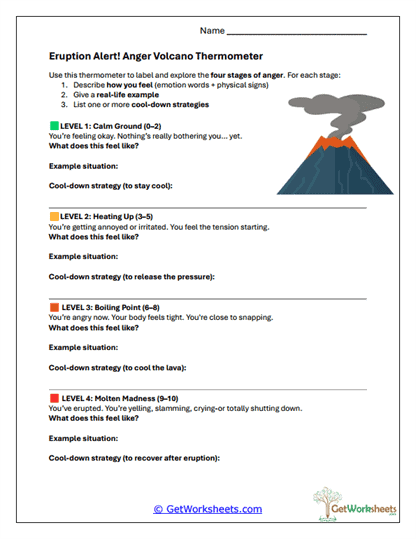
Eruption Alert! Anger Volcano Thermometer
Using a volcano metaphor, students track how anger builds from mild irritation to explosive frustration. They describe signs, triggers, and calming strategies for each stage. The visual model teaches emotional awareness and self-regulation. It's a valuable mindfulness tool for managing anger before it "erupts."
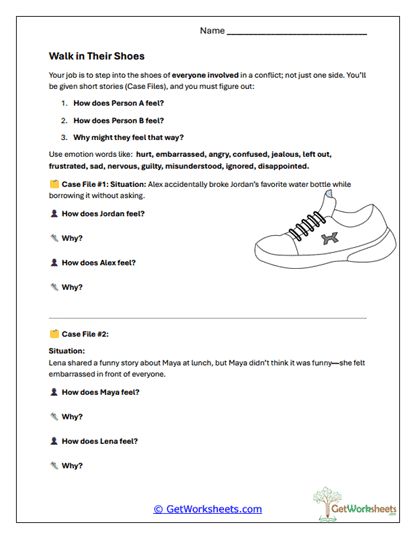
Walk in Their Shoes
Students analyze both sides of a disagreement, identifying what each person might feel and why. The exercise promotes empathy and multiple-perspective thinking. By recognizing shared emotions, learners discover that understanding others is key to resolving conflict respectfully.
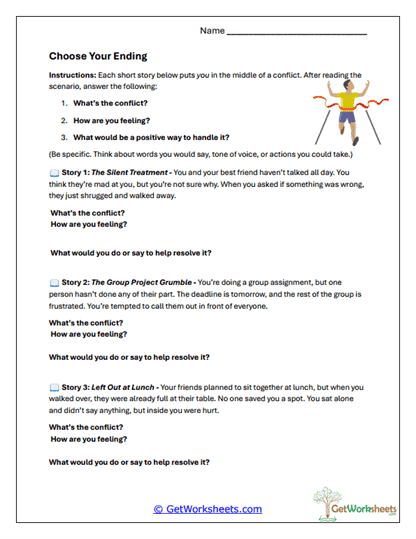
Choose Your Ending
In this open-ended problem-solving task, learners read short conflicts and decide how to resolve them positively. They describe emotions involved and outline the communication needed for a peaceful outcome. The activity reinforces decision-making, empathy, and constructive language.
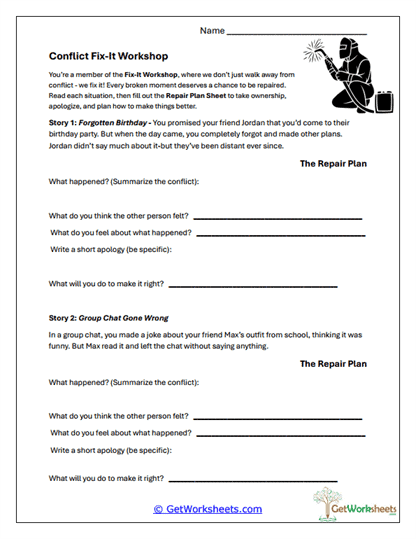
Conflict Fix-It Workshop
Students explore ways to repair relationships after mistakes or hurt feelings. For each scenario, they summarize what happened, write a short apology, and create a "Repair Plan." The exercise builds accountability, compassion, and responsibility. It models how communication and sincerity rebuild trust.
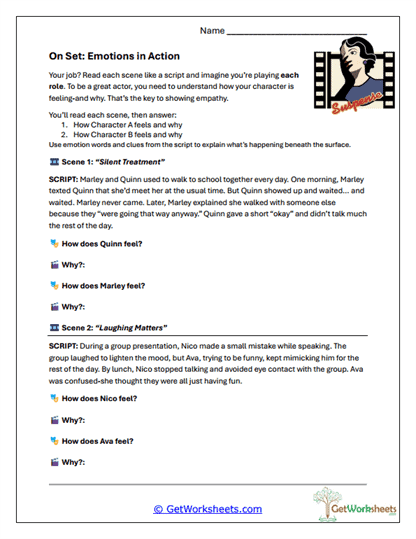
Emotions in Action
In this performance-based worksheet, students step into character roles and interpret emotional cues from short scripts. They analyze dialogue, tone, and motivation to uncover how feelings influence behavior. The role-play approach encourages empathy, self-expression, and emotional insight in conflict situations.
Bookmark Us Now!
New, high-quality worksheets are added every week! Do not miss out!