Comparisons & Connections in Reading Worksheets
About This Worksheet Collection
The Comparisons & Connections in Reading collection helps students move beyond reading single texts in isolation and begin thinking like literary "connectors." Each worksheet invites learners to place texts side by side-across genres, time periods, and perspectives-and notice how characters, settings, themes, and ideas relate to one another. As students compare classic stories, speeches, novels, and informational pieces, they practice close reading, critical thinking, and evidence-based explanation. These activities build an essential skill for upper elementary and secondary ELA: using comparisons and connections to deepen comprehension and make meaning across multiple texts.
Detailed Descriptions Of These Worksheets
Character Comparison
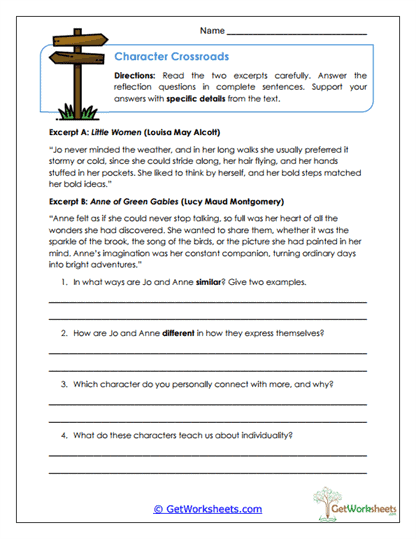
In this worksheet, students read two short excerpts-one featuring Jo March from Little Women and one featuring Anne Shirley from Anne of Green Gables-and compare the personalities and behaviors of both characters. Guiding questions prompt students to identify how Jo and Anne are alike and different in their energy, imagination, and reactions to the world around them. Students are encouraged to quote specific lines that show each character's voice, choices, and attitudes, then make personal connections by reflecting on which character feels more like them. This activity strengthens character trait analysis, helps students see how different authors create memorable, spirited protagonists, and supports thoughtful, text-based comparison. This worksheet is part of our comparisons & connections in reading worksheets collection.
Setting Comparison
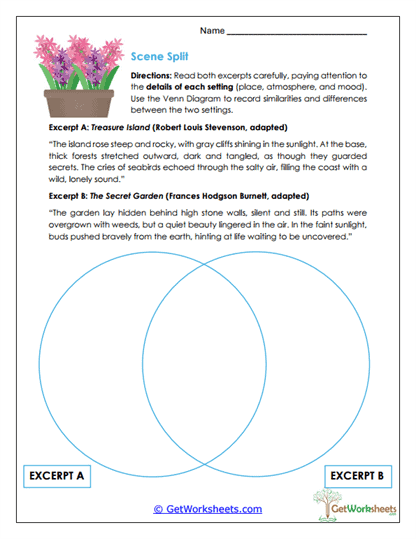
Students read descriptive excerpts from Treasure Island and The Secret Garden and use a Venn diagram to compare the two settings. They look closely at sensory details, mood, and atmosphere, noting how one setting feels adventurous and dangerous while the other feels mysterious, quiet, or hopeful. Prompts guide students to describe how each setting might make a character feel and how those feelings could shape the story's events. As they fill in the Venn diagram, learners practice organizing similarities and differences visually, strengthening their ability to compare descriptive writing and understand how setting influences tone and reader experience. This worksheet is part of our comparisons & connections in reading worksheets collection.
Cause-Effect Comparison
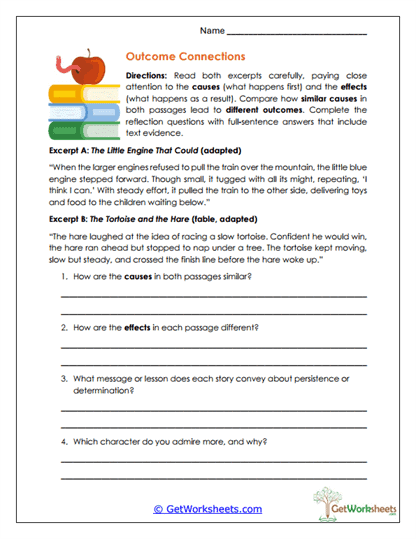
In this worksheet, students examine adapted excerpts from The Little Engine That Could and The Tortoise and the Hare to compare how similar causes-such as facing a challenge or choosing how to respond to difficulty-lead to very different outcomes. Students identify what each character does at key moments and how those actions create success or failure. Reflection questions prompt them to think about persistence, overconfidence, and the kinds of attitudes that lead to positive results. By comparing cause-and-effect relationships across texts, learners deepen their understanding of theme, learn to see patterns in stories, and practice explaining how an author's message is revealed through consequences. This worksheet is part of our comparisons & connections in reading worksheets collection.
Defining Courage
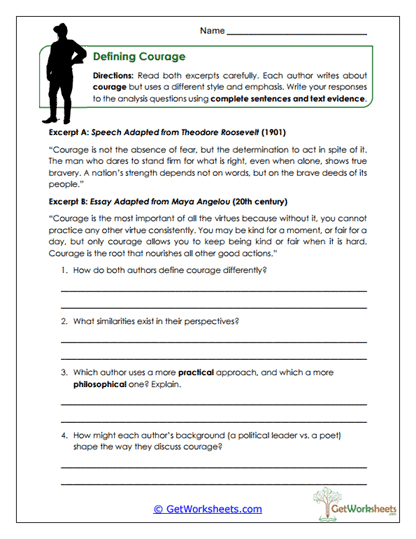
Students read short excerpts from Theodore Roosevelt and Maya Angelou that both explore the idea of courage but from different angles-one more action-focused and historical, the other more reflective and personal. Guided questions ask students to explain how each author defines courage, where their definitions overlap, and how their backgrounds might shape their views. Learners compare tone, examples, and emphasis, noticing whether the writing feels more practical, philosophical, or emotional. This worksheet strengthens students' ability to compare author perspectives across genres and encourages them to think critically about how important concepts like courage can be understood in multiple ways. This worksheet is part of our comparisons & connections in reading worksheets collection.
Point of View Shift
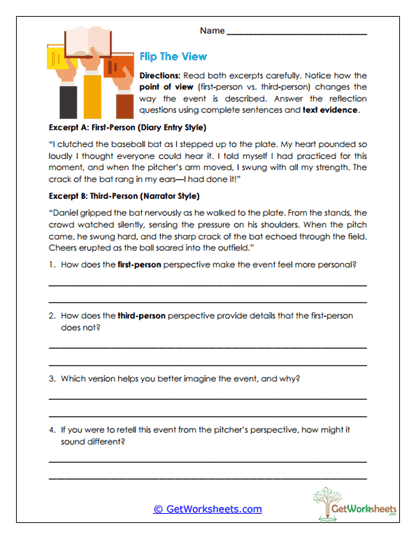
In this worksheet, students compare a first-person diary-style excerpt with a third-person narrative scene. They examine how point of view affects what the reader knows, how closely the reader feels connected to the character, and how emotions are expressed. Questions guide students to notice how "I" narration creates intimacy and immediacy, while third person can provide a wider or more observational view of the same type of event. By directly comparing these perspectives, learners gain insight into how authors make deliberate choices about point of view to shape mood, detail, and reader experience. This worksheet is part of our comparisons & connections in reading worksheets collection.
Genre and Tone Contrast
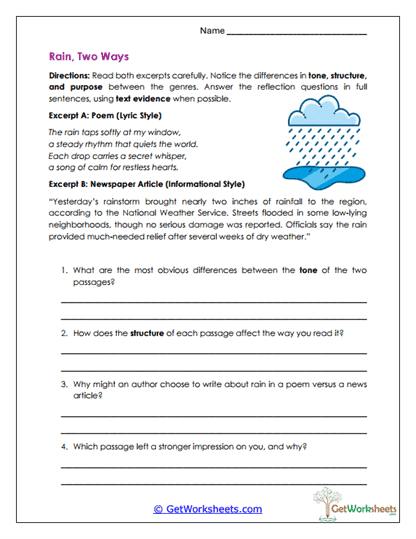
Students read two texts about rain: a lyrical poem that uses imagery and emotion, and an informational article that explains rainfall in a straightforward, factual style. They compare the tone, structure, and purpose of each piece, using text examples to describe how the poem makes the reader feel and how the article helps the reader learn. Reflection questions prompt students to think about why writers sometimes choose poetry and other times choose informational writing to communicate ideas. This worksheet helps students understand how genre influences style and tone, and it builds their ability to recognize how the same topic can be approached in very different ways. This worksheet is part of our comparisons & connections in reading worksheets collection.
Survival Strategy Comparison
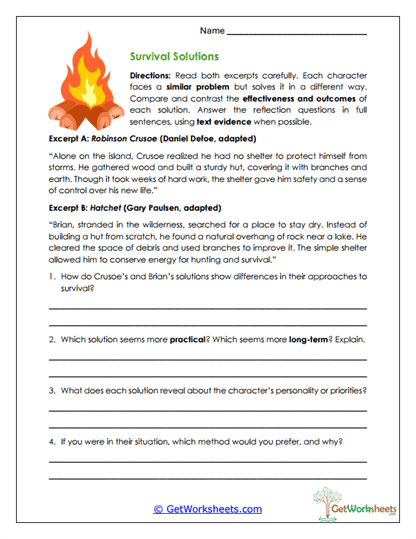
In this worksheet, students read excerpts from Robinson Crusoe and Hatchet, each describing a main character facing a survival challenge. Learners identify the problem in each text and analyze how Crusoe and Brian respond using different strategies, resources, and mindsets. Questions guide students to compare the practicality of each strategy, what each character's choices reveal about their personality, and how their environments shape their actions. Through this comparison, students deepen their understanding of survival themes, problem-solving in literature, and how character traits influence outcomes. This worksheet is part of our comparisons & connections in reading worksheets collection.
Historical vs. Modern Perspective
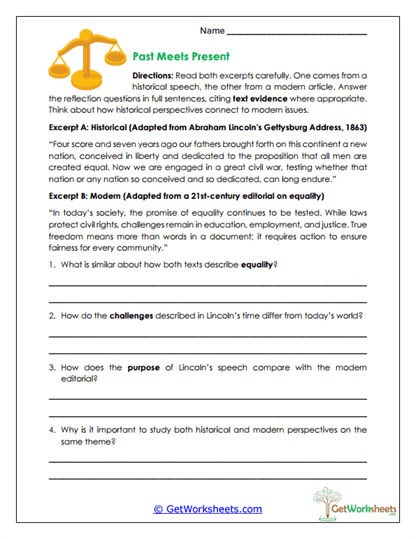
Students read an excerpt from Abraham Lincoln's Gettysburg Address and a modern editorial about equality. They then compare how both texts address fairness, justice, and the ongoing struggle for equal treatment. Guided questions ask learners to identify what kinds of challenges each text mentions, how the language reflects its time period, and how the authors' purposes differ. Students support their responses with quotes from both texts, learning to connect historical rhetoric to contemporary issues. This worksheet encourages thoughtful conversation about progress over time and builds students' skills in comparing author viewpoints across eras. This worksheet is part of our comparisons & connections in reading worksheets collection.
Friendship Themes
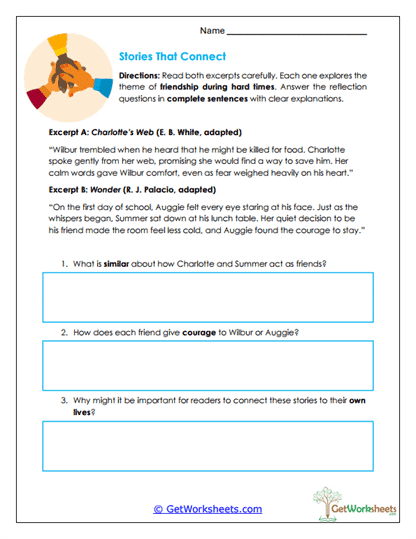
This worksheet invites students to compare excerpts from Charlotte's Web and Wonder, focusing on how friendship supports characters during difficult moments. Students examine how friends offer comfort, stand up for one another, and show kindness when someone feels afraid or left out. They respond to questions that ask them to describe specific acts of support, identify similarities in the friendships, and reflect on what these stories say about loyalty and compassion. The activity helps students recognize universal themes of friendship across very different types of stories and encourages them to make personal connections to their own friendships. This worksheet is part of our comparisons & connections in reading worksheets collection.
Literature and World Issues
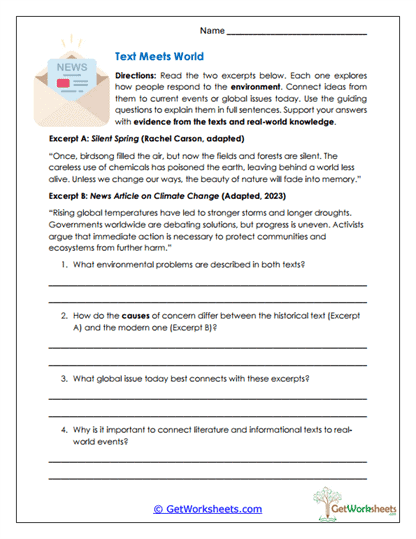
Students analyze an excerpt from Rachel Carson's Silent Spring alongside a modern article on climate change, comparing environmental problems, causes, and warnings across decades. They answer questions that ask them to identify shared concerns, note what has changed over time, and consider how each text calls readers to pay attention or take action. By connecting a foundational environmental text to current informational writing, students learn how literature and nonfiction both play roles in raising awareness. This worksheet strengthens their ability to connect texts to real-world issues and think critically about human impact on the planet. This worksheet is part of our comparisons & connections in reading worksheets collection.
Conflict Comparison
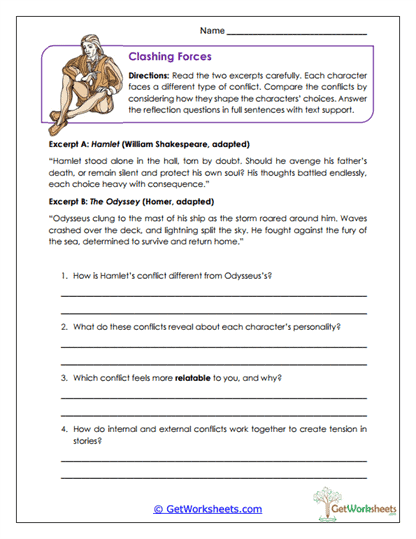
In this worksheet, students read adapted excerpts from Hamlet and The Odyssey and compare the very different conflicts each hero faces. They look at Hamlet's internal struggle-his doubts, fears, and moral questions-and contrast it with Odysseus's external battle against the sea and other forces. Students answer full-sentence questions supported by text details to explain how these conflicts shape each character's decisions and personality. This activity helps learners distinguish between internal and external conflict and appreciate how different types of struggle build tension and drive the story forward. This worksheet is part of our comparisons & connections in reading worksheets collection.
Courage Connections
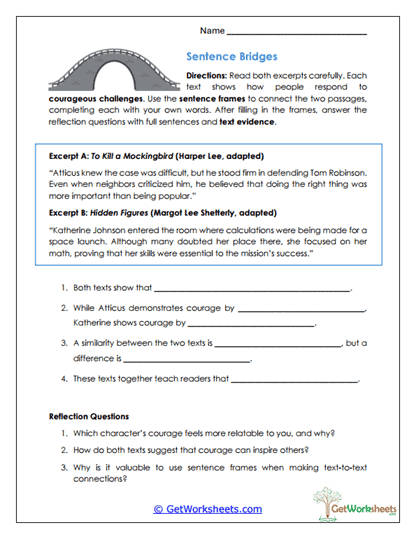
Students read excerpts from To Kill a Mockingbird and Hidden Figures, examining how each text portrays courageous choices in the face of injustice, bias, or pressure. Structured sentence frames guide students to compare the characters' actions, motivations, and the risks they take. Reflection questions ask which character they relate to most, how courage can inspire others, and what both texts suggest about speaking up or persevering. This worksheet supports text-to-text connections, helps students identify shared themes of bravery, and gives them scaffolding to write clear, evidence-based comparisons. This worksheet is part of our comparisons & connections in reading worksheets collection.
Bookmark Us Now!
New, high-quality worksheets are added every week! Do not miss out!