Close Reading Passages Worksheets
About This Worksheet Collection
This Close Reading Passages collection is designed to build students' ability to analyze short texts with precision, depth, and purpose. Each worksheet guides students through reading a passage multiple times, noticing details, and using textual evidence to support high-level thinking. Through annotation, inference, interpretive writing, and thematic analysis, learners strengthen their capacity to uncover deeper meanings, examine author craft, and recognize how small details shape the larger message of a text.
These worksheets promote patient reading, reflection, and analytical reasoning-skills essential for advanced ELA success.
Detailed Descriptions Of These Worksheets
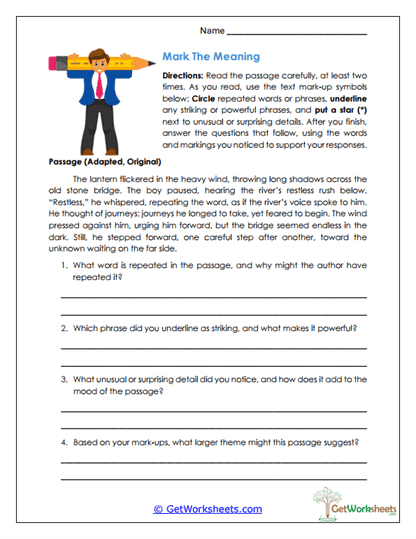
Meaning Mark-Up
Students read a descriptive passage multiple times and annotate it using specific mark-up symbols. They circle repeated words and phrases, underline vivid language, and star surprising or unusual details that stand out. After annotating, they answer targeted questions requiring them to use the markings they created as textual evidence. This approach helps students slow down and analyze how authors use repetition, imagery, and detail to craft meaning. The worksheet strengthens students' ability to notice subtle craft choices, interpret descriptive writing, and support interpretations with evidence from the text.
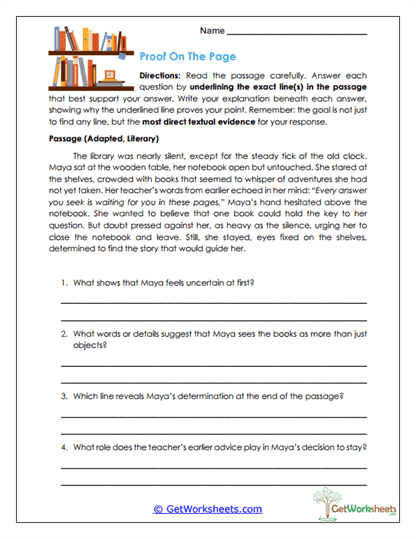
Text Evidence Finder
Students explore a literary passage and answer comprehension questions that require them to underline the exact lines supporting their answers. They then write short explanations connecting the evidence to their reasoning, reinforcing the difference between finding a line and finding the right line. This worksheet strengthens precision in selecting evidence, supports inferential reasoning, and helps students analyze the character's uncertainty, motivation, and emotional complexity. It builds confidence in defending answers with textual proof.
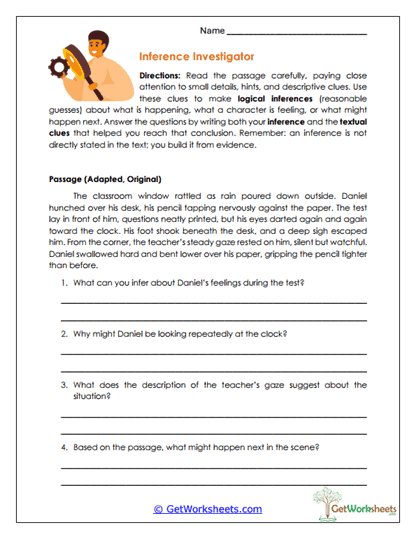
Inference Builder
Students read a descriptive passage and make inferences about a character named Daniel by analyzing small textual clues-body language, tone, setting details, and action. For each question, they state their inference and cite the specific evidence that led them to that conclusion. This clear separation between observation and interpretation teaches students how to "read between the lines" while staying grounded in the text. The worksheet develops logical thinking, emotional inference, and prediction skills.
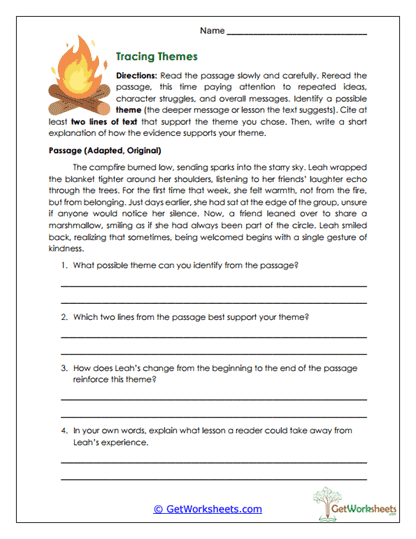
Theme Tracing
Students read a short passage carefully, paying attention to repeated ideas, emotional shifts, and the character's internal conflict. They identify a possible theme, cite at least two supporting lines, and write a brief explanation linking the evidence to the theme. Additional questions help them analyze how the character has changed by the end of the passage and how this growth reinforces the message. This worksheet supports advanced thematic thinking and helps students connect character development to broader ideas about belonging, kindness, and personal growth.
Character Lens Study
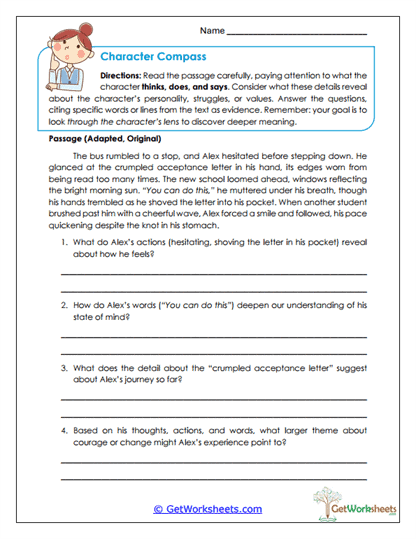
Students examine a passage that focuses on a character named Alex and analyze what Alex thinks, says, and does. They cite evidence to interpret deeper struggles or anxieties-such as clues hidden in symbolic objects or subtle actions. By studying these cues, students learn how authors reveal character complexity through small but meaningful details. This worksheet strengthens close-reading of narrative elements and helps learners understand emotional nuance within a character-driven text.
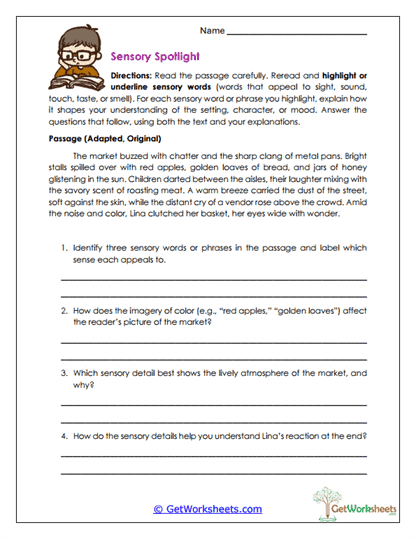
Sensory Detail Explorer
Students reread a descriptive passage and highlight sensory words related to sight, sound, smell, taste, and touch. For each highlighted detail, they explain how the sensory imagery enhances the setting or reveals something about the character's emotions. Follow-up questions challenge students to analyze how sensory writing contributes to mood, atmosphere, and deeper character interpretation. This worksheet supports visual literacy, strengthens descriptive analysis, and teaches students how sensory language creates vivid meaning.
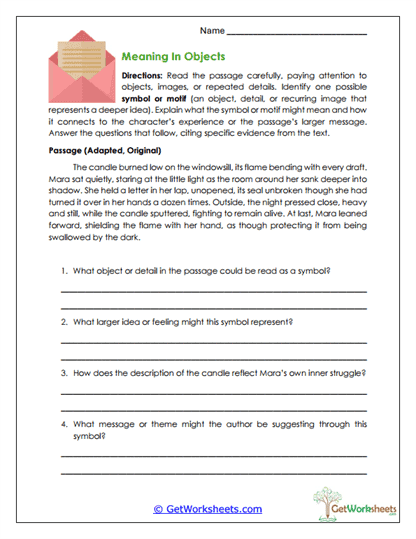
Symbol and Motif Finder
Students read a passage and search for an object, repeated detail, or image that may function as a symbol or motif. They explain what deeper idea the symbol represents and how it reflects the character's inner conflict or supports the passage's larger message. Using Mara's candle as an example, students explore how recurring imagery can reveal emotional states or express thematic meaning. This activity builds abstract thinking, helps students understand symbolic communication in literature, and encourages evidence-based interpretation.
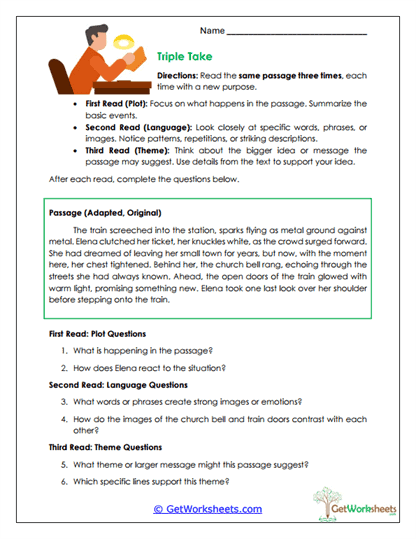
Triple-Read Analysis
This worksheet guides students through reading the same passage three times with three distinct purposes: reading for plot, reading for language, and reading for theme. After each stage, they answer focused questions that help them uncover layers of meaning-first understanding what is happening, then how it is written, then why it matters. Through this structured method, students learn that deeper meaning emerges through repeated, intentional reading. The worksheet builds stamina, analytical precision, and the ability to synthesize insights.
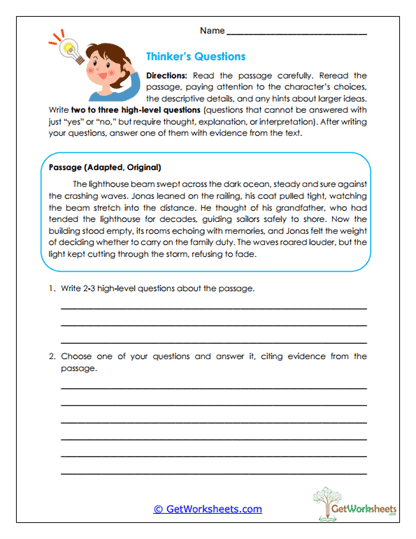
High-Level Questioning
Students read a passage and craft two or three high-level questions that require deep thought, interpretation, or evaluation-questions that cannot be answered with simple facts. They then choose one question to answer using specific evidence from the text. This worksheet teaches students how to engage in inquiry, generate thoughtful literary questions, and support their ideas with textual justification. It encourages curiosity, deeper reading, and critical analysis.
Contrast and Contradiction
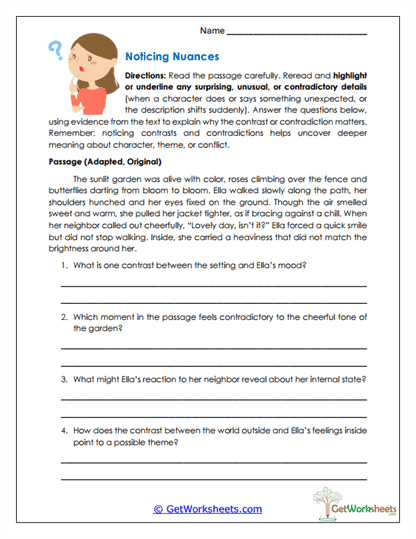
Students reread a passage and highlight surprising or contradictory moments-places where a character's words or actions differ from their environment or emotions. They answer questions explaining each contrast using evidence from the text. By analyzing Ella's conflicting feelings and surroundings, students learn how contradictions reveal hidden tension, emotional complexity, and emerging themes. This worksheet strengthens close-reading, emotional inference, and interpretation of layered storytelling.
Comparing Perspectives
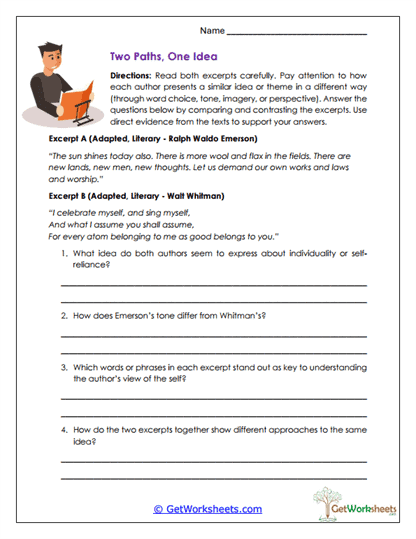
Students read adapted excerpts from Ralph Waldo Emerson and Walt Whitman, then compare how each author expresses ideas about individuality and self-reliance. They answer analytical questions requiring them to compare tone, word choice, imagery, and philosophical perspective. Students learn to identify shared themes across authors while recognizing stylistic and conceptual differences. This activity builds comparative reasoning, textual evidence skills, and understanding of how writers communicate complex ideas through language.
Evidence-Based Interpretation
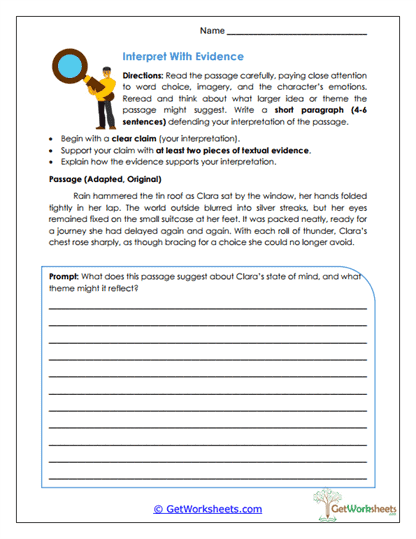
Students read a narrative passage and write a 4-6 sentence paragraph interpreting the character's emotional state and the passage's theme. They must provide at least two pieces of textual evidence and explain how each supports their claim. This worksheet strengthens students' ability to craft clear analytical claims, select meaningful evidence, and explain how an author's choices shape meaning. It promotes high-level literary reasoning and concise, purposeful writing.
Bookmark Us Now!
New, high-quality worksheets are added every week! Do not miss out!