Classic Literature Worksheets
About This Worksheet Collection
This Classic Literature collection helps students engage deeply with some of the most influential works in the literary canon. Each worksheet introduces students to high-impact excerpts or ideas from iconic texts and guides them through analysis of theme, character, symbolism, historical context, philosophical questions, and author craft.
The collection is designed to develop close-reading stamina, interpretive reasoning, analytical writing, and the use of textual evidence-all essential skills for advanced ELA learning. These worksheets give students manageable, focused entry points into complex literature while encouraging thoughtful reflection on timeless human experiences.
Detailed Descriptions Of These Worksheets
Fate vs. Free Will
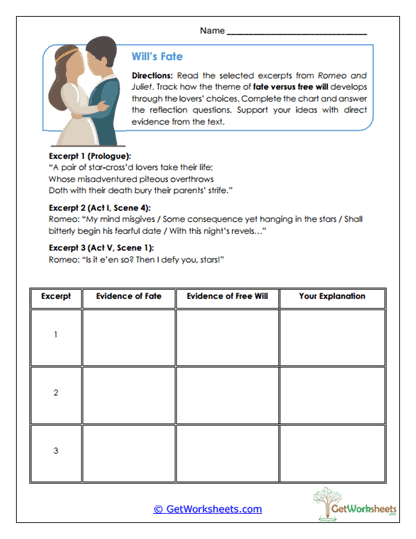
In this worksheet, students analyze three carefully selected excerpts from Romeo and Juliet to examine Shakespeare's treatment of the enduring question: How much of our lives is determined by fate, and how much is shaped by our choices? Students complete a chart that separates evidence suggesting destiny from evidence suggesting personal agency, then write short explanations connecting each piece of evidence to thematic interpretation. The activity helps students work through the complexity of Shakespearean language, compare multiple textual moments, and think deeply about how the forces of fate and free will intertwine within the lovers' tragic arc. Students strengthen their ability to analyze theme, support ideas with quotations, and understand character motivations within a multilayered narrative.
Gatsby Motivation
Students explore three excerpts from The Great Gatsby that highlight Jay Gatsby's fixation on Daisy and his longing for an idealized past. Through four analytical questions, they consider Gatsby's motivations, how illusion shapes his worldview, and how Fitzgerald contrasts dreams with reality. The worksheet pushes students to identify textual clues about Gatsby's emotional landscape and the broader themes of aspiration, obsession, and the American Dream. By examining the connections between Gatsby's desires and the novel's plot, learners develop stronger close-reading skills and gain insight into how character motivations drive narrative structure.
Hamlet Soliloquy Study
This worksheet guides students through a focused close reading of Hamlet's iconic "To be, or not to be" soliloquy. Students analyze Shakespeare's use of figurative language, philosophical questioning, and emotional tension as Hamlet wrestles with life, death, fear, and uncertainty. Through four text-dependent questions, students unpack the soliloquy's imagery, explore Hamlet's indecision, and consider how soliloquies reveal character psychology in drama. The activity builds interpretive depth and strengthens students' ability to extract meaning from early modern English while practicing evidence-based analysis.
Moby Dick Symbolism
Students read a passage from Moby-Dick and study how Melville constructs the white whale as a symbol. They respond to reflective questions about Ahab's obsession, the whale as a representation of the unknown, and the universal struggles embodied in the pursuit. The worksheet invites students to consider abstract symbolism and the philosophical layers embedded in Melville's writing. It supports the development of inference skills, the ability to interpret figurative meaning, and deeper engagement with allegory, making it ideal for discussions about human motivation, ambition, and existential mystery.
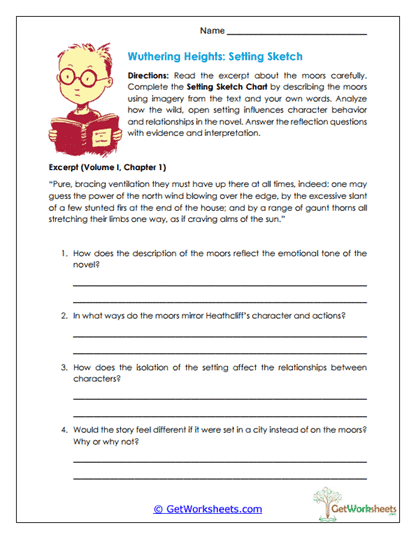
Setting Influence Study
In this worksheet, students examine a vivid excerpt describing the wild moors in Wuthering Heights. They complete a chart detailing imagery from the text, then answer questions about how the setting shapes tone, influences character behavior, and impacts relationships throughout the novel. By analyzing the turbulent environment that mirrors emotional and narrative tension, students learn how setting functions as a thematic and psychological force. This activity builds awareness of Gothic conventions and reinforces evidence-based interpretation.
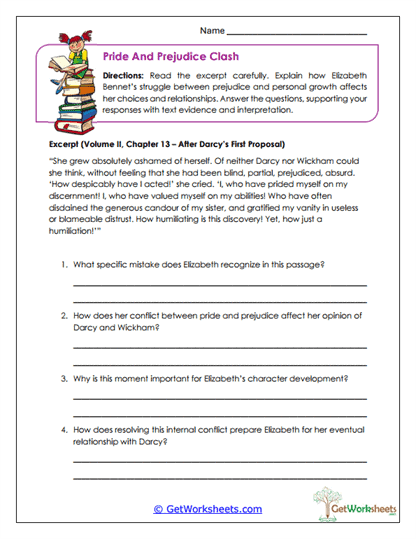
Pride & Prejudice Conflict
Students analyze a significant moment from Pride and Prejudice-Elizabeth Bennet's internal reaction after Darcy's first proposal. The questions guide learners to explore Elizabeth's conflicting judgments, her recognition of her own prejudices, and how this revelation transforms her character arc. By citing specific textual details and interpreting emotional nuance, students gain insight into Austen's crafting of internal conflict, social misunderstanding, and personal growth. The worksheet strengthens inferencing skills and highlights the interplay between theme and character development.
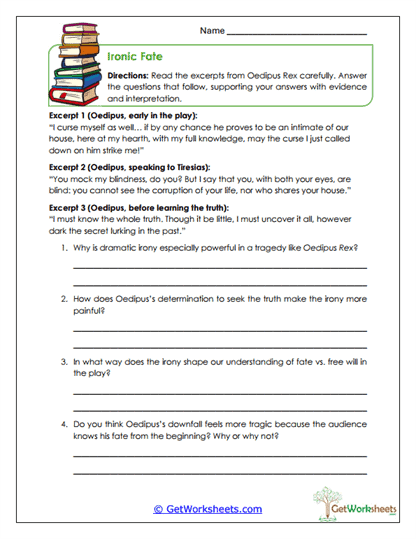
Oedipus Irony Study
This worksheet presents three excerpts from Oedipus Rex and asks students to examine how dramatic irony operates within the tragedy. Students analyze how Oedipus's determination to uncover the truth intensifies irony, why the audience's prior knowledge heightens the tragic effect, and how the themes of fate and free will appear in the unfolding events. This activity deepens students' understanding of classical structure, tragic inevitability, and the emotional impact of dramatic irony on readers and audiences alike.
Chaucer Vocabulary Study
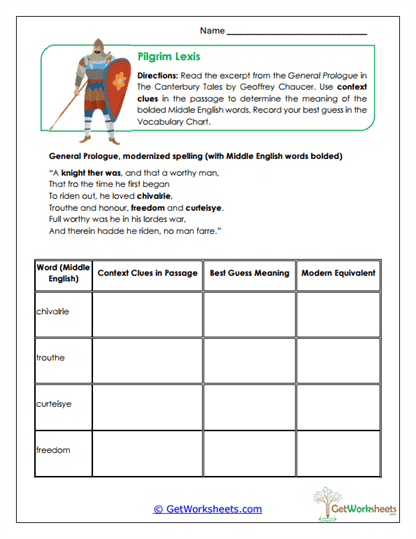
Students work with an excerpt from Chaucer's Canterbury Tales and use context clues to interpret four Middle English terms. They record the context clue, their inferred meaning, and a modern equivalent in a three-column chart. This worksheet helps students navigate historical language while developing strategies for decoding unfamiliar words. By engaging with authentic vocabulary from a medieval text, learners build linguistic flexibility, comprehension skills, and confidence reading older forms of English.
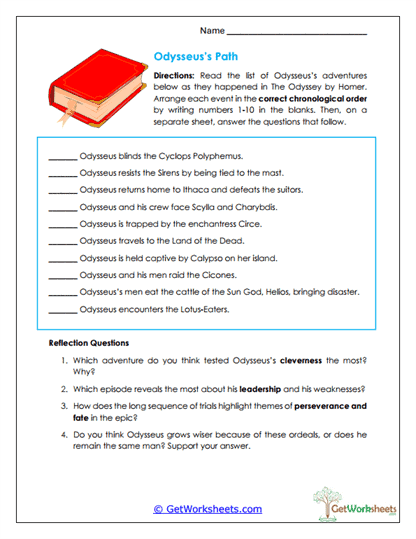
Odyssey Chronology
Students arrange ten major events from The Odyssey in correct chronological order, reinforcing their understanding of epic storytelling and Odysseus's extended journey. After sequencing, they respond to analytical questions about Odysseus's leadership, cleverness, perseverance, and growth through adversity. This worksheet connects plot structure to character development and theme, helping students understand how episodic adventures build toward a unified epic narrative.
Dystopia Comparison
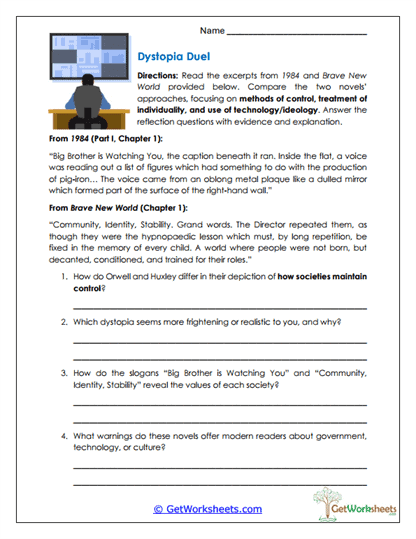
This worksheet invites students to compare short passages from 1984 and Brave New World, analyzing how each society maintains control and suppresses individuality. Students answer four text-dependent questions exploring themes such as surveillance, conditioning, technology, and societal values. By evaluating the distinct mechanisms of control in each dystopia, learners practice comparing authors' approaches, understanding warnings embedded in the texts, and analyzing how speculative fiction critiques real-world systems.
Crime and Punishment Debate
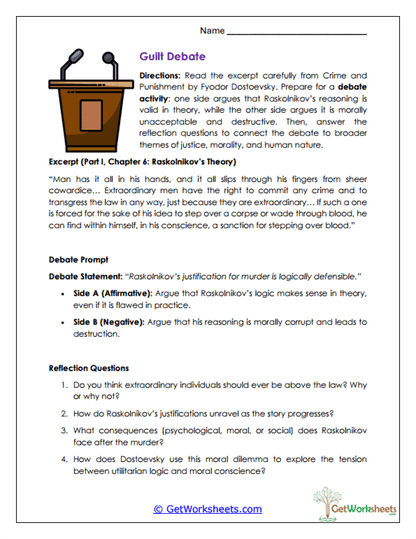
Students read an excerpt from Crime and Punishment and prepare for a structured debate centered on Raskolnikov's idea that "extraordinary individuals" can break moral laws. After analyzing the passage, students choose a stance and craft arguments grounded in textual evidence. Reflection questions guide them to explore deeper themes such as justice, guilt, utilitarian ethics, and psychological consequence. This worksheet fosters high-level reasoning, debate skills, and ethical analysis while introducing students to Dostoevsky's philosophical complexity.
Jane Eyre Independence Response
Students read a powerful excerpt from Jane Eyre in which Jane asserts her self-respect and independence. They write a 1-2 paragraph critical response analyzing how Jane resists control and affirms her identity. The prompt encourages students to connect the excerpt to broader themes of autonomy, equality in relationships, and the constraints of Victorian society. By supporting claims with textual evidence, students strengthen formal writing skills, thematic interpretation, and understanding of character-driven narrative dynamics.

Bookmark Us Now!
New, high-quality worksheets are added every week! Do not miss out!