Choral Reading Worksheets
About This Worksheet Collection
This collection of character voice practice worksheets blends fluency instruction with performance-based reading in a way that feels active, social, and memorable for young learners. Rather than treating oral reading as a routine drill, these activities invite children to read with rhythm, expression, coordination, and purpose. The set is especially useful for teachers building engagement during literacy blocks, small-group lessons, or speaking-and-listening practice, and it also gives parents approachable ways to make reading aloud more interactive at home. With chants, choral reading, call-and-response structures, and simple performance routines, the collection turns foundational reading practice into a shared literacy experience.
Across the worksheets, learners strengthen oral fluency, phrasing, prosody, listening comprehension, and confidence in reading aloud. Repeated reading helps improve automaticity, while group-based formats support pacing, expression, and attention to meaning. Teachers will appreciate how these pages reinforce comprehension through performance, and caregivers can use them to support reading stamina, vocabulary retention, and smoother delivery. Together, the activities build the kind of expressive, accurate reading that supports long-term success in both silent reading and spoken communication.
Detailed Descriptions Of These Worksheets
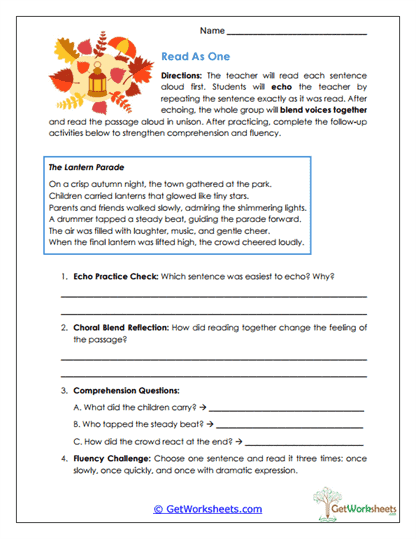
Read As One
Designed for guided choral reading, this worksheet helps learners practice pacing, expression, and accuracy by reading in unison with others. The shared format reduces performance pressure, which can be especially helpful for emerging readers who need confidence as much as skill practice. Teachers can use it to strengthen prosody and comprehension during whole-group instruction, while parents may find it useful for supportive read-aloud routines at home. Its collaborative structure makes repeated reading feel encouraging rather than repetitive.
Choral Poem Quest
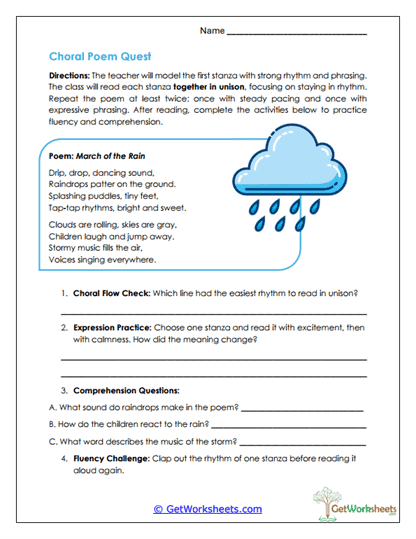
A poem becomes the vehicle for building fluency as learners read together with attention to rhythm, phrasing, and vocal expression. The worksheet encourages readers to hear how poetic cadence shapes meaning, making it a valuable bridge between fluency work and poetry analysis. For educators, it offers an engaging way to teach prosody and imagery at the same time. The performance element also helps children experience poetry as something to hear and feel, not just decode.
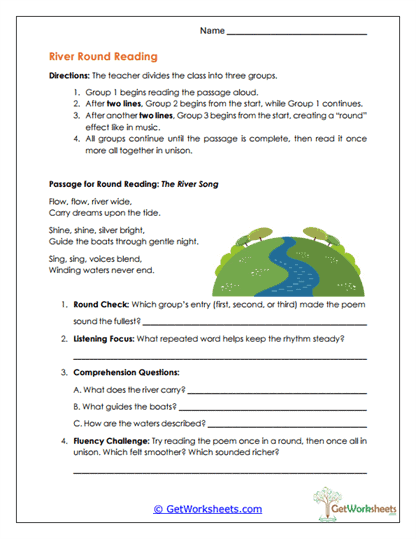
River Round Reading
This activity uses a round-style reading structure to help learners maintain flow while listening carefully to peers. Because students must enter at the right moment and keep the reading continuous, the worksheet strengthens timing, attention, and smooth oral delivery. Teachers can use it to build classroom community while reinforcing fluency through patterned repetition. It also gives students a memorable introduction to how rhythm and coordination shape shared reading.
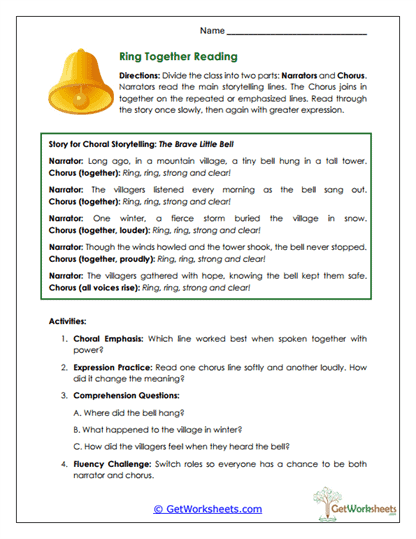
Ring Together Reading
By assigning narrator and chorus parts, this worksheet gives young readers a clear structure for expressive group reading. Repeated lines and shared responses support story comprehension while also helping students notice emphasis, sequence, and key details. The format is especially useful for teachers who want to combine fluency practice with active participation from the whole class. For home use, it offers a simple way to turn reading into a family or sibling activity.
Choral Stage Play
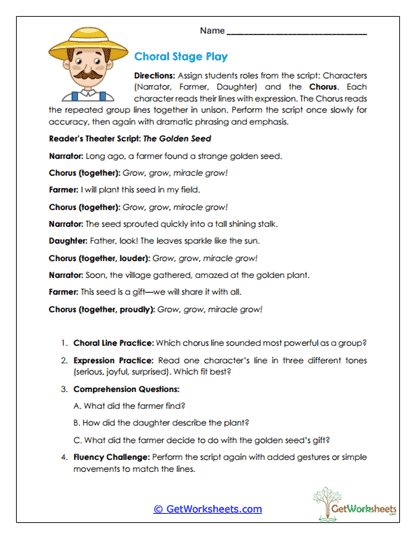
This script-based worksheet brings together performance reading, storytelling, and oral expression in a way that supports both literacy and confidence. Learners practice clarity, timing, and dramatic tone as they take on narrator and group roles. Teachers will find it effective for integrating speaking and listening standards into reading instruction without adding preparation time. The dramatic structure also helps students hold onto plot details because they are actively performing the text.
Choral Clap Quest
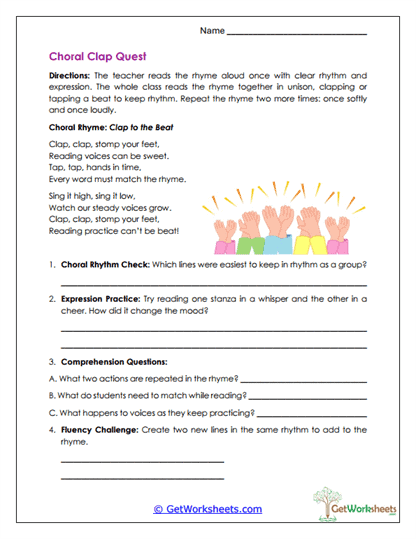
Movement and reading work together here as learners clap to a steady beat while reading a rhythmic chant aloud. That physical pacing support can help young readers internalize phrasing, maintain tempo, and stay engaged during fluency practice. Parents and teachers alike may appreciate how the multisensory format channels energy into purposeful reading. It is particularly strong for children who benefit from kinesthetic learning and structured repetition.
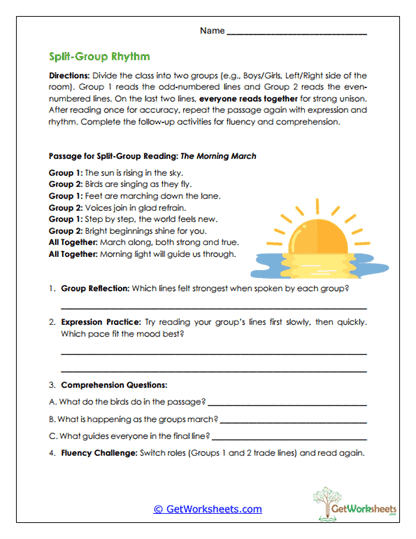
Split-Group Rhythm
Alternating lines between groups gives this worksheet a strong focus on coordination, listening, and expressive delivery. Learners must attend closely to cues, which reinforces pacing and helps them become more responsive readers. In the classroom, it works well for partner teams, table groups, or literacy stations that emphasize cooperative learning. The final unified reading also gives students practice blending voices while maintaining comprehension.
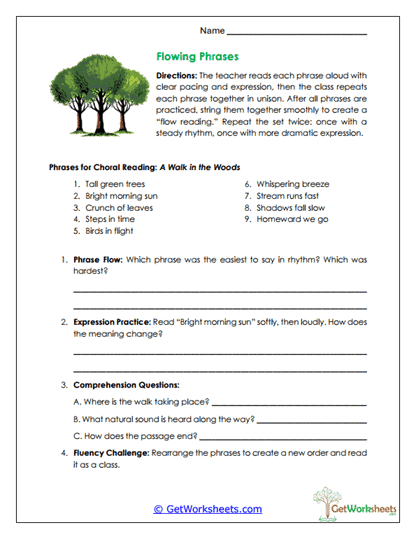
Flowing Phrases
Short phrase reading is used here to help early readers move beyond word-by-word decoding and toward smoother, more natural oral language. The worksheet supports chunking, phrasing, and breath control, all of which are essential for fluent reading and stronger comprehension. Teachers can use it as a warm-up before guided reading, and parents can use it to support children who need help sounding less robotic when reading aloud. Its simplicity makes it especially valuable for foundational literacy instruction.
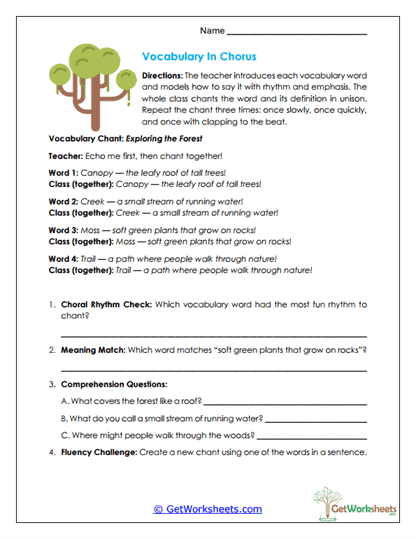
Vocabulary in Chorus
This worksheet combines repeated oral reading with explicit vocabulary reinforcement, helping learners connect new terms to their meanings through rhythm and group response. The choral format supports memory retention, making it easier for students to internalize academic language and content-area words. Teachers may find it especially useful for review before tests or as part of a word-study routine. The repetition feels more lively and collaborative than traditional vocabulary drilling.
Call and Answer Reading
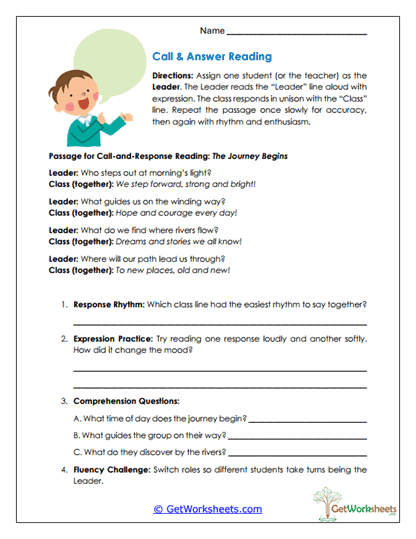
Built around a leader-and-group structure, this activity strengthens listening, timing, and expressive response through a call-and-response format. Learners must track cues carefully, which supports auditory processing and attention as well as fluency. For teachers, it is an effective tool for engaging the whole class while reinforcing comprehension through repetition. At home, it can turn routine reading practice into a more interactive back-and-forth exchange.
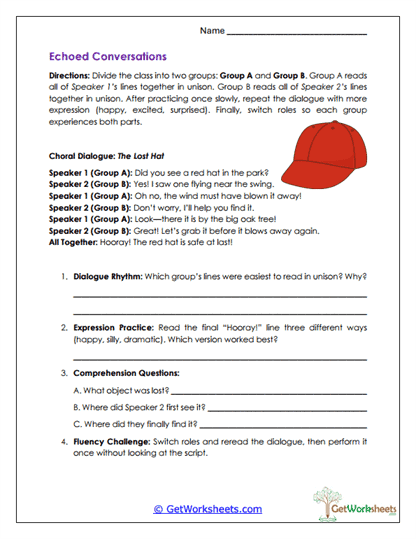
Echoed Conversations
Alternating dialogue lines and blended group responses make this worksheet a strong option for introducing expressive reading through conversation. Learners practice tone, pacing, and emotional delivery while also deepening understanding of what the speakers mean. Teachers can use it to support fluency and speaking skills in a format that feels cooperative and lively. The repeated dialogue structure also helps students remember story details and follow the flow of a text.
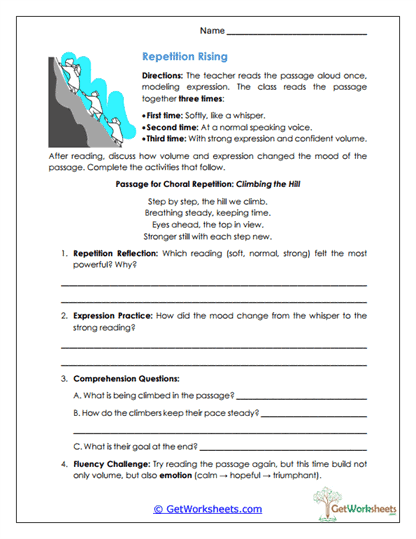
Repetition Rising
This repeated-reading activity invites learners to revisit the same passage using gradually stronger volume and expression. By noticing how voice level changes mood and emphasis, students begin to understand that fluency is not only about accuracy but also about interpretation. Educators will appreciate the built-in reflection on how delivery affects meaning, especially for readers who need to develop prosody. It is a practical tool for helping children sound more engaged, confident, and intentional when reading aloud.
Bookmark Us Now!
New, high-quality worksheets are added every week! Do not miss out!