Children's Stories Worksheets


About This Worksheet Collection
This Children's Stories collection introduces students to classic tales while guiding them through essential literacy skills such as sequencing, character analysis, main idea identification, context clues, summarizing, and creative writing. Each worksheet uses a familiar story to anchor reading comprehension and provide meaningful opportunities for students to practice analyzing narrative structure, interpreting themes, and thinking critically about characters and events.
Students interact with story elements visually, verbally, and analytically-strengthening both foundational skills and higher-order thinking. These worksheets support independent reading growth while nurturing imagination and deeper literary engagement.
Detailed Descriptions Of These Worksheets
Tale Sequencing
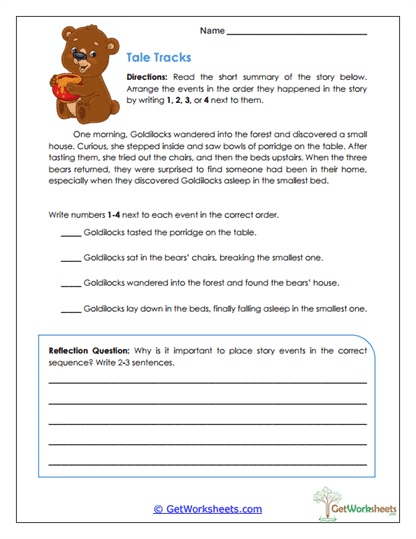
Students read a simplified summary of Goldilocks and the Three Bears and place four key story events in the correct chronological order. The activity requires learners to examine plot structure, identify transitions between events, and think about how actions build on one another. The reflection prompt pushes students to explain why sequencing matters in storytelling-helping them make connections between order, clarity, and comprehension. This worksheet supports narrative understanding, logical reasoning, and the ability to organize information meaningfully.
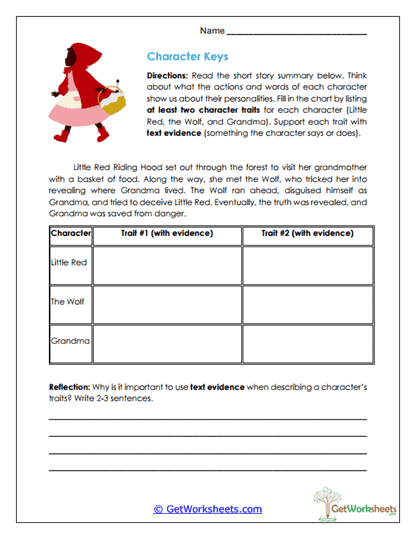
Character Traits Chart
This worksheet introduces an adapted summary of Little Red Riding Hood and asks students to list personality traits for Little Red, the Wolf, and Grandma. Students must justify each trait with text evidence, teaching them to connect character behavior to descriptive conclusions. By analyzing actions, dialogue, and motivations, learners develop stronger interpretation skills and begin understanding how authors reveal character qualities indirectly. The structured chart format also helps students organize complex ideas clearly and effectively.
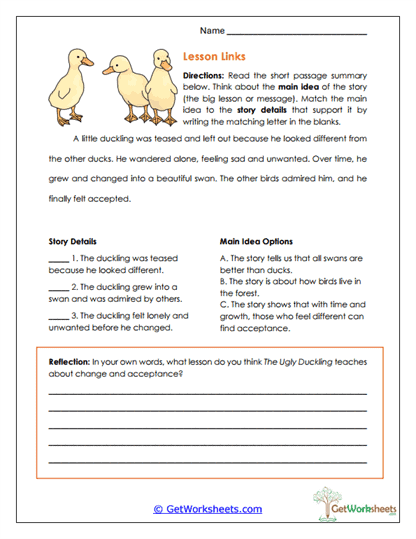
Main Idea Match
Students explore a summary of The Ugly Duckling and identify the central message of the story. They match supporting details to the main idea, learning how to distinguish important thematic evidence from minor plot details. The reflection question encourages deeper reasoning about themes such as personal growth, acceptance, and transformation. This worksheet strengthens a student's ability to extract meaning from text, recognize author messages, and explain how details support the central idea.
Problem-Solution Chart
Using a summary of Jack and the Beanstalk, students analyze Jack's major challenge and how he solves it. They then map the character, problem, solution, and outcome in a structured chart. The writing prompt at the end requires reflection on what Jack learns from his experiences. This worksheet supports understanding of narrative problem-solving, reinforces comprehension of plot structure, and promotes analysis of lessons or morals embedded in classic stories.
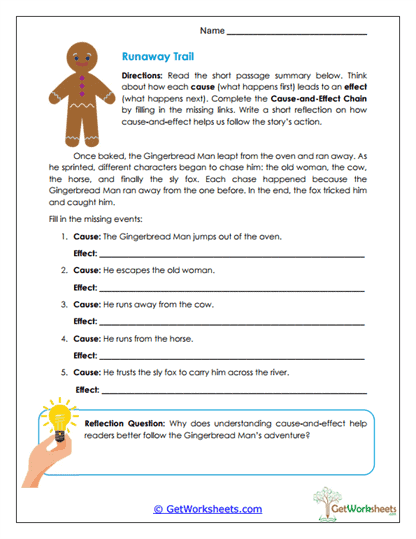
Cause and Effect Chain
Students read a retelling of The Gingerbread Man and complete a chain that shows how each event leads logically to the next stage of the chase. This helps learners understand how cause-and-effect relationships drive plot progression. By filling in missing causes or effects, students practice reading for detail, connecting events, and recognizing patterns that shape narrative flow. The reflection question reinforces why analyzing cause and effect helps readers follow action more clearly.
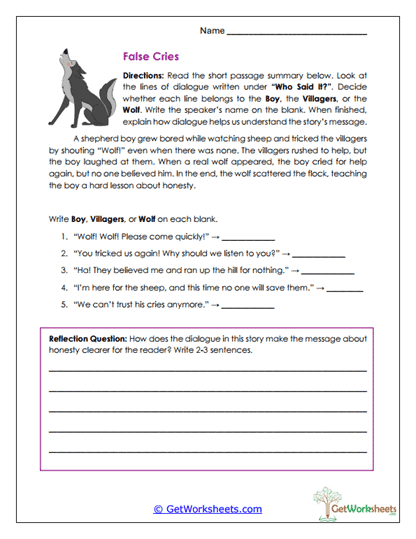
Dialogue Identification
This worksheet provides a summary of The Boy Who Cried Wolf and presents several lines of dialogue from the story. Students label who is speaking-the Boy, the Wolf, or the Villagers-requiring them to interpret tone, context, and speaker behavior. By examining how each line contributes to the story's theme of honesty, learners deepen their understanding of how dialogue reveals character motivations and moral lessons. This activity also strengthens perspective-taking and comprehension of spoken text.
Story Ending Illustration
After reading a summary of The Little Mermaid, students draw the ending of the story and write 3-4 sentences explaining how their illustration reflects the final events. The task encourages visualization, a key reading skill that helps students comprehend stories more deeply. By translating textual information into artwork, students demonstrate understanding of mood, emotion, and narrative resolution. The writing component reinforces their ability to connect creative expression with textual meaning.
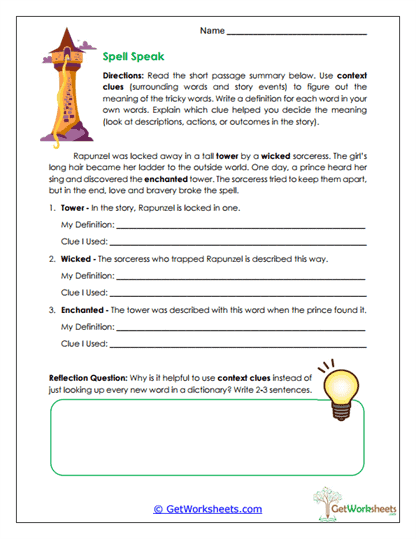
Context Clue Meanings
Students read a summary of Rapunzel and use contextual clues to interpret vocabulary words such as tower, wicked, and enchanted. They must identify the hint in the text that helped them determine meaning, supporting inference skills and vocabulary development. The activity encourages independence by teaching students how to decode unfamiliar words using logical reasoning rather than external tools. The reflection prompt emphasizes why context clues are essential for strong reading comprehension.
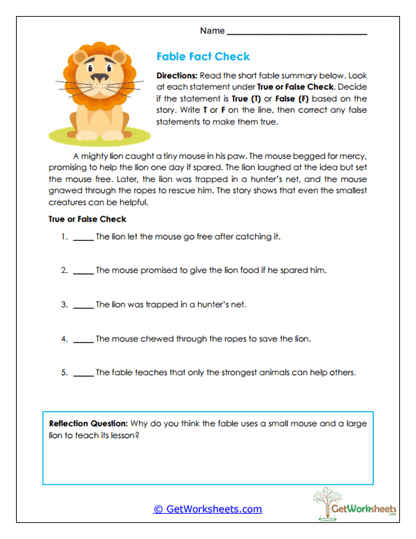
Fable Fact Check
After reading The Lion and the Mouse, students decide whether statements about the story are true or false, then correct the false ones. This strengthens attention to detail and builds the ability to recall key information accurately. A final reflection question helps learners think about why authors often choose contrasting animals to communicate moral lessons-encouraging deeper reasoning about symbolism and fable structure. Students practice comprehension, analysis, and purposeful correction.
Story Retell Strips
Students read a retelling of The Princess and the Pea and summarize the narrative in three short sentences representing the beginning, middle, and end. This task teaches students to identify essential events while removing unnecessary details. They develop stronger summarization skills and learn how to communicate story structure concisely. The reflection question reinforces the value of retelling as a strategy for comprehension and clear communication.
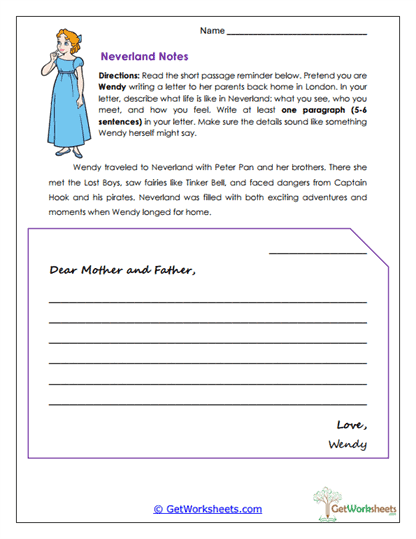
Neverland Letter
Using a summary of Wendy's adventures in Peter Pan, students write a letter from Wendy to her parents describing who she meets, what she sees, and how she feels in Neverland. Writing in first person strengthens point of view understanding and builds narrative voice. Students must imagine sensory details, emotional reactions, and story events to craft an authentic character letter. This activity supports creativity, descriptive writing, and perspective-based storytelling.
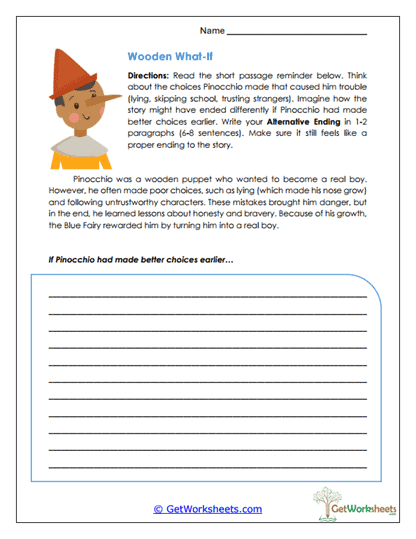
Pinocchio Alternative Ending
This worksheet invites students to rethink Pinocchio by writing a new ending based on improved choices made earlier in the story. They must consider how Pinocchio's changed behavior would realistically alter events, encouraging analysis of cause and effect, character development, and moral messages. Writing a fully formed alternate ending strengthens creative writing skills, narrative structure awareness, and understanding of how character choices shape plot outcomes.
Bookmark Us Now!
New, high-quality worksheets are added every week! Do not miss out!