Canada Worksheets
About This Worksheet Collection
This Canada worksheet collection introduces students to the geography, cultures, history, and civic features of the world's second-largest country. Through informational passages, vocabulary practice, matching tasks, written responses, and map-based reasoning, students gain a well-rounded understanding of Canada's regions, Indigenous cultures, national identity, and major landmarks. The variety of formats keeps learning engaging while helping students make meaningful connections between physical geography and cultural diversity.
As students read closely, analyze clues, evaluate statements, and write evidence-based responses, they build essential literacy and social studies skills. These activities reinforce geographic vocabulary, deepen cultural awareness, and strengthen comprehension of both national and regional features. The worksheets also support critical thinking by asking learners to make comparisons, justify answers, and synthesize information into clear written explanations. Collectively, this collection develops confident readers, thoughtful writers, and informed young geographers.
Detailed Descriptions Of These Worksheets
Canada Reading
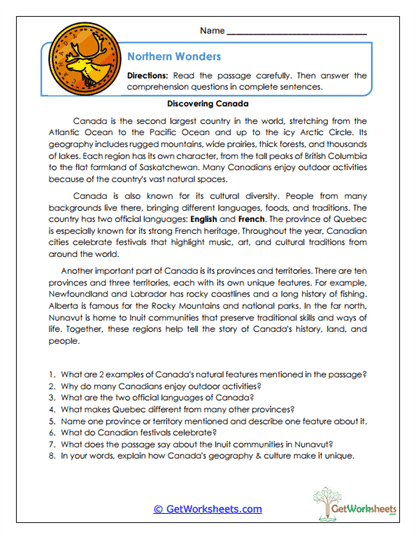
Students read an informational passage about Canada's geography, provinces, Indigenous communities, and cultural traits. They answer open-ended questions that require textual evidence and complete-sentence explanations. This activity strengthens informational comprehension and analytical thinking. It also encourages students to synthesize key details about what makes Canada geographically and culturally unique.
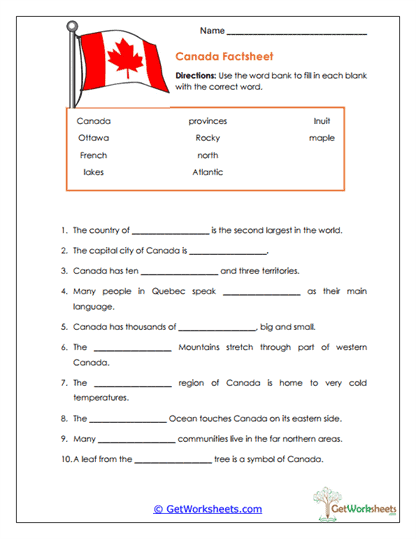
Canada Factsheet
Using a word bank, learners fill in missing terms related to Canada's climate, population, landmarks, and provinces. The exercise reinforces contextual reading and vocabulary application. Students improve recall of key national features while strengthening understanding of Canada's geography and civic identity. The cloze format also supports attention to detail.
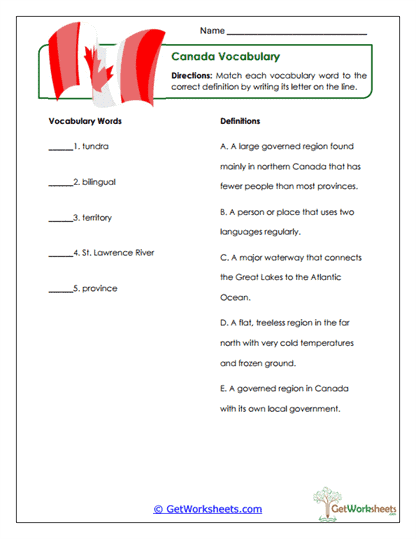
Canada Vocabulary
Students match Canadian geography and civics terms-such as territory, tundra, and St. Lawrence River-to accurate definitions. This reinforces foundational terminology used in studying Canada's environment and government. The activity builds semantic reasoning and strengthens background knowledge. It also supports comprehension across social studies units.
Territory Matching
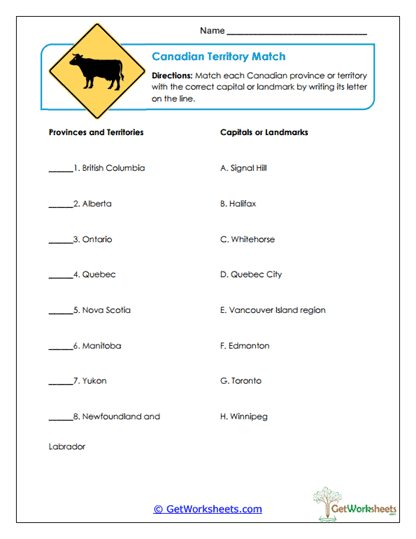
Learners match Canadian provinces and territories with their capitals or major landmarks. This task deepens familiarity with political geography and improves memorization of important places. Students strengthen map-based reasoning through association and comparison. The activity also supports civic understanding by highlighting regional identities.
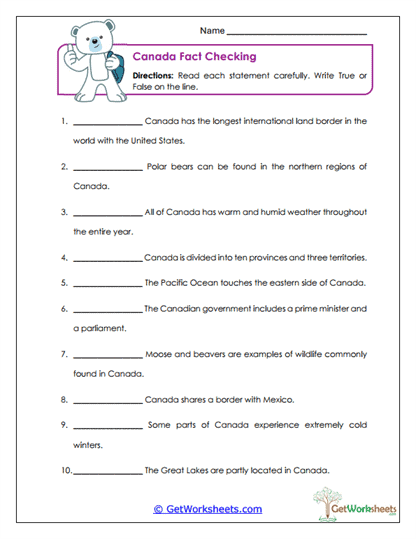
Canada Fact Check
Students determine whether statements about Canada's climate, government, wildlife, and geography are true or false. When evaluating claims, they apply content knowledge and critical reading skills. This reinforces retention of accurate information and clarifies misconceptions. The worksheet promotes thoughtful analysis of factual statements.
Indigenous Geography
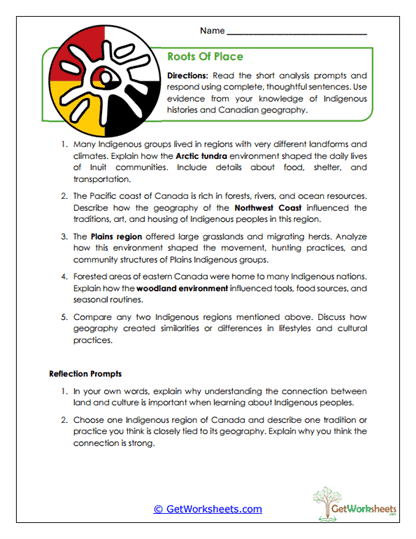
Students analyze how geography shaped the lives of Indigenous groups across regions such as the Arctic, Plains, woodlands, and Northwest Coast. They write complete-sentence explanations using evidence about food, shelter, and movement. This worksheet strengthens understanding of human-environment relationships. It also supports reflective, evidence-based writing grounded in cultural history.
Landmark Report
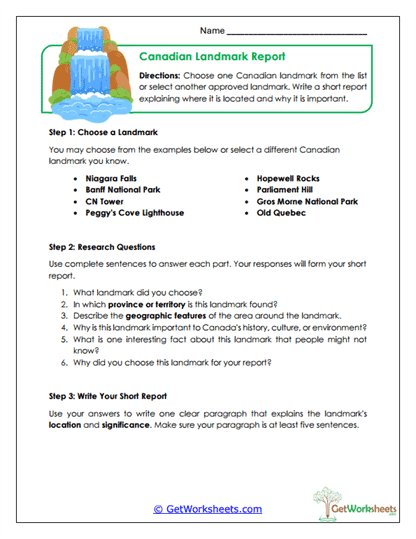
Learners research or select a Canadian landmark and answer guided questions about its location, significance, and environmental or cultural importance. They then use their responses to create a structured paragraph. This activity builds research skills, organization, and informational writing. It deepens students' appreciation for Canada's notable places.
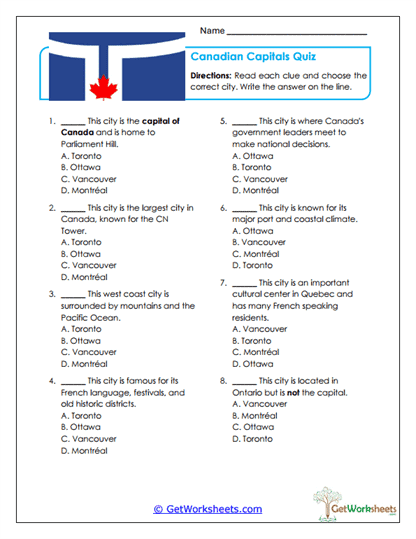
Capitals Quiz
Students read clues about Canadian cities and choose the correct answer from multiple-choice options. The clues highlight geographic, cultural, and political features that distinguish each city. This task strengthens deductive reasoning and reinforces national geography knowledge. It also builds confidence in analyzing multiple-choice questions.
Symbol Analysis
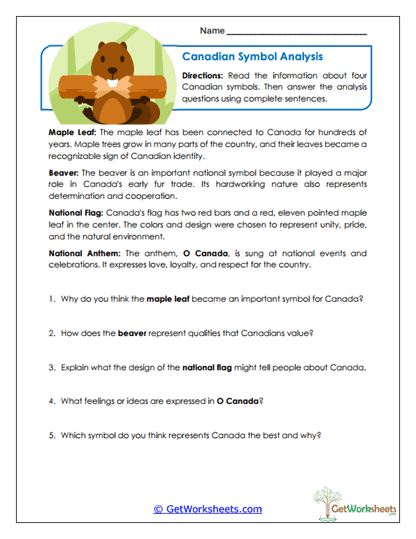
Students read informational descriptions of Canada's national symbols-such as the flag, beaver, maple leaf, and anthem-and answer interpretive questions. They explain symbolism, infer meaning, and connect symbols to national values. This worksheet strengthens comprehension of informational text and encourages thoughtful written responses. It also deepens understanding of national identity.
Holiday Origins
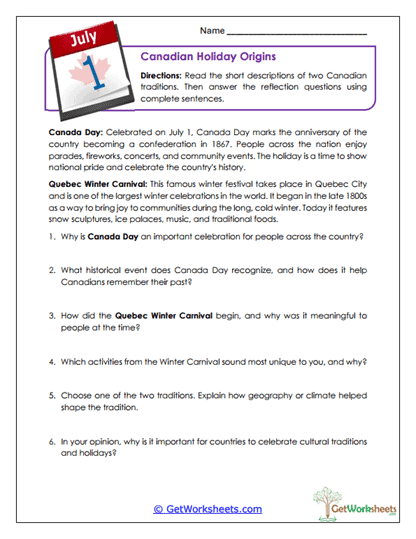
Learners read descriptions of Canada Day and the Quebec Winter Carnival and answer reflective questions in complete sentences. This activity connects cultural traditions to geography, climate, and history. It strengthens comprehension and helps students analyze how celebrations express community identity. Writing prompts support clear explanation and cultural reasoning.
Province Puzzle
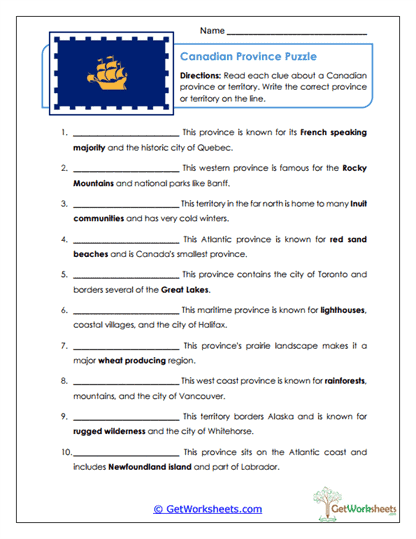
Students use descriptive clues to identify specific Canadian provinces or territories. Clues reference landmarks, climate patterns, major cities, and cultural traits. This task strengthens clue-based reasoning and reinforces knowledge of Canada's regional diversity. It also improves reading comprehension and recall of geographic features.
Maple Review
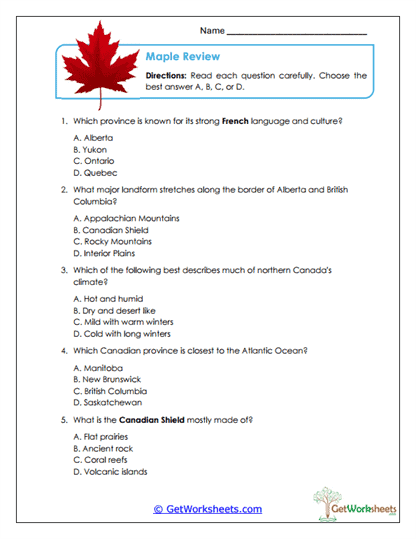
In this multiple-choice worksheet, students answer questions about Canada's landforms, climate, culture, and regions. They must compare answer choices carefully to select the most accurate option. This activity reinforces key facts about Canada while building test-taking strategies. It strengthens geographic reasoning and comprehension of informational text.
Bookmark Us Now!
New, high-quality worksheets are added every week! Do not miss out!